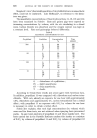
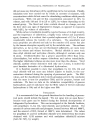
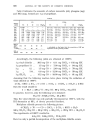
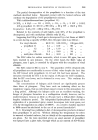
LANOLIN DERIVATIVES FOR PRESSURIZED FORMULATIONS 331 LANOLIN DERIVATIVES FOR PRESSURIZED FORMULATIONS A. HERZKA, B.Sc., F.R.I.C.* Presented at the Symposium on "Aerosols", organised by the Society, at Southport, Lancs., on 24th April 1965. The solubility of ten lanolin derivatives in nine different propellant and propel/ant/alcohol systems is described. The results indicate that most of the materials exhibit satisfactory solubility at 0 ø (•. INTRODUCTION TI•E SOnUBInIT¾ Of ten lanolin derivatives in propel!ant and propellant/ alcohol systems was investigated in order to establish their likely usefulness in formulations intended for pressurized packing. As the propel/ant may be added to a formulation either at ambient (room) temperature or at a low temperature, i.e. during cold filling, the tests were carried out at 20 ø C and at 0ø C. The tollowing products were tested: i. Anhydrous lanolin, B.P. The physical and chemical properties of anhydrous lanolin (refined wool fat), even amongst samples all complying with the British Pharmacopoeia or the Toilet Preparations Federation specification, can vary to an appreci- able extent according to the source of the raw wool fat and the refining methods employed. Since it is conceivable that solubility in propel/ants could be one of the variables involved, it should be put on record that the lanolin used in the present work was refined from wool fat centrifugal/y- recovered from wool washed with soap, not detergents. Refining processes included chemical as opposed to absorptive deodorisation and bleaching. The lanolin used was a pale, superfine quality, complying with both of the specifications mentioned above. The substance is used in a very wide range of cosmetic products not only because of its outstanding emollience on the skin, but also by virtue of its powerful w/o emulsifying properties, plasticising and hair-conditioning properties, etc. ii. Wool alcohols, B.P. This official pharmaceutical description is essentially a misnomer, the product being more accurately described as wool wax alcohols, lanolin *Independent Consultant, London.

332 JOURNAL OF THE SOCIETY OF COSMETIC CHEMISTS alcohols, etc. The so-called wool alcohols represent the unsaponifiable fraction of wool fat, the theoretical yield being about 50% from refined lanolin but varying according to the raw material used and the methods used for saponification, extraction and refining. The physical properties of this refined product also vary according to its previous history, examples of properties affected being-emulsifying power, cholesterol content, hydroxyl value, and to a certain extent, solubility. The product used was produced from anhydrous lanolin of pharmaceutical quality and extracted with trichloroethylene, subsequent refining operations including vacuum- deodorisation and chemical bleaching. The uses of wool alcohols in cosmetics are basically similar to those of lanolin, but the product is much harder, having a brittle waxy consistency as compared to an unctuous grease. Its w/o emulsifying properties are much more powerful than those of the original lanolin. It may be used in pressurized emulsions, or, for example, as a plasticiser or film-modifier in hair sprays. Like lanolin, wool alcohols are insoluble in water, and thus can only be utilised in pressure packs in the form of emulsions or as solutions in organic solvents or in a suitable propellent system. iii. Liquid lanolin "A.C.E." This•is a chemically modified lanolin derivative, consisting of an almost fully acetylated fraction of wool alcohols. It is a clear, moderately viscous fluid, very readily taken up by the skin without any residual stickiness. The product has virtually no emulsifying properties by reason of the blocked hydrophilic groups, but is very emollient, conditions the hair and imparts gloss, and is soluble in, and compatible with, a wide range of products used in cosmetics and pharmacy. iv. Alcohol soluble lanolin Prepared from B.P. quality wool alcohols, and not chemically modified in any way, the physical characteristics of this material are those of a soft, easily melted, orange coloured wax with a faint, characteristic odour. It has a high content of free cholesterol, and is thus a ready means of achieving an alcoholic solution of cholesterol (which itself has limited solubility in cold alcohol) for scalp treatments. Alcohol soluble lanolin still retains some of the powerful w/o emulsifying characteristics of its parent wool alcohols, but is much less efficient and gives less stable emulsions. It is ideal for the preparation of 'alcoholic hair sprays. The product is stabilised during manufacture to be resistant to oxidation, and its films, even when freely exposed to the air, never become brittle or powdery, and
Purchased for the exclusive use of nofirst nolast (unknown)
From: SCC Media Library & Resource Center (library.scconline.org)