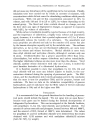
SOME ECONOMIC ASPECTS OF PERFUMERY 305 all, countries of the world? The nineteenth century had its successes. Have there been any in the twentieth? Success is, of course, a relative term, and if oils produced in non-tradi- tional areas are seldom as good as those from normal sources, they never- theless have a substantial value. Moreover, in some cases transplantation not only coarsens but also strengthens an oil, thereby conferring on it potentialities which the parent oil did not possess. Geranium Bourbon, for example, has so much more power than Geranium de Grasse that, even without the large cost differential, it would inevitably be preferred for many uses. The present position regarding the quality of some of the oils obtainable from alternative sources is, in my opinion, as follows: Jasmin French Pre-eminent. Italian Best qualities floral, but lacking in odour strength. Algerian Having good strength, but heavy and indoloid in character. Egyptian Best qualities good, but of somewhat indi- vidual odour. Moroccan Of improving quality but seemingly lacking in richness. Other sources of Jasmin yield products markedly different from those listed above. Rose by extraction French Moroccan Bulgarian Turkish Russian Rose by distillation Bulgarian Turkish Moroccan Geranium (by distillation) Pre-eminent. Good but lacking in richness. Good but lacking in top note character. Good but lacking in top note character. Hors de concours. Pre-eminent. Excellent, but of differing tonality. Excellent, but of lesser strength. Other sources give oils of variable quality. French Of exceptional fragrance and lift. Bourbon Of outstanding character and strength. Algerian Toward French in character but less fragrant. Moroccan Good, but without the special characteristics of Bourbon and Algerian. Other important sources exist concerning which I do not feel qualified to express an opinion. These lists may be continued and, in each case, the old established source shows up as pre-eminent. These opinions are based on experiments in which finished products of classical types have been made up employing each of the oils in turn. It turns out that the costs of the oils offered on the open market often approximate closely to the values which may be set upon them in actual use. In other words, returning to the problem of making available to a wider public the classical creations of perfumery it will be seen that while one can reduce the cost by substituting dear natural constituents with similar products obtained by cultivation in lower cost areas, the degree of economy

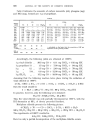
306 JOURNAL OF THE SOCIETY OF COSMETIC CHEMISTS obtained corresponds with the degree of difference noticeable in the finished perfume. PLANT SELECTION If one accepts that cultivation of the desired essential oil-producing plants in differing geographical locations gives broadly unrewarding results, there remains the possibility that one may select a strain of plant giving a higher yield of oil and so obtain a lower cost price without the necessity of undertaking capital investment in underdeveloped and most likely, politically unstable, foreign countries. The lavender family has proved particularly suitable for the exercise of plant selection, but results have not always been in accord with expectation. Lavender oil is notorious for the ease with which it can be adulterated, and lavender "to a price" has been, and still is, offered for sale by many com- panies. Some buyers have been quite satisfied to accept these oils providing that they comply with the relevant standard set by the Pharmacopoeia. But to others it has come as a surprise to discover, often following the use of the new analytical techniques, that the oils they had been in the habit of accepting contained little or no true lavender. Consumers' desires to buy nothing but pure oil made it all the more necessary for the producers to select lavender plants giving high yields. Odour evaluation was largely ignored since it was believed that the ester content of the oil was an index of odour quality. The results are, of course, well known. Two selected plants were widely cultivated--these have come to be known as Matherone and Maillette. Both give oils of highly satisfactory physical and chemical constants, coupled with yields per unit area of land two or three times greater than those normally associated with true lavender. Unfortunately, it has since been found that from the purely olfactive standpoint these oils have very limited value and, at the time of writing, individual lots are offered for sale at prices similar to those quoted for Lavandin. Thus in this case, selection has undoubtedly proved a failure. On the other hand, one important French company has studied lavender selection over a long period. Paying due regard to the perfumer's opinion that company has isolated strains of lavender giving superior yields (though not as good, of course, as Matherone and Maillette), and at the same time oils comparable in quality with normal true lavender. One cannot turn from plant selection without mentioning the one out- standing commercial success which has been achieved, i.e. the invention of Abrialis Lavandin. This plant was originally intended to meet the require- ment for a high ester and therefore (it was supposed) a high quality Lavandin giving a larger yield per unit of land cultivated. When offered originally at a price higher than that asked for normal Lavandin it enjoyed little
Purchased for the exclusive use of nofirst nolast (unknown)
From: SCC Media Library & Resource Center (library.scconline.org)