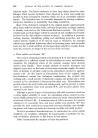
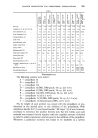
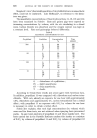
PHYSIOLOGICAL PROPERTIES OF PROPELLANTS 347 did not cause any disturbance of the equilibrium in the test animals. Finally, inhalation tests were carried out by Scholz in currents of mixtures, with concentrations which did not cause the stimulating conditions which precede anaesthesia. With 114 and 12 this concentration amounted to 10% by volume, and with 113 and 11 to 2.5 or 1.25% by volume depending on the animal group. The blood and urine controls showed no change, nor did the liver show any signs of degenerative changes, as opposed to exposures with 0.25•o by volume of chloroform. While carbon tetrachloride should be rejected because of its high toxicity, and the importance of chloroform, a highly toxic solvent and anaesthetic agent, decreases, it is evident that a partial replacement of C1 by F atoms considerably reduces the toxicity of a substance. The anaesthetic and toxic properties are affected not only by the number of C1 atoms but also by the human absorption capacity and by the metabolic rate. The methane derivatives, as far as they are not fluorinated sufficiently, are more toxic than the ethene and ethane derivatives. Methyl chloride is more toxic than ethyl chloride and methylene chloride, although it contains only one C1 atom. Trichloroethylene has a greater anaesthetic effect than tetra~ chloroethylene, but neither surpass chloroform and carbon tetrachloride. The higher chlorinated ethanes are also more toxic than the ethenes. Vinyl chloride, another ethene derivative with only one C1 atom, is indeed the most harmless derivative of a chlorinated hydrocarbon. It is therefore possible to state that propellants 11, 12, 113, 114 and vinyl chloride will not cause any definite injuries to health, in the con- centrations obtained during the spraying of pressurized packs. The MAC values, and the classification into toxicity groupings permits the conclusion that the same is true for propellant C318, and for propane, butane and isobutane. We have no data on the inhalation compatibility of gaseous hydrocarbons, and we only know that the MAC values of the low molecular hydrocarbons is 100, and of the higher ones 500. INHALATION It is recommended that the general directions for the handling of pressur- ized packs should include the legend: "Do not spray into an open flame," because toxic gases can be formed during the thermal decomposition of halogenated hydrocarbons. This was investigated at the Battelle Institute, with propellants 11, 12, 114, vinyl chloride, and methylene chloride. The amount of carbon monoxide and phosgene, formed between 100 and 1000øC, and the amount of HC1, formed at 1000øC, were determined. The values for propellant 11 and for methylene chloride were derived from the results obtained with 11/12 mixture and with methylene chloride/12 mixture (both 50: 50% by weight).

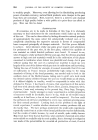
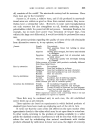
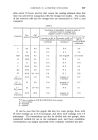
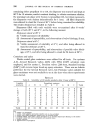
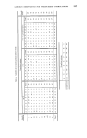
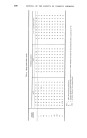
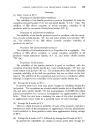
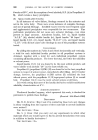
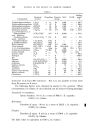
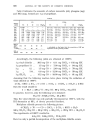
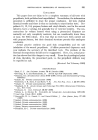
348 JOURNAL OF THE SOCIETY OF COSMETIC CHEMISTS Table 3 indicates the amounts of carbon monoxide (ml), phosgene (mg) and HC1 (mõ), formed per 1 g of propellant. Table 3 Tempe- rature 100 ø 200 ø 300 ø 400 ø 500 ø 600 ø 750 ø 900 ø 1000 ø CO VC 11 12 114 CH2CI • 0.001 0.03 0.45 0.001 0.001 0.001 0.001 0.75 0.007 0.004 0.004 0.10 1.00 0.019 0.007 0.021 0.24 6.25 0.29 0.013 0.11 1.4 20.5 0.69 0.43 0.45 5.0 24.4 1.50 0.9 0.39 12.5 31.6 1.20 1.2 0.63 12.2 COC12 VC 11 12 114 CH•CI• 3.0x10 -4 3.0x10 -4 3.0x10 -4 3.0x10 4 3.0x10 -4 8.1x10 -4 1.9x10 -a 3.0x10 -4 3.0x10 -4 3.0x10 -4 2.2x10 -a 4.2x10 -8 6.5x10 -4 1.5x10 -a 2.5x10 -8 1.7x10 -a 8.8x10 -a 4.5x10 -a 1.5x10 -a 3.5x10 -a 3.4x10 -• 2.6x10 -• 8.0x10 -a 1.3x10 -• 4.4x10 -• 5.0x10 -• 8.6x10 4 3.2x10 -• 5.1x10 4 1.6 6.4x10 -• 3.6 3.7x10 -• 1.6x10 -• 2.2x10 • 9.2x10 -8 6.4 1.8 1.1x10 • 1.8x10 • 1.1x10 4 7.0 2.4 1.2x10 • 1.8x10 x HClat 1000 ø 102 79 51 28 81 HF at +1000øC -- 15 28 31 -- HXat 1000øC 102 94 79 59 81 + calculated on the basis that the quantities of HF are equivalent to the quantity of HCI. Accordingly, the following yields are obtained lgvinylchloride .. 39.5mgC0 q- 0.11 mg 1 gpropellant 11 .. 1.5 mg CO q- 7.00 mg 1 g ,, 12 .. 1.SmgCO q- 2.40mg 1 g ,, 114 .. 0.8 mg CO q- 12.00 mg lgCH2C12 ,, .. 15.2mgC0 + 18.00mg Assuming that the following reaction takes place vinyl chloride at 1000øC at 1000øC. COCI= q- 102 mg HX COClz q- 94 mg HX COCI= q- 79 mg HX COCi= q- 59 mg HX COCi• q- 81 mg HX during the oxidation of 4 CH2: CHC1 q- 80= • 2 CO + 5 COz q- 1 COCI,. q- 5 H,.O q- 2 HC1 then the result should be 4 x 62.5 --250gVC 56gCO 99gCOCl= 72gHC1 In practice, however, only the following were obtained: 10 g CO 0.028 g COCi= 25 g HC1 Thus the vinyl chloride was only partially decomposed at 1000øC, with the HCl-formation at 35% of theory proceeded furthest. Methylene chloride presents the following picture: 4 CH•Ci• q- 70----• CO + COCI., q- 2 CO• q- 6HC1 q- H•O 340 g CHzCI= 28 g CO q- 99 g COCi= q- 88 g CO= q- 219 g HC1 q- 18 g H=O The experiments at 1000øC resulted in 4.6 g CO 3.06 g COCi= 27.6 g HC1 Here too only a partial decomposition of the methylene chloride occurs.
Purchased for the exclusive use of nofirst nolast (unknown)
From: SCC Media Library & Resource Center (library.scconline.org)