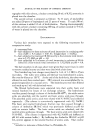
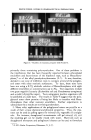
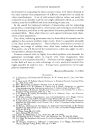
482 JOURNAL OF THE SOCIETY OF COSMETIC CHEMISTS TABLE VI--CoMPOSlTION OF EMULSIONS PREPARED WITH POLYGLYCEROL ESTEKS Formula #1 (Vegetable Oil Emulsion) Neobee 54* .................... 6% Decaglycerol decaoleate ......... 5% Decaglycerol decastearate ........ Neobee t .................... 45% Water ........................ 39% Formula//3 (Mineral Oil Emulsion) Mineral oil (50--60 risc.) ........ 38% Petrolatum ................... Decaglycerol decastearate ........ 3% Decaglycerol tetraoleate ......... 5% Lanolin ........................ Beeswax ....................... 3% Magnesium stearate ............. Water ...................... 32.6% Borax ...................... 0.4% Formula//5 (Cosmetic Emulsion) Isopropyl myristate ............. Cetyl alcohol .................. .4/0 Decaglycerol tetraoleate ......... l Decaglycerol mono61eate ......... Stearic acid .................. 18% Spermaceti ..................... Glycerol ....................... 4% Hexachlorophene ............. 0.5% Water ...................... 66.5% Formula #2 (Peanut Oil Emulsion) Beeswax: ..................... Neobee 54* .................... 3% Magnesium stearate ............ 1% Decaglycerol decaoleate ...... 10% Peanut oil .................... 45% Borax ....................... 0. Water ..................... 37.8% Formula//•t (Mineral Oil Emulsion) Mineral oil ................... 25% Petrolatum ........... 25% Decaglycerol decaoleate ......... Decaglycerol decalinoleate ....... 3% Beeswax ....................... 7% Glycerol ...................... 3% Borax ....................... 0.5% Water ...................... 32. Formula//6 (Cosmetic Emulsion) Neobee M5 :• ................... 3% Cetyl alcohol ................. Decaglycerol decalinoleate ....... Decaglyce• ol monopalmitate ..... 4% Drewmulse 1128{} ............... 8% Cabosil©[[ ..................... 1% Glycerol ....................... 3 % Water ....................... 73 % * Glyceryl tripalmitate (Drew Chem. Corp.). t Modified coconut triglyceride (Drew Chem. Corp.). :[: Modified coconut triglyceride (Drew Chem. Corp.). {} Self-emulsifying glyceryl monostearate (Drew Chem Corp.). [[ A grade of silica manufactured by G. L. Cabot Co. 'I-ABLE V---ZONES OF INHIBITIO•q Emulsifier E. coli Ps. aeroginosa d. niger , Concentration of Emulsifier Used 0 o. 5% 1.0% 2.0% 0 o. 5% 1.0% 2.0% 0 0.5% 1.0% 2.0% POE Sorbitan mono61eate 7 - - - 5 - - - 8 POE Sorbitan monolaurate .. 5 - - .. - - - .. -' POE (39) stearate .. - - - .. - - - .. - - POE (23) laurylalcohol .. - - - .. - - - .. - - - Decaglycerol mono61eate* .. 10 12 10 .. 3 2 - .. 6 6 6 Decaglycerol monolaurate* .. 15 15 10 .. 5 3 2 .. 6 8 7 Decaglycerol monopalmitate* .. 12 8 10 .. 5 2 1 .. 6 6 7 Hexaglycerol monoiJleate* .. 20 10 5 .. 5 1 - .. 9 7 3 All tests were run using 0.5% G-11 in alcoholic soluiion, with and without emulsifiers. - indicates no inhibition. Numbers indicate the zone of inhibition in ram. * Please note that no precipitate occurred in alcohol at these concentrations of emulsifier.

POLYGLYCEROL ESTERS IN PHARMACEUTICAL PREPARATIONS 483 self-emulsifying waxes. Thus, the addition of hexaglycerol mono61eate to mineral oil produces a clear oil which is readily rinsed off the hands with water. Other esters, such as decaglycerol tetraoleate, can be used in a similar fashion with vegetable oil. The fact that the polyglycerol esters are edible opens up many possible applications in the pharmaceutical field. Thus, their use as emulsifiers in edible emulsions containing vegetable oils and as solubilizers for vitamins is currently under investigation. SUMMARY The chemical and physical characteristics of a series of polyglycerol esters are presented. The utility of this versatile group of compounds is illus- trated. The stability of O/W and W/O emulsions prepared with the aid of these esters is examined. Formulations of practical cosmetics con- taining polyglycerol esters are given. Preliminary tests suggest that these emulsifiers do not interfere with the activity of Hexachlorophene. (Received January 15, 1964) REFERENCES (1) W. C. Griffin in E. Sagatin, Cosmetics: Science and Technology, Interscience Publishers, Inc., New York, 1004-05 (1955). (2) W. F. Rehm, Milchwissenschaft, 16, 310 (1961). (3) A. Bille and A. Mirimanoff, y. Pharm. Pharmacol., 2, 685 (1950). (4) M. G. deNavarre and H. E),Bailey, y.•Soc. Cosmetic Chemists, 7, 427 (1956). (5) M. G. deNavarre, Ibid., 8, 68 (1957). (6) L. F. Tice and M. Bart, Ibid., 9, 171 (1958). (7) D. L. Wedderburn, Ibid., 9, 210 (1958). (8) R.G. Harry, Modern Cosmeticology, Leonard Hill (Books) Ltd., London, 1962, p. 566. (9) N.H. Nash and V. K. Babayan, Baker's Digest, 37, 72 (1963). (10) Patent Pending Serial No. 14477. (11) K. S. Markley, Fatty .4cids, Part 2, Interscience Publishers, Inc., New York, 1961, pp. 826-27. (12) H. Kaunits, C. A. Slanetz and V. K. Babayan, y..4m. 01l Chemists' Soc., 41, 434 (1964). (13) Federal Register, July 2, 1963, p. 6783 March 19, 1963, pp. 2675-76. (14) W. C. Griffin, y. Soc. Cosmetic Chemists, 1, 311 (1949). (15) W. C. Griffin in E. Sagatin, Cosmetics: Science and Technology, Interscience Publishers, • Inc., New York, 1955,.pp. 1018-20. (16) [dem., Ibid., p. 1029.
Purchased for the exclusive use of nofirst nolast (unknown)
From: SCC Media Library & Resource Center (library.scconline.org)