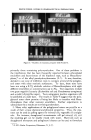
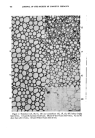
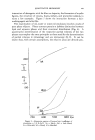
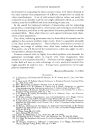
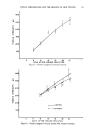
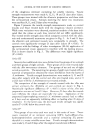
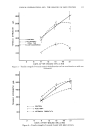
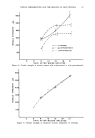
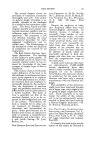
480 JOURNAl. OF THE SOCIETY OF COSMETIC CHEMISTS and decaglycerol decastearate (10-10-0/10-10-s) the second best stabil- ity was obtained with decaglycerol decaoleate (10-10-0) alone. Similar results were obtained with Neobee MS, peanut oil and corn oil. Based on these results several W/O emulsions which could be readily adapted for cosmetic or pharmaceutical use were prepared. These formula- tions are shown in Table IV. It has been possible to prepare many excellent cosmetic creams and lotions by the use of these esters. Decaglycerol monoesters, such as the 7-/' AV IN.oeA. O/ LIGHTMINEoeAL OIL .i. . . -- ,• .'" ß ,,: •. :•m• • ...s•.•• ...... Figure 1.--Stability of emulsions prepared Figure 2.--Stability of emulsions prepared with light mineral oil. with heavy mineral oil. palmitate, stearate and oleate, have been found to be very effective hydro- philic emulsifiers, while decaglycerol tri- and tetra-esters, such as decaglycerol tristearate or decaglycerol tetraoleate, are excellent auxiliary emulsifiers. Two formulations using these esters are included in Table IV. 2. Although a great variety of nonionic O/W emulsifiers is currently available, there are still some problems that occur in the use of nonionics,

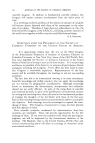
POLYGLYCEROL ESTERS IN PHARMACEUTICAL PREPARATIONS 481 ...... • . . .' '."c":•' •""• '..•":.:.'.:.." .'.:::.:...:V.%.•:•...•:• ..................... •0•o-0 •-•-o .'::. ............... .:::...... .... ' NEOBE.E 0 . . ß • : '• :. •: .: ....... • .. • .... . '•-• .... •=•.: ..- •.o:•--•..2%'.:.•..•:•:=•: '.: ...... ..•- - ' ..... • ' :•':::":• •" '•,• ".•4•.•:• ........... ... . ..... . ....... . .... Figure &--Stability of emulsions prepared with Neobee O. primarily those containing polyoxyethylene. One of these problems is the interference that has been frequently reported between ethoxylated emulsifiers and bacteriostats of the bisphenol type, such as Hexachloro- phene,* or of the alkyl parahydroxybenzoates (2-7). It was, therefore, decided to use zone of inhibition tests to compare several of the polyglyc- erol esters with other nonionic surfactants. To date, these tests have been run using a 0.5% alcoholic solution of Hexachlorophene with eight different emulsifiers at concentrations up to 2%. Test organisms include two gram negative bacteria (Escherichia coli and Pseudomonas aeruginosa) and a mold (/Ispergillus niger). Tests using gram positive organisms will be published at a later date. The results in Table V suggest that the poly- glycerol esters show promise of being less likely to interfere with Hexa- chlorophene than other nonionic emulsifiers. Further experiments to substantiate these results are now being undertaken. 3. Many other applications of the polyglycerol esters are possible as a result of their unique chemical and physical properties. Thus, the stea- rates can be used as gelling agents for mineral oils, vegetable oils and gly- cols. For instance, decaglycerol monostearate will gel mineral oil, and the resulting gel can be readily rinsed with water. Materials such as decaglycerol tristearate and polyglycerol oleates can be used to formulate * G-11©--Sindar Corporation, Delawanna, N.J. (7).
Purchased for the exclusive use of nofirst nolast (unknown)
From: SCC Media Library & Resource Center (library.scconline.org)