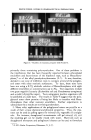
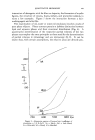
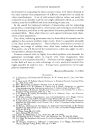
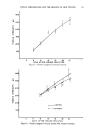
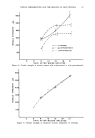
512 JOURNAL OF THE SOCIETY OF COSMETIC CHEMISTS peated using available materials which had been reported to have an ef- fect upon wound healing. The following preparations were evaluated: Series Treatment Material II (A) Ointment containing Vitamins A and D (B) Liquid containing 2% allantoin and 5% refined coat tar extract (C) Cream containing 0.01% 6%9a-ditquoro-16a-hydroxy- prednisolone acetonide III (A) /lloe vera extract in an ointment base (B) Essential oil (steam distillate) from leaves of.4rtemisia tridentata IV (A) Ointment containing 0.01% 6a,9r•-difluoro-16a-hydroxy prednisolone acetonide (B) Cream containing 2% pantothenylol All test materials were applied once daily over the healing wound and surrounding skin until the day on which the tensile strength measurements were made. Series I. Control Group Sixty mice were divided into six groups of ten animals each. After surgery, each animal was housed in an individual cage and given food and water ad libitum. The tensile strength of the healing wounds was de- termined 6, 9, 12, 15, 18 and 21 days after wounding, with one group of mice being sacrificed at each time interval. Figure 1 shows the results obtained over the 21 days experimental period. There is a time-related increase in the tensile strength of the wounds. The ranges indicated above and below the central point at each interval represent the standard error calculated for that group of measure- ments. Through the 15 day determinations, the standard errors remained fairly constant at about plus or minus 20 g. At 18 and 21 days after sur- gery a wider range was observed as higher tensile strengths were reached and the standard errors increased to 40 to 50 g. A simple calculation showed that despite the absolute increases in standard error, these values generally represented between 5 and 10% of the group average. Results obtained indicate that with the basic techniques employed statistically acceptable measurements could be made and that the determination of increases in tensile strength may be a useful indication of the skin wound repair process. Series H Ninety-six mice were used in these tests. They were divided into six- teen groups of six animals each and wounded and housed as in Series I. Five groups served as controls, and five groups received daily applications

TOPICAL PREPARATIONS AND THE HEALING OF SKIN WOUNDS 513 600 m 50C z 400 ,., 300 • 200 IOO 600 500 4OO 3OO •00 lO0 3 6 9 12 15 18 21 DAYS AFTER WOUND INFLICTED Figure-1.--Tensile strength of untreated wounds. : : CONTROL x-- -- ----XOINTMEN T 3 6 9 12 15 18 21 DAYS AFTER WOUND INFLICTED Figure 2.--Tensile strength of wounds treated with vitamin ointment.
Purchased for the exclusive use of nofirst nolast (unknown)
From: SCC Media Library & Resource Center (library.scconline.org)