RHEOLOGICAL CHANGES IN EMULSION PRODUCTS WHEN AGED 601 I t

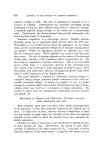
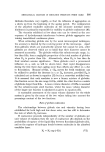
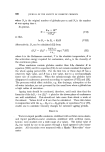
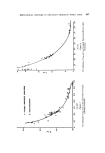
602 JOURNAL OF THE SOCIETY OF COSMETIC CHEMISTS corresponding •0. Accounting for the influence of D= in this way results in an apparent increase in v at the steady state which is less than that suggested by equation X (Fig. 7). (Received: 17th December 1964) REFERENCES (1) Becher, P. Emulsions. Theory and Practice 331 (1957) (Reinhold Publishing Co., New York). (2) Rehfeld, S. J. f. Phys. Chem. 66 1966 (1962). (3) Void, R. D. and Groot, R. C. J. Phys. Chem. 66 1969 (1962). (4) Void, R. D. and Groot, R. C. J. Soc. Cosmetic Chemists 14 233 (1963). (5) Void, R. D. and Groot, R. C. J. Colloid Sci. 19 384 (1964). (6) Void, R. D. and Groot, R. C. Paper presented at •lth Intern. Congr. Surface Activity, Brussels (Sept. 1964). (7) Sherman, P. Proc. 3rd Intern. Congr. Surface Activity 2 596 (1960). (8) Sherman, P. J. Phys. Chem. 67 2531 (1963). (9) Sherman, P. Paper presented at •lth Intern. Congr. Rheology, Brown University, Rhode Island, U.S.A. (September 1963). (10) Albers, W. and Overbeek, J. Th. G..[. Colloid Sci. 15 489 (1960). (11) Van den Tempel, M. Proc. 2nd Intern Congr. Surface Activity 1 493 (1957). (12) Lawrence, A. S.C. and Mills, O. S. Disc. Faraday Soc. 18 98 (1954). (13) Sherman, P. Paper presented at 4th Intern. Congr. Surface Activity, Brussels (September 1964). (14) Mooney, M. f. Colloid Sci. 1 195 (1946). DISCUSSION MR. M. J. THORNXON: The paper implies that the rheological properties are those of a Bingham plastic •t higher shear rates, i.e. the viscosity is independent of rate of shear above a certain value. Have you tried to fit the curves obtained to any published theological equation ? THe. L•CXUR•R: There are two types of rheological equation that one can apply, and I am not quite sure which one you are referring to. You have first of all the stress-rate of shear type of equation which one can try to use. The other type .relates viscosity to the volume concentration of disperse phase and other components of the emulsion. All these equations suffer the disadvantage that the authors have applied them to their own data but have very rarely tried to apply them to any other data. As soon as you •ry to do this you run into trouble. We have not looked at the stress-rate of shear relationship because we were not studying the problem as a basic rheological one. We have tried to relate viscosity to volume concentration, etc., and in a review (15) we have discussed this particular question in great detail. When developing equa- tions of this type, the great tendency has been to try and devise an equation which is an extension of the original equation of Einstein, and people tend to forget the limitations imposed by Einstein on the applicability of his equation. They have tried to introduce factors, apart from the straightforward relationships between the viscosity and the volume concentration of disperse phase, which in essence are powers of the volume concentration. There is a wide range of such equations which has (15) J. Pharm. Pharmacol. 16 1 (1964).
Purchased for the exclusive use of nofirst nolast (unknown)
From: SCC Media Library & Resource Center (library.scconline.org)