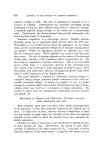
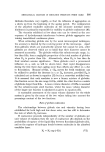
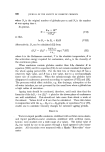
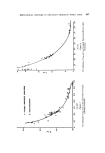
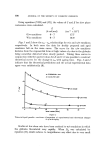
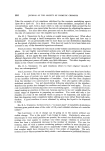
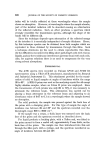
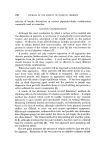
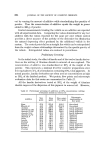
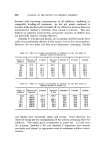
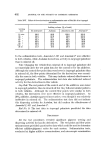
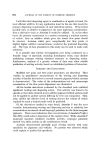
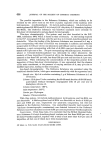
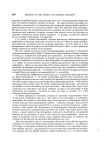
626 JOURNAL OF THE SOCIETY OF COSMETIC CHEMISTS decrease with increasing concentrations of all additives, exhibiting no comparable levelling-off tendencies. As the wet points continued to decrease while the flow points levelled off, the difference between these two measurements reached a minimum, then started to increase. This may indicate an optimum concentration and greater amounts of additive may not materially improve wetting efficiency. Amerlate P, Viscolan and lanolin, all containing estertried lanolin fatty acids, were particularly effective in this system, even at low concentrations. However, the wet point and flow point dispersions containing Viscolan Table III Effect of varying concentration of additives on the wet point of titanium dioxide in mineral oil Concn. of Mineral oil ,4 cetulan zi merchol zi ruerlate P Viscolan Lanolin additive (control) L-101 -- 0.0% 57.0 57.0 57.0 57.0 57.0 57.0 2.5 -- -- -- 36.0 36.0 37.0 5.0 50.5 47.3 46.5 28.3 32.0 31.0 10.0 44.0 34.3 29.5 22.8 25.0 26.0 15.0 41.0 21.3 18.3 20.0 17.0 18.0 20.0 36.0 14.0 11.5 15.5 12.5 14.5 25.0 33.5 9.0 5.0 7.0 4.5 7.5 Table IV Effect of varying concrntration of additives on the flow point of titanium dioxide in mineral oil Concn. of Mineral oil ,,lcetulan zimerchol ,elmerlate P Viscolan Lanolin additive (control) L-101 --_ 0.0% 270.5 270.5 270.5 270.5 270.5 270.5 2.5 (267.5) -- -- 93.0 94.0 107.6 5.0 (264.5) 247.8 264.0 78.3 50.3 49.0 10.0 (258.5) 242.4 238.4 60.7 46.0 43.6 15.0 (252.5) 31.5 51.0 55.8 25.0 30.8 20.0 (246.5) 33.5 46.5 50.9 26.0 31.8 25.0 (240.5) 26.5 56.0 51.0 32.3 31.3 , and lano!in were excessively sticky and stringy. Some dilatency was observed during the test manipulations of the systems containing these two additives. This might prove troublesome in actual use. In both tests, the Acetulan, Amerchol L-707 and Amerlate P dispersions were smooth, non-tacky and elegant in appearance even at maximum additive concen- trations.

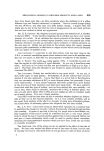
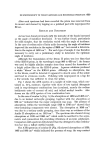
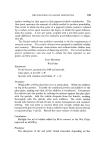
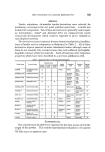
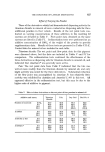
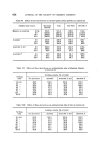
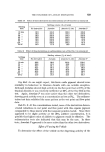
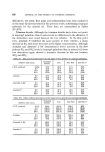
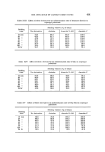
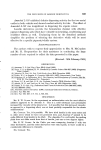
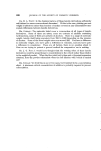
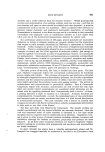
THE INFLUENCE OF LANOLIN DERIVATIVES 627 Effect of Varying the Powder Three of the derivatives which had demonstrated dispersing activity for titanium dioxide in mineral oil were evaluated as dispersing aids for three additional powders in that vehicle. Results of the wet point tests con- ducted on varying concentrations of these additives in the resulting 12 systems are detailed in Table V. Flow point data obtained on the same systems are listed in Table VI. Sedimentation tests were performed at an additive concentration of 100•/o of the weight of the powder to provide supplementary data. Results of these tests are presented in Tables VII-X. Control data for mineral oil are included in each table. Titanium dioxide: The wet point and flow point data for this pigment were discussed above, but the data are included in Tables V and VI for comparison. The sedimentation tests confirmed the effectiveness of the three derivatives as dispersing aids for titanium dioxide in mineral oil, and indicated that Amerlate P was generally more active. Talc: The wet point data from Table V indicated that the talc was wetted more readily than the titanium dioxide by mineral oil, and only slight activity was noted for the three derivatives. Substantial reduction of the flow point was accomplished by Amerlate P, but relatively little activity was exhibited by Acetulan and Amerchol L-707 in this test. All appeared effective in the sedimentation test, but this may be due to the higher ratio of additive to pigment. Table V Effect of three derivatives on the wet point of four powders in mineral oil ,, Additive and concn. Titanium Talc Oxy Red Red No. 9 dioxide Mineral oil (control) 0.0% 57.0 45.6 49.5 42.5 5.0 50.5 38.5 43.0 37.5 10.0 44.0 33.0 37.5 32.5 20.0 36.0 22.5 (26.0) (23.0) A cetulan 5.0 47.3 34.5 40.0 38.0 10.0 34.3 28.0 29.5 32.0 20.0 14.0 15.0 7.5 17.5 A merchol L -101 5.0 46.5 32.5 36.5 32.0 10.0 29.5 25.5 29.5 27.5 20.0 11.5 18.0 7.0 16.0 Amerlate P 5.0 28.3 35.0 21.5 40.0 10.0 22.8 27.0 11.0 35.0 20.0 15.5 18.0 3.0 19.5
Purchased for the exclusive use of nofirst nolast (unknown)
From: SCC Media Library & Resource Center (library.scconline.org)