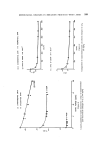
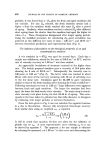
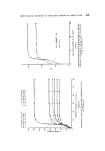
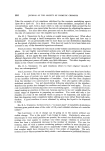
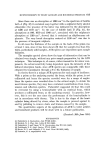
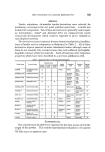
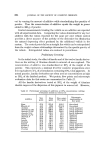
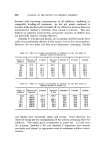
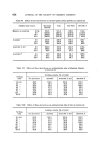
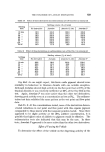
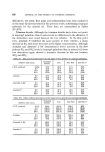
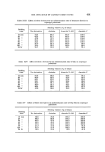
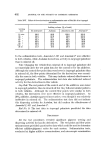
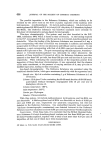
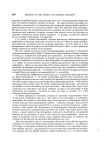
4•32 JOURNAL OF THE SOCIETY OF COSMETIC CHEMISTS Table XVI Effect of three derivatives on sedimentation rate of Red No. 9 in isopropyl palmirate Settling volume (% of total) Settling time No derivative A cetulan A merchol L-101 A ruerlate P 10 min 98.8 98.8 100.0 100.0 20 ,, 96.9 97.6 98.8 100.0 30 ,, 92.7 95.1 95.1 100.0 40 ,, 92.7 93.4 92.7 98.8 60 ,, 90.9 90.2 89.9 98.8 90 ,, 80.5 85.4 83.6 98.8 120 ,, 73.2 80.5 78.0 95.1 24 hr 21.9 19.5 24.4 53.7 In the sedimentation tests, Amerchol L-IOI and Amerlate P were effective in both vehicles, while A cetulan showed less activity in isopropyl palmitate than in mineral oil. Talc: Changing the vehicle from mineral oil to isopropyl palmitate did not materially alter the wet point data for the control or for the additives. Although the control flow point data were lower in isopropyl palmitate than in mineral oil, the flow points determined for the derivatives were essenti- ally the same in both vehicles. This may indicate reduced effectiveness in isopropyl palmitate. The sedimentation test data also indicated reduced activity for the derivatives in this vehicle. Oxy Red: The wet points of the control and of the additives were lower in isopropyl palmitate than in mineral oil but they followed similar patterns in both vehicles. Although the control flow points were similar in both vehicles, the derivatives were more effective in isopropyl palmitate. At 20% additive, A cetulan appeared most active, even though it was relatively ineffective in mineral oil. The sedimentation test data did not indicate this dispersing activity for A cetulan, but did confirm the effectiveness of Amerchol L-IOI and Amerlate P. Red No. 9: The test data in isopropyl palmitate paralleled the data determined in mineral oil. DISCUSSION All the test procedures revealed significant pigment wetting and dispersing activity for lanolin derivatives. The wet point and flow point measurements provided quantitative data which could be used to determine efficient additive/pigment ratios for each system. Sedimentation tests, conducted at higher additive concentrations, and microscopic examination

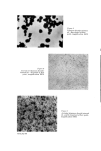
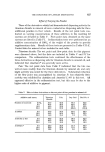
THE INFLUENCE OF LANOLIN DERIVATIVES 63• of the flow point dispersions, although in themselves neither definitive nor quantitative, proved valuable supplementary procedures. In several instances, an additive flow point had approximately the same numerical value as the control. Microscopic examination of these dispersions revealed that the additive sample was partly deflocculated and the control was completely flocculated. This indicated that the additive should be explored further at higher concentrations. Microscopic exami- nation thus anticipated the sharp drops in the wet points and flow points. of the mineral oil/titanium dioxide dispersions containing A cetulan and Arnerchol L-707. Such sharp drops probably represent reaching the critical ratio of pigment/additive/vehicle required for complete dispersion. Similarly, the sedimentation test often indicated activity for systems which appeared comparatively inactive in preliminary wet point and flow point measurements. This was noted with the Amerlate P/Red No. 9 • combination and indicated the advisability of continuing the tests at higher additive concentrations. In the titanium dioxide/mineral oil system, lanolin and its liquid fraction demonstrated good wetting and dispersing properties. However, the dispersions were tacky and stringy. Potentially troublesome dilatency was also noted. By contrast, all the other lanolin derivative dispersions were smooth and elegant and handled easily in all test manipulations. Thus the chemically modified derivatives retained the desirable wetting action while eliminating the inherent disadvantages of lanolin. The initial screening tests on the titanium dioxide/mineral oil system indicated that those derivatives containing free or esterified lanolin fatty acids were the most active dispersing aids. The lanolin fatty acids consist of normal, branched and hydroxy acids having a wide range of molecular weights. Because of their unique chemical configuration, these fatty acids exhibit functional properties vastly different from those of conventional fatty acids. This is clearly demonstrated by the superior performance of Amerlate P (isopropyl lanolate) in contrast to the inactivity manifested by isopropyl palmirate. No overall rating of relative efficiency can be made for pigment wetting and dispersing agents because of the many criteria by which efficiency may be judged. An ideal agent would achieve complete dispersion at a low additive to pigment ratio in a minimal amount of vehicle and would be active in many systems. Because of the specific action of wetting additives,. the ideal dispersing aid may well be found in a combination of surface active- materials.
Purchased for the exclusive use of nofirst nolast (unknown)
From: SCC Media Library & Resource Center (library.scconline.org)