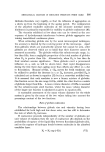
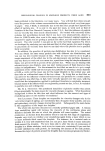
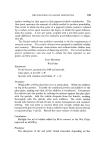
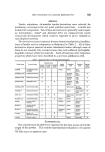
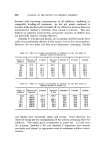
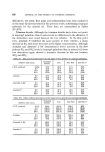
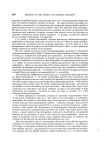
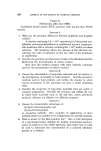
THE INFLUENCE OF LANOLIN DERIVATIVES 623 Additives Twelve anhydrous, oil-miscible lanolin derivatives were selected for preliminary screening in the wet point and flow point tests. Lanolin was included for comparison. Ten of these derivatives are presently used in make up formulations Arlan* and Amerchol LFA are comparatively recent commercial developments which could be expected to prove valuable in such dispersed systems. The derivatives tested represent diverse chemical and physical modifica- tions of lanolin and its components as illustrated in Table I. All of these derivatives depress mineral oil-water interfacial tension although some of them do not emulsify this system because they lack sufficient hydrophilic- lipophilic contrast within the molecule. Each of them has other important properties which have been described in a previous publication (10). Table I Summarized data on selected landin derivatives Derived from Trade name Generic name Added Chemical Physical Emulsi, lanolin lanolin lanolin radical type form lying alcohols acids esters activity ,, Acetulan acetylated lanolin X acetyl esters thin alcohols liquid Amerchol L-101 multisterol extract X alcohols, thin X steroIs liquid merchol CAB multisterol extract X alcohols, soft X steroIs solid Amerchol H-9 absorption base X X alcohols, soft X steroIs, solid esters ., •nerchol LFA lanolin fatty acids X fatty acids plastic, X firm solid -- A•ner/ate P isopropyl lanolate X isopropyl esters soft buttery X solid .4rlan (11) rearranged lanolin X X X fatty acids, soft solid X esters Modula*} (12) acetylated lanolin X acetyl esters soft solid Polylan lanolin alcohol X linoleyl esters viscous linoleate liquid Ricilan B lanolin alcohol X ricinoleyl esters vi.qcous ricinoleate liquid Ricilan C acetylated lanolin X ricinoleyl, esters viscous alcohol rieinoleate acetyl liquid Viscolan lanolin oil X esters viscous X (dewaxed lanolin) liquid Lanolin refined wool fat X esters soft solid X EXPERIMENTAL The concentration of additive is expressed in the data as per cent of the weight of the powder. This enables experimental evaluation to be carried *All trade names are printed in italics.

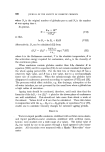
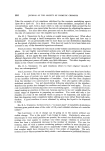
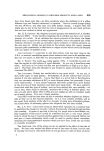
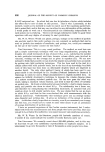
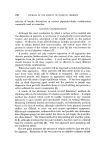
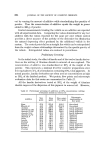
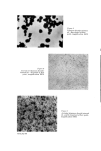
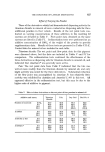
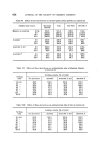
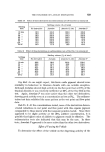
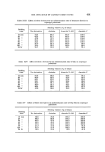
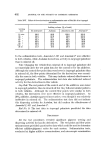
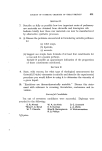
624 JOURNAL OF THE SOCIETY OF COSMETIC CHEMISTS out by varying the amount of additive while standardizing the quantity of powder. Thus the concentration of additive equals the weight in grams added to 100 g of powder. Control measurements treating the vehicle as an additive are reported with all experimental data. Comparing the values determined for any test additive with the values reported for the same per cent vehicle control provides a direct measure of the activity of the derivative by eliminating the natural depressing effect produced by the additional vehicle in the system. The control points fall on a straight line which can be extrapolated from the weight-volume relationships determined by the specific gravity of the vehicle. Extrapolated values are enclosed in parentheses. Preliminary Screening In the initial study, the effect of lanolin and of the twelve lanolin deriva- tives on the wetting of titanium dioxide in mineral oil was explored. The concentration of additive was standardized at 10% of the weight of the powder. This represents a minimal level for cosmetic preparations since it is equivalent to 1% of a formulation containing 10% total pigments. In actual practice, lanolin derivatives are often used at concentrations as high as 10% of the finished product. Wet points, flow points and microscopic' evaluation data for this series are summarized in Table II. All the lanolin derivatives tested at 10% of the weight of titanium dioxide improved the dispersion of this pigment in mineral oil. However• Table II Preliminary screening of additives at 10% concentration wetting of titanium dioxide in mineral oil Additive Wet Flow Flow point- Microscopic point point Wet point examination at flow point ,.. None 57.0 270.5 213.5 flocculated Mineral oil 44.0 (258) (214.5) flocculated •1 cetulan 34.3 242.4 208.1 partly dispersed •trnerchol L-101 29.5 238.4 208.9 partly dispersed A rnerchol CA B 35.0 229.6 194.6 partly dispersed Arnerchol H-9 27.5 103.0 75.5 partly dispersed A rnerchol L FA 25.0 45.6 20.6 dispersed Arnerlate P 22.8 60.7 37.9 dispersed A rlan 24.5 54.0 29.5 dispersed Lanolin 26.0 43.6 17.6 dispersed Modulan 30.8 45.7 14.9 dispersed Polylan 29.5 137.1 107.6 partly dispersed Ricilan B 36.0 136.4 100.4 partly dispersed Ricilan C 27.5 165.8 138.3 partly dispersed Viscolan 25.0 46.0 21.0 dispersed
Purchased for the exclusive use of nofirst nolast (unknown)
From: SCC Media Library & Resource Center (library.scconline.org)