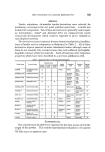
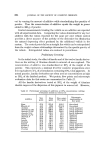
618 JOURNAL OF THE SOCIETY OF COSMETIC CHEMISTS activity of lanolin derivatives in various pigment/vehicle combinations commonly used in cosmetics. GENERAL CONSIDERATIONS Although the exact mechanism by which a surface active material aids the dispersion of pigments is not known, it undoubtedly lowers interfacial tension and promotes adsorption of the liquid vehicle on the particle surface. If effective, it also aids lubrication, mobility and plastic flow. In order to obtain desired flow characteristics, the vehicle must often be present in excess of the volume needed to just fill the void between the particles (critical pigment volume) (7). A perfect system not only requires separation of all aggregates into discrete particles (deflocculation) but also removal of air, water and other impurities from the particle surface. A good wetting agent for pigments should function in all these respects and be effective in many different pigment/vehicle combinations. When thoroughly wet, a powder will be dispersed as individual particles rather than aggregates. These particles will then settle slowly to a com- pact dense mass which will be difficult to resuspend. By contrast, a nonwetted powder will disperse as aggregates which will settle more rapidly and will attain a larger equilibrium volume. It has been suggested that an ideal dispersing agent would wet the particles to permit easy dispersion, then partially flocculate them to retard settling and promote a softer sediment for easier resuspension (8). A search of the literature revealed several laboratory methods for obtaining data on the adsorption of vehicles on particle surfaces. A simple method was desired which could be readily employed in any cosmetic laboratory to give reliable and reproducible results on wetting efficiency. Measuring interfacial tension and contact angles, and calorimetric methods based on the heat of wetting, although valuable for basic physical chemical studies, are difficult to carry out and require specialized equipment. Microscopic examination, sedimentation tests and particle size determina- tions (Hegman gauge) are also useful, but these do not supply the quantita- tive data desired. The Daniel method for determining wet and flow points (8, 9), although developed for the paint industry, has been used on a limited basis for cosmetic materials (6). This test appeared most promising and was studied in detail. The wet point measures the amount of vehicle needed to just wet all of the pigment. Reduction of the wet point by an additive indicates initial

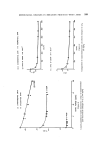
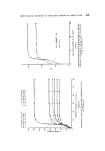
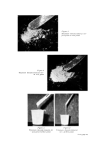
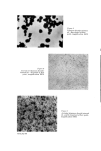
THE INFLUENCE OF LANOLIN DERIVATIVES 619 surface wetting by that agent in that pigment/vehicle combination. The flow point measures the amount of vehicle needed to produce pourability. The extent to which the flow point of a pigment/vehicle system is reduced by a surface active agent measures the degree to which the agent defloccu- lares the system. A low wet point, coupled with a low flow point and a small difference between the two indicates good deflocculation or disper- sion (8). The Daniel method was modified somewhat to fit the requirements of cosmetic systems. The results obtained were analysed to establish validity and accuracy. Microscopic observations and sedimentation studies were employed as auxiliary measures of dispersing activity. The revised method proved satisfactory, and was used to obtain the data reported on wet points and flow points. TEST }V[ETHODS Wet Point Equipment 10 ml burette, graduated in 0.05 ml intervals. Glass plate, at least 8" x 8". 5tt Spatula with stainless steel blade, 4" x • . Procedure Weigh 2.00 • 0.01 g of powder on to a watch glass. Weigh the additive on top of the powder. Transfer the combined powder and additive to the glass plate, making sure that all the additive is transferred. Incorporate the additive into the powder by rubbing the mixture against the glass plate with the spatula. Add the vehicle dropwise from the burette, working thoroughly with the spatula after each addition. The entire mixing should take between 10 and 15 min to ensure homogeneous and complete wetting. The end point is reached when just enough vehicle has been incorporated into the powder to form a coherent mass which does not break or separate (Figs. 7 and 2). Record the exact volume of vehicle added. Calculation: Multiply the ml of vehicle added by 50 to convert to the Wet Point expressed as ml/100 g. Precision: The sharpness of the end point varied somewhat depending on the
Purchased for the exclusive use of nofirst nolast (unknown)
From: SCC Media Library & Resource Center (library.scconline.org)