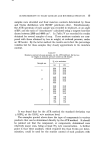
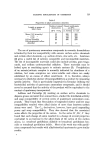
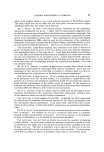
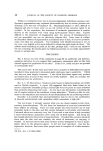
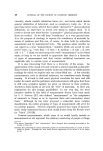
CATIONIC EMULSIFIERS IN COSMETICS 19 Table I Properties of alk' 71 ammonium chlorides Length or source of alkyl chain Mono C. 12 trimethyl ,, C.16 ,, C.18 Di•oco dimetl•l Dihydrogenated tallow dimethyl Surface tension (dynes/cm) 25øC 0.1% 33 34 34 30 37 Phenol coefficients at 37øC S. Aureus 25O 415 185 430 E. Coli 300 300 165 27O The use of quaternary ammonium compounds in cosmetic formulations is limited by their low compatibility with anionic surface active chemicals and certain other chemicals, e.g. sodium citrate, zinc salts, etc. Lawrence (2) gives a useful list of cationic compatible and incompatible materials. The list of incompatible materials could also include pectins, gum traga- canth, and sodium carboxymethyl cellulose. These materials may be looked upon as sensitizing agents to cationic systems ($). Precipitation of an anionic/cationic complex is normally indicated by cloudiness of a solution, but some complexes are water-soluble and others are easily solubilized by an excess of either constituent. It is, therefore, always necessary to check for absence of incompatibility in a product by measuring specific activity. This is particularly important in formulae utilizing the bactericidal activity of quaternary ammonium compounds, and it should never be assumed that the activity of the product will be equivalent to the content of quaternary incorporated. Addison and Furmidge (4) working on surface active chemicals to disperse grease and suint from animal fleece, studied the interfacial activity and soap compatibility of several series of quaternary ammonium com- pounds. They found that flocculation of suspended matter and low soap compatibility resulted when alkyl chains of more than fourteen carbon atoms were used. The C•4 derivatives, however, have good suspending power and soap compatibility. They also showed that the associated anion affects the properties of the cation. In the series Ci-, Br-, I- they found that each change of anion resulted in a change of overall properties equivalent to an increase in the alkyl chain of the cation of two carbon atoms, i.e. octadecyl pyridinium chloride ---- hexadecyl pyridinium bro- mide ---- tetradecyl pyridinium iodide. Most of the work was with pyridi-. nium compounds but results with alkyltrimethyl quaternaries gave similar results.

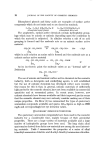
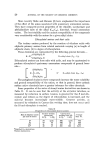
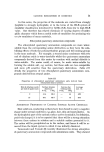
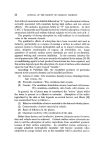
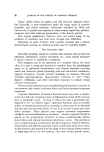
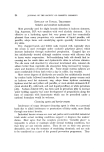
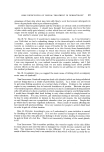
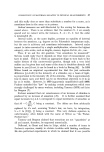
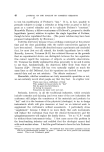
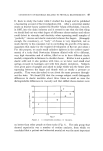
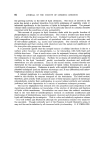
2O JOURNAL OF THE SOCIETY OF COSMETIC CHEMISTS More recently Shibe and Hanson (5) have emphasized the importance of the effect of the anton associated with quaternary ammonium cations. They have compared several properties of the chloride, saccharinate and phthalimidate salts of the alkyl (C•-C,), dimethyl, benzyl ammonium cation. The heat stability and the anionic compatibility of the compounds vary considerably with the anions for a given alkyl chain. Ethoxylated amines and their salts The tertiary amines produced by the reaction of ethylene oxide with aliphatic primary amines form related materials varying (a) in length of aliphatic chain, (b) in degree of ethoxylation. These chemicals are represented by the following general formula:-- CH2CH•O)x H R. R=alkyl chain (C•2 - C•8) Nx(CH•CH•O)y H Ethoxylated amines can form salts with acids, and may be quaternized to produce ethoxylated quaternary ammonium compounds of general form- ula:- R. N--CH 8 X- R----alkyl chain (C•, - C•8) (CH2CH,O)y The polyglycol chains in these compounds increase the water solubility and general compatibility of the cation, so that in general, these cationic surface active chemicals have a greater tolerance for other chemicals. Some properties of the series of stearyl amine derivatives are shown in Table II. It can be seen that the activity at the air/water interface, as measured by reduction in surface tension, is greatest for the 5 mol eth- oxylate and reduces as the degree of ethoxylation is increased, and the material becomes increasingly water-soluble. Greatest activity, as measured by reduction in Canvas disc wetting time, does not occur until the 10 mol ethoxylate is reached. Table II Properties of ethoxylated stearyl amines Surface tension Canvas disc Mol of ethylene oxide (dynes/cm) wetting time (6) Average per mol of amine 0.1% 1.0% 0.1% 1.0% tool. wt. 5* 34 (gell) 360 (gell) 495 5'• 34 33 226 12 482 15• 41 40 157 27 925 50* 49 47 360 360 2470 *Distilled C•s derivatives. iTallow derivatives.
Purchased for the exclusive use of nofirst nolast (unknown)
From: SCC Media Library & Resource Center (library.scconline.org)