CATIONIC EMULSIFIERS IN COSMETICS 25 The reaction product of anionic and cationic surface active chemicals can also be of value, and a patent (21) refers to the use of such a compound as a water repellant carrier for therapeutically active substances. Cationic surface active chemicals exhibit a high degree of substantivity towards keratin and the beneficial effects of an adsorbed layer on hair has been claimed in several patents (11-13, 22) and mentioned elsewhere (23,24). Cationic chemicals have been used as solubilizing agents for certain dye- stuffs giving products having high substantivity and dye levelling proper- ties. Emulsions are often desirable for aerosol formulations, particularly those designed for cosmetic use. The results of a study of a wide range of surface active chemicals showed that all classes have members which give good emulsifying and foaming characteristics. Of the cationic materials investigated the difatty quaternaries, e.g. distearyl dimethyl ammonium chloride, gave results similar to an alcohol sulphate, a sodium sulpho- succinate di-ester and a sorbitan ester. The effect of various additives on the propellant water systems were also studied and it was found that the emulsions were very stable, and not sensitive to other ingredients likely to be found in cosmetic formulations. A polyethoxylated laurylamine having 5 tool of ethylene oxide was found by Lesshafft and De Kay (25) to give optimum release of mercuric oxide and iodine medicaments when used at 1% in place of sodium lauryl sulphate in the standard formulation in USPXIV. Increase in the surface active chemical concentration causes a decrease in release which empha- sizes the necessity to formulate to optimal levels as over-usage can annul the beneficial effects of these systems. Several papers and patents (26-30) refer to the use of cationic surface active agents in cosmetic products, and reference to them will indicate some further ways of making use of the properties of these interesting chemicals. (1) (2) (a) (4) (5) (6) (7) (S) (9) (10) REFERENCES Du Brow, P. L. Am. Perfumer Aromat. 72 95 (October 1958). Lawrence, C. A. Soap Perfumery Cosmetics 27 369 (1954). Hilfer, H. Drug Cosmetic Ind. 76 466 (1955). Addison, C. C. and Furmidge, C. G. L. J. Sci. Food Agr. 5 212 (1954). Shibe, W. J. and Hanson, D. H. Soap Chem. Specialties 39 83 (1964). Seyforth and Morgan, Am. Dyestuffs Reptr. 27 (19 September 1938). Griffin, W. C. J. Soc. Cosmetic Chemists 1 311 (1949). Griffin, W. C. ibid 5 249 (1954). Tamamushi and Tomaki, Proc. 2nd Intern. Congr. Surface Activity III 449 (1957). Lincoln, P. A. J. Soc. Cosmetic Chemists 8 222 (1957).

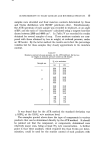
26 JOURNAL OF THE SOCIETY OF COSMETIC CHEMISTS (11) (12) (13) (14) (15) (16) (17) (18) (19) (20) (21) (22) (23) (24) (25) (26) (27) (28) (29) (so) U.S. Pat. 2,930,761 Brit. Pat. 867,874 Brit. Pat. 823,303 Pickthall, J. Perfumery Essent. Oil Record 51 299 (1960). Blank, I. It. J. Occupational .¾Ied. 2 6 (1960). Carter, P. J../Ira. Perfumer -4romar. 71 43 (June 1958). Burton, D. N..¾Ifg. Chemist 22 267 (1951). Dvoretskaya, 1•. M. tfolloidt•. Zh. 13 432 (1951). ttilfer, It. Drug Cosmetic Ind. 65 394 (1949). Cardew, C. V. Soap Perfumery Cosmetics 24 154-7 (1951). Brit. Pat. 767,840 Brit. Pat. 891,600 ttilfer, It. Drug Cosmetic Ind. 68 322 (1951). Mills, C. M., Ester, V. C. and Henkin, H. J. Soc. Cosmetic Chemists 7 466 (1956). Lesshafft, C. T. S. and de Kay, It. G. Drug Std. 25 45 (1957). Sagarin, E. Cosmetics: (1957) Interscience, New York. Brit. Pat. 641,203 U.S. Pat. 2,543,061 Lincoln, P. A. Chem. Prod. 17 407 (1954). Brit. Pat. 699,752 DISCUSSION MR. D. E. HERRING: Could you give any indication of how the HLB values in Table IV were obtained ? Are they in fact theoretical or determined figures ? THE LECTURER: The HLB values given in Table IV are, I believe, practica ones. I have not determined them myself. I think they would be obtained by a sub- stitution method. The theoretical values are slightly different from those given. For the C-12, 5 mol ethoxylated amine the theoretical value would be 11.0. For the C-12, 15 tool ethoxylate derivative, 15.7, and for fl•e C-18, 15 tool derivative, 14.3. One would expect this decrease between the C-12 and C-18 derivatives of equal degrees of ethoxylation as the overall molecular weight increases for the same number of tools in ethylene oxide. MR. D. E. HERRING: Since amines, and particularly ethoxylated amines, form salts in acid solution, one would anticipate the HLB value to vary with pH. Would you care to comment on this, and would you care to say whether there is a sharp change or a gradual one ? THE LECTURER: The HLB value must be considered for the system as a whole so that the amine salts will have a higher HLB than the basic materials. I have never seen any results relating pH to HLB so I just do not know whether the change is gradual or stepwise. MR. W. D. MACMILLAN: I would like to refer to Table II in which some very useful information is given concerning the variations in surface tension and wetting times in relation to the number of ethylene oxide molecules per tool of amine. I wonder, however, if you have any further information concerning the sensitization of the skin by these compounds and whether this varies according to the HLB of the ethoxy- lated amine. THE LECTURER: I can make the generalization that sensitization decreases with ethoxylation, i.e. it decreases with increased HLB. The nearer one is to the basic amines the higher the sensitization. There is a very great increase between the amine and the 2 mol ethoxylate, i.e. from the primary to the tertiary amine the sensitizing
Purchased for the exclusive use of nofirst nolast (unknown)
From: SCC Media Library & Resource Center (library.scconline.org)