JOURNAL OF THE SOCIETY OF COSMETIC CHEMISTS ingredients in cosmetics or soaps as perfume, hexachlorophene (7), bithionol, or halogenated salicyl anilides. Suntan preparations will reduce the absorption spectra of light rays and change them into tanning rays. Pyribenzamine and monoglyceryl pamino benzoates will cause contact sensitization. Large doses of ascorbic acid can reduce oxidized dark melanin to the reduced form (8), and prevent the later oxidation to dopa quinone. Hydroquinone monobenzyl ether mainly depigments after it has produced contact dermatitis, but its effects are most variable and patchy cross-sensitization occurs with other com- mon quinone sensitizers, e.g. pphenylenediamine, and with azo dyes, as in foods, petrol or textiles. Bleaching agents (mercurials) as used in freckle creams which probably displace copper and interfere with tyrosinase, are often irritant and sensitizing. Possibly some future approach could be made through an active agent which would inhibit the enzyme without denaturing its protein. Treatment of depigmentation is equally unsatisfactory the efficacy of the photosensitizing agent 8-methoxypsoralen in increasing pigmentation is doubted in the controlled experiment of Cahn et al (9) who found no erythema or pigmentation histologically after exposure. Staining agents used include potassium permanganate or fresh walnut stain, and lately, dihydroxyacetone D.H.A. (1,$, dihydroxy-2-propanone) in a 2.5% alcoholic lotion (10). In combination with keratin this may, however, cause contact dermatitis (11). Conversely, removal of keratin stains in industry is a problem. None of these seem to give a normal skin colour and further research is needed for some suitable dye in which the shades can be more easily varied to suit the individual. (Received: 21st December 1964) REFERENCES (1) Wells, F. V. and Lubowe, I. I. Cosmetics and the skin (1964) (Reinhold, New York). (2) O'Brien, J.P. Brit. J. Dermatol. 59 125-158 (1947). ($) Knox, J. M. and Ogura, X. X. Brit. Med. J. 2 1048 (1964). (4) Skog, E. Acta Dermato-Venereol. 38 15-19 (1958). (5) Findlay, G. H. S. African J. Lab. Clin. Med. 8 26-30 (March 1962). (6) Lorincz, L. A. in Rothman, S. Physiology and Biochemistry of skin Chap. 22 (1953) (University Press, Chicago). (7) Newcomer, V. D., Lindberg, M. C. and Steinberg, T. H. Arch. Dermatol. 83 284 (1947). (8) Rothman, S. Proc. Soc. Exp. Biol. Med. 45 52-54 (1940). (9) Cahn, M. M., Levy, E. J. and Schaffer, B. J. Invest. Dermatol. 36 193-198 (1961). (10) Mumford, P. B. Brit. J. Dermatol. 72 279 (1961). (11) Harman, R. R. M. Trans. St. John's Hosp. Dermatol. Soc. London 47 157 (1961).

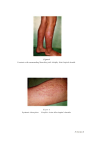
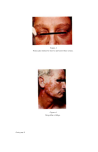
SOME DIFFICULTIES OF TOPICAL TREATMENT IN DERMATOLOGY 39 Introduction by the lecturer I would like to stress that I am a practising dermatologist, without any pre- tensions to being an expert in cosmetics or their chemistry. However, I thought that it would be interesting to discuss some of the problems that confront us in day-to-day practice. Many of the minor complaints are just a nuisance and are not real illnesses of the skin they represent changes in the normal skin physiology from day to day and even from hour to hour. For instance, urticaria or nettlerash is almost normal it is an immune reaction in the skin. We all get urticaria, but there are some people in whom it becomes chronic, like a "bad habit," and once initiated, it goes on and on. It is then extremely difficult to arrest, as so many factors can have a causative influence. A large group of people we have to treat are those who have defective or inferior skins, for they suffer from defects in keratinization. This is a difficult problem, for we are only now beginning to realize that the skin is not the same over all parts of the body. For example, the deposition of fatty material in the eyelids of some people, known as xantholasma, is due to a local accumulation of cholesterol and related substances. We have to ask ourselves why it occurs there and not every- where else. There is evidently something different about these areas of skin. I recently saw a patient who was pregnant and who presented an extraordinary picture down one arm only she had literally hundreds of angiomata, or small, visible blood vessels. This condition was obviously hormone-induced but why did the hormones not stimulate such blood vessels to hypertrophy all over her skin ? In another parallel case, all the angiomata disappeared when the baby was born. This area of skin is evidently susceptible to some hormonal influence unlike the rest of the skin. I suppose it is fair to say that the protection of the skin depends mainly on the dead horny cells being fully keratinized, secondly on the water content which keeps it supple, and thirdly upon the sebum which seals in this water and retards evapora- tion. The degrees of abnormal keratinization range from very severe to very mild types and it is the mildest types that we mainly have to treat. A large number of people have a mild type of imperfectly keratinized dry skin or xerosis. Do you consider making cosmetics especially for such people or cosmetics for various other types of skin, or even for different areas of the skin ? I should next like to consider some of the more abnormally keratinized skins. We had an example of gross ichthyosis where there were areas of heaped-up kera- tinous horny material on a man's back, literally an inch deep. We have improved him a good deal simply by applying hydrous ointment under polythene. The horny material peeled off, and although he has considerably improved, it will regrow yet this does show that much can be done just by replacing the water content in the skin. In the case of mild ichthyosis, many people have a mild xerosis of the legs although the rest of the skin appears quite normal. The skin on the face may be greasy but chapping affects the legs and especially the heel, particularly in the winter. Some- times a minor degree of ichthyosis affects the hair follicles we describe this as being like a nutmeg grater or keratosis pilaris. Another group of abnormally keratinized, dry skins is the atopic, i.e. people with the eczema-asthma-hay fever syndrome. They are not more allergic than their fellows to external agents causing eczema or contact dermatitis, but they do have an inborn allergy to foreign proteins which yield this syndrome. They probably
Purchased for the exclusive use of nofirst nolast (unknown)
From: SCC Media Library & Resource Center (library.scconline.org)