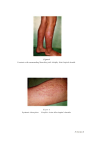
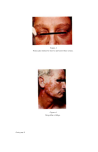
SOME DIFFICULTIES OF TOPICAL TREATMENT IN DERMATOLOGY 39 Introduction by the lecturer I would like to stress that I am a practising dermatologist, without any pre- tensions to being an expert in cosmetics or their chemistry. However, I thought that it would be interesting to discuss some of the problems that confront us in day-to-day practice. Many of the minor complaints are just a nuisance and are not real illnesses of the skin they represent changes in the normal skin physiology from day to day and even from hour to hour. For instance, urticaria or nettlerash is almost normal it is an immune reaction in the skin. We all get urticaria, but there are some people in whom it becomes chronic, like a "bad habit," and once initiated, it goes on and on. It is then extremely difficult to arrest, as so many factors can have a causative influence. A large group of people we have to treat are those who have defective or inferior skins, for they suffer from defects in keratinization. This is a difficult problem, for we are only now beginning to realize that the skin is not the same over all parts of the body. For example, the deposition of fatty material in the eyelids of some people, known as xantholasma, is due to a local accumulation of cholesterol and related substances. We have to ask ourselves why it occurs there and not every- where else. There is evidently something different about these areas of skin. I recently saw a patient who was pregnant and who presented an extraordinary picture down one arm only she had literally hundreds of angiomata, or small, visible blood vessels. This condition was obviously hormone-induced but why did the hormones not stimulate such blood vessels to hypertrophy all over her skin ? In another parallel case, all the angiomata disappeared when the baby was born. This area of skin is evidently susceptible to some hormonal influence unlike the rest of the skin. I suppose it is fair to say that the protection of the skin depends mainly on the dead horny cells being fully keratinized, secondly on the water content which keeps it supple, and thirdly upon the sebum which seals in this water and retards evapora- tion. The degrees of abnormal keratinization range from very severe to very mild types and it is the mildest types that we mainly have to treat. A large number of people have a mild type of imperfectly keratinized dry skin or xerosis. Do you consider making cosmetics especially for such people or cosmetics for various other types of skin, or even for different areas of the skin ? I should next like to consider some of the more abnormally keratinized skins. We had an example of gross ichthyosis where there were areas of heaped-up kera- tinous horny material on a man's back, literally an inch deep. We have improved him a good deal simply by applying hydrous ointment under polythene. The horny material peeled off, and although he has considerably improved, it will regrow yet this does show that much can be done just by replacing the water content in the skin. In the case of mild ichthyosis, many people have a mild xerosis of the legs although the rest of the skin appears quite normal. The skin on the face may be greasy but chapping affects the legs and especially the heel, particularly in the winter. Some- times a minor degree of ichthyosis affects the hair follicles we describe this as being like a nutmeg grater or keratosis pilaris. Another group of abnormally keratinized, dry skins is the atopic, i.e. people with the eczema-asthma-hay fever syndrome. They are not more allergic than their fellows to external agents causing eczema or contact dermatitis, but they do have an inborn allergy to foreign proteins which yield this syndrome. They probably

4O JOURNAL OF THE SOCIETY OF COSMETIC CHEMISTS develop eczema because they have an inferior dry skin which is easily damaged. In atopic eczema, the flexural thickened skin is very itchy and troublesome. These people with abnormal skins suffer various disabilities. The first thing is reduction of the water content, leading to numerous minor disorders for which treat- ment is sought. For example, they may well have winter chapping of the hands. Another condition, mostly seen in children, is a dry, flaky eczema of the face during winter known as pityriasis alba, which clears up in the following summer it may leave white patches on the skin as the excessive moisture prevents solar pigmentation. Then there may be chapping of the lips, particularly in people who have any obstruction of the nose or large tonsils or adenoids so that they breathe through the mouth. These cracked and chapped lips may lead eventually to chronic eczema. We help them by trying to hydrate the keratin again and by lessening evaporation, through putting on silicones overnight. Some of these people have a habit of licking the lips and they can develop a chronic cheiliris. Chronic fissuring either side of the mouth follows the same principles. The skin is always wet in this area and as it dries, the skin loses its elasticity and cracks. This is more common with ill-fitting dentures but it often affects the atopic, dry-skinned person. Dry skin behind the ears is also liable to crack easily. This is a problem from the standpoint of infection. Most people carry organisms on the skin without ill- effect, but patients with eczema and ache are subject to repeated infections perhaps because they carry staphylococci in fissures or the nasal vestibule. Sepsis may occur behind the ears, in the nose, on the face or as boils on the trunk, in the groins or in any area of eczema. Many people are susceptible to solvents used for cleaning the hands, since these defat and dehydrate the skin. They are also susceptible to physical trauma. Contact dermatitis usually involves all the areas in contact, and bacteria also com- monly produce a sensitization eczema. The starting-point may well be friction with clothing, or hot bathing with alkaline soaps which open the way for penetration of bacteria and chemical sensitizers. Dry-skinned persons also have problems in industry. As the skin has diminished flexibility, a squamous eczema may develop on areas of pressure this is commonest in the 40-50 age group, when endocrine involutional changes are taking place. This type of eczema is especially difficult to treat successfully as the patient has to go on working. Another problem of the dry-skinned person may appear as difficulty in sweating freely. Microtrauma to the skin cause keratinous obstruction in the sweat pores, leading to various gradations of miliaria or "prickly heat." Such eruptions are extremely common I am sure that many people who complain of trouble with cosmetics do not suffer from a true contact dermatitis at all, but from a poral obstruc- tion due to friction or excessive sweating. Sweat obstruction also occurs on the hands in people wearing protective gloves for long periods of time and in emotionally unstable people who sweat a great deal. They develop a hand eczema termed pompholyx, cheiropompholyx or dyshidrosis. Mechanical obstruction to sweating is a common eczematous reaction which relapses easily. In the unusual event of a cosmetic contact dermatitis, a second episode is often caused by a pre-existing sweat obstruction due to previous inflammation or to the treatment given as soon as the patient gets hot, the eruption starts again. I have seen this in people holidaying in unfamiliar climates such as Italy, where they become excessively sunburned. On returning home, a miliaria may follow.
Purchased for the exclusive use of nofirst nolast (unknown)
From: SCC Media Library & Resource Center (library.scconline.org)