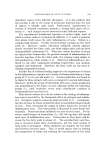
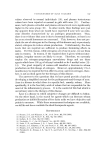
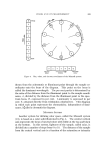
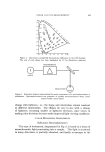
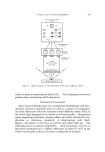
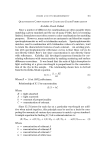
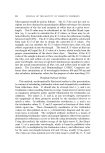
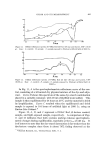
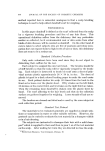
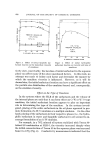
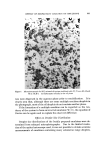
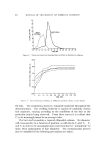
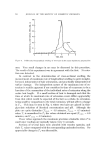
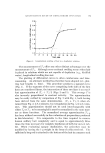
EVALUATION OF DANDRUFF SEVERITY 671 RESPONSE TO ANTI-DANDRUFF RINSE RESPONSE TO ANTI-DANDRUFF RINSE Figure 1. Clear-cut response to germicidal rinse treatments in subject with moderate level of dandruff 150 100 so t• I I I Nov. 1 Dec.1 Jan,1 Feb. 1 Maoe1 Apr. 1 Figure 2. Prompt response to germicidal rinse treatments followed by gradual return to pre-treatment dandruff levels No other material is allowed to be used on the hair or scalp. Swimming is also prohibited. Haircuts are only allowed at certain time periods which will be explained below. A useful treatment schedule has been once per week as follows: Each subject is asked to shampoo and treat his hair at home on Saturday. The brushing and collection of the scurf take place once each week on the following Friday. If a haircut is required it must be taken after the brushing on Friday and before the shampoo and treatment on Saturday. The reason for this is that small fibers of hair remain on the scalp follow- ing a haircut. If these find their way into the brushed out dandruff scurf, they are exceedingly tedious to remove before weighing the sample. The duration of the test can be adjusted as required. The usual procedure has been 4 weeks of pre-treatment control, 4 weeks of treat- ment, and 4 weeks of post-treatment control. Each subject is used as his own control. A_ base line dandruff level is established in the pre-treat- ment period then a drop from this level is sought during treatment, fol- lowed by a rise toward pre-treatment levels in the final test segment. RESULTS For purposes of illustration, some types of responses to various treat- ments are described. In Fig. 1 is shown a good response to a germicidal rinse. Although there is considerable fluctuation in the pre-treatment period, treatment brings on a sharp decline followed by a post-treatment rise. In some subjects, a decline following treatment is noted but the rise when treatment is discontinued may be very gradual. In Fig. 2 an in-

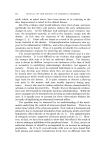
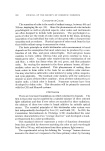
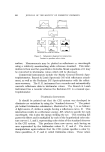
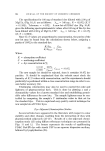
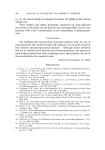
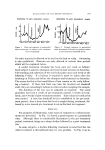
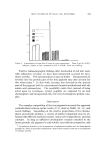
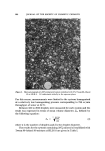
679, JOURNAL OF THE SOCIETY OF COSMETIC CHEMISTS TWICE WEEKLY SCURF COLLECTION •_. :i: -4oo . z .,125 300 i t , , .... • • •, •6 'l• ½9 •i• 4,• 4,• o • 5,• FR'DA¾ ß DATE Figure 3. Agreement between collections made on Tuesdays and Fridays. Good tracking between curves suggests errors introduced by biological variables exceed those due to the collection method stance is shown where many weeks are required before the dandruff levels show a substantial rise. Of course, there are also instances where no response is evident. It is obvious, therefore, that to evaluate a particu- lar treatment a sufficiently large test group must be chosen. DISCUSSION The method presented is straightforward in its logic and simple to perform. Dandruff is defined operationally. Although, using such a criterion, this condition may be confused with other scaly diseases of the scalp, it has usually been possible to avoid this difficulty by proper pa- tient selection. In the panel selection process, subjects are usually dropped from the test if their collected scurf during the pre-treatment control falls below some arbitrary level such as 10 mg per collection period. Cooperation of the test subjects is most important. They are allowed to use the test materials themselves (although in an institutional popula- tion this can be supervised). They are asked to brush the dandruff scurf out themselves each time in as identical a routine as possible. They must also cooperate in not using other products on their scalp and avoid- ing swimming. In this type of study each patient serves as his own control and a qualitative judgement is made as to whether or not a response was ob- served. However, there is an important drawback to this procedure.
Purchased for the exclusive use of nofirst nolast (unknown)
From: SCC Media Library & Resource Center (library.scconline.org)