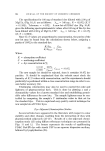
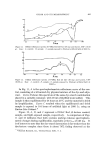
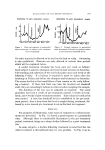
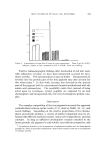
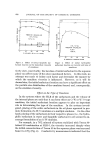
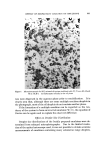
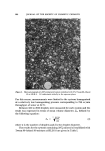
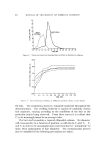
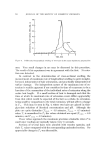
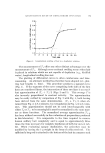
EVALUATION OF DANDRUFF SEVERITY 6?3 Seasonal effects are believed to occur in dandruff with mnelioration during the summer months (4). The authors, too, have observed this effect. Therefore, it is felt to be important to observe a rise in dandruff levels in the post-treatment control period in order to claim a positive anti-dandruff response with confidence. Although it may seem that the procedure described would encounter huge fluctuations in scurf levels because of the casual manner in which the subjects were handled during the interval between treatment and measurement, in practice this has proved tolerable. As an illustration of the magnitude of these fluctuations one subject (with heavy dandruff) was followed for a period of ten weeks (March to May) while he used only a mild shampoo. In this instance, dandruff collections were made twice each week on Tuesdays and Fridays so that the trends of "replicate curves" could be compared. The data are plotted in Fig. 3 and show that the two sets of results track very well. Although this is only one subject, it would suggest that normal biological fluctuations will intro- duce greater errors than those inherent in the collection method. From observations made in the course of many evaluations of dan- druff by these techniques it appears to us that it is the adherent scales which are correlated with the severity of the disease. These scales are not much disturbed by the usual hair care practices. Loose flakes seen in the hair can be very misleading in estimating dandruff severity. (Received November 17, 1967) REFERENCES (1) Van Abb6, N.J., The investigation of dandruff, J. Soc. Cosmetic Chemists, 15,609 (1964). (2) Van Abbfi, N.J., and Dean, P.M., The clinical evaluation of antidandruff shampoos, Ibid., 18,439 (1967). (3) Spoor, H. J., Clinical evaluation of antidandruff formulations, Ibid., 14, 135 (1963). (4) Botwinick, I. S., and Botwinick, C. G., Methods for evaluating antidandruff agents, Presented at Joint Meeting of the Toilet Goods Association and the Committee on Cu- taneous Health and Cosmetics of the American Medical Assoc., New York, May 1, 1967. (5) VandcrWyk, R. W., and Roia, F. C., The relationship between dandruff and microbial flora on the human scalp, J. Soc. Cosmetic Chemists, 15, 761 (1964). (6) VandcrWyk, R. W., and Hcchcmy, K. E., A comparison of the bacterial and yeast flora of the human scalp and their effect upon drandruff production, Ibid., 18, 629 (1967).

J. Soc. Cosmetic Chemists, 19• 675-681 (Sept. 16, 1968) Chemical Studies of the Iron Pigments of Red Hair and Feathers PETER FLESCH, M.D., Ph.D. t Synopsis--The iron pigments of red hair and feathers consist of a protein linked to a non- protein chromophore. The chromophore is responsible for the characteristic properties of the siderins, i.e., the iron pigments obtained by extraction with hot acids their indicator-like properties and characteristic absorption bands are due to this grouping. This work does not support the theory of the participation of tyrosinase in the synthesis of the red hair pigments. Earlier evidence advanced in support of this view is subjected to a critical re-evaluation. INTRODUCTION In previous publications (1-3), attention has been called to iron pigments in human red hair and red chicken feathers. These substances are different from all other known epidermal pigments. It is believed that they are the major pigments in red hair and feathers and that their synthesis differs from that of the black melanins. Although data in this field are scant, it already has been shown that the appearance of the particles elaborating the red hair pigment, the melanosomes in the red hair matrix, differs from that of their black counterparts (4). This paper presents some recent findings on the chemical composition of the iron pigments, extending and reinterpreting some previous data. As the suggestion that red pigments are the products of tyrosinase activity is not accepted, some of the evidence adduced in support of this theory (5) will be subjected to critical evaluation. * Investigation supported by Public Health Service Research Grant AM 10046 from the Division of Research Grants, National Institutes of Health, Bethesda, Md. • Department of Dermatology, School of Medicine, University of Pennsylvania, Phila- delphia, Pa. 19104. 675
Purchased for the exclusive use of nofirst nolast (unknown)
From: SCC Media Library & Resource Center (library.scconline.org)