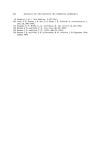
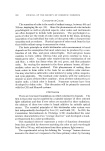
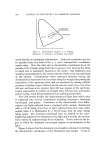
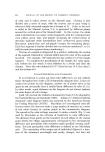
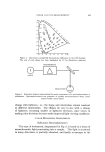
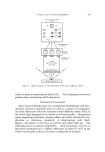
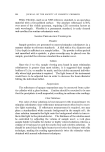
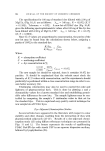
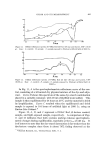
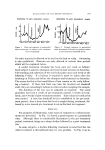
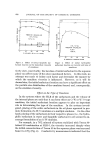
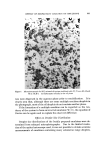
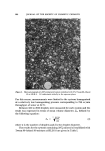
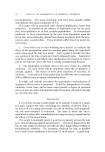
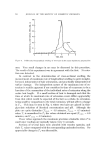
EFFECT OF SURFACTANT LOCATION ON EMULSIONS 691 Figure 7. Microphotograph of a 30% mineral oil system stabilized with 5% Tween 80-Arlacel 80 at HLB 6. All surfactants initially in the oil phase tern were dispersed in the aqueous phase prior to emulsification. It is clearly seen that, although there are some multiple emulsion droplets in the photograph, most of the oil droplets do not contain another phase. If the formation of a multiple emulsion can be regarded as the ten- dency of the system to form an inverted emulsion (W/O), the equation of Davies can be again used to explain the observed difference. Effect on Droplet Size Distribution Droplet size distributions of the freshly prepared emulsions were de- termined from enlarged microphotographs. Due to the limited resolu- tion of the optical microscope used, it was not possible to obtain accurate measurements of emulsions containing many submicron range droplets.

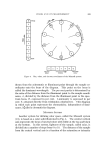
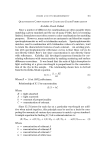
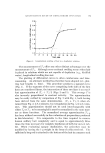
692 JOURNAL OF THE SOCIETY OF COSMETIC CHEMISTS Figure 8. Microphotograph of a 30% mineral oil system stabilized with 5% Tween 80-Arlacel 80 at HLB 6. All surfactants initially in the aqueous phase For this reason, measurements were limited to the systems homogenized at a relatively low homogenizing pressure corresponding to 786 cc/min throughput of water at 24 øC. Between 500 to 2000 droplets were measured for each system and the result was expressed in terms of mean volume diameter, din, defined by the following equation: dm= (2) • Zn where n is the number of droplets and d is the droplet diameter. The results for the systems containing 30% mineral oil stabilized with Tween 80-Arlacel 80 mixture at HLB 10 are given in Table I.
Purchased for the exclusive use of nofirst nolast (unknown)
From: SCC Media Library & Resource Center (library.scconline.org)