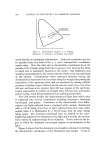
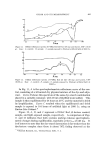
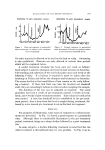
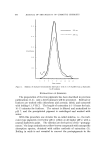
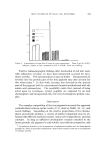
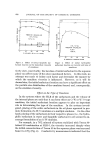
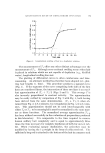
678 JOURNAL OF THE SOCIETY OF COSMETIC CHEMISTS little contamination by keratin decomposition products. With pro- gressing purification, both cystinc and methionine disappear from the protein. The various derivatives (protopigments, siderins, those de- rived by precipitation with KSCN and after dialysis) are remarkably similar in composition, indicating progress toward homogeneity. Their minimum molecular weight was estimated between 6800 and 8300. With increasing purification, as the brown protein is removed, the chromophore assumes increasingly brilliant colors: purple red in acids, orange in alkalies. The compound retains its colors at all pH's, even in strong acids. One of the split products of the siderins with a large proportion of chromophore occasionally turns pink when standing in air in a 0.1 _/V NaOH solution. This color change is reminiscent of similar behavior of two other nonheme iron proteins, transferrin and conalbumin. As in their case, the color change could be attributed to absorption of CO•. from the air by the alkaline solutions and subsequent combination of the iron compound with the chelating bicarbonate ion. This reaction can be pre- vented in vacuo and promoted in a CO•. atmosphere or by the direct addi- tion of sodium bicarbonate to the alkaline solution of this pigment derivative. Upon acidification of the pink product CO• is released realkalinization turns the color to its usual orange shade without restor- ing the pink shade. The chemistry of this type of reaction has been ex- tensively studied both in transferrin (6) and conalbumin (7). THE POSTULATED ROLE OF TYROSINASE IN THE SYNTHESIS OF NONBLACK PIGMENTS It has been claimed that tyrosinase is required for the formation of all "mdanins," black, yellow, or red (5). This assumption is chiefly based on two types of experiments: the dopa-positivity of red hair follicles and autoradiographic studies with labelled tyrosine. Neither can be re- garded as definite proof for the role of tyrosinase in the synthesis of the iron pigment of human red hair. The dopa-positivity of red hair follicles could result from a non- specific catalytic effect of the iron pigment on the autoxidation of dopa. When dopa is incubated in vitro with traces of the iron pigments, its darkening in air is greatly enhanced. The objection that the siderins used in these studies are derivatives of the original pigments is minimized by the fact that traces of ferric ions in themselves have a similar effect (Fig. 2).

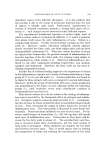
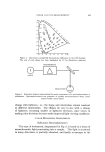
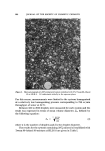
IRON PIGMENTS OF HAIR AND FEATHERS 679 DOPA • ftath• r pigment D pH 7. % ] DOPA pJl 7. 5 ] DOPA • Fe C13 I DOPA Figure 2. Autoxidation of dopa after 2 hours at room temperature. Dopa, 4 ml of a 0.05% solution siderin, 0.2 ml saturated in 0.01 N NaOH ferric ion, 0.025 Positive radioautographic findings after incubation of red hair roots with radioactive tyrosine (5) have been interpreted as proof for tyro- sinase activity. This interpretation is open to doubt. Incorporation of tyrosine into the protein part of the iron pigment may also account for this observation.* In this work, tyrosine was detected in the protein part of the pigment both by conventional chemical methods and with the amino acid autoanalyzer. The possibility exists that, instead of being acted upon by tyrosinase, tyrosyl peptides are captured by an iron chromophore and incorporated into the iron chromophore-protein com- plex. DxsoeuSSION The complex composition of the iron pigments accounts for apparent contradictions between earlier works (2, 9), data by Boldt (10, 11), and recent findings. Depending on the relative proportions of the chromo- phore and protein moieties, a variety of similar compounds may be ob- tained with different isoelectric points, amino acid compositions, and iron contents. As long as sufficient chromophore remains attached to the brown protein, the pigment is acid-soluble, has indicator properties, and * An analogous situation is the incorporation of radioactive histidine into the keratohyalin granules (8), which is generally recognized as a step in their synthesis and not as an indication of histidase activity.
Purchased for the exclusive use of nofirst nolast (unknown)
From: SCC Media Library & Resource Center (library.scconline.org)