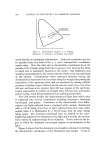
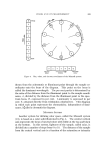
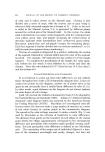
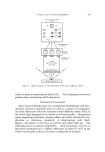
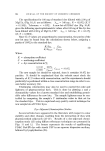
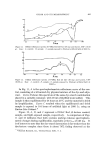
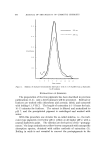
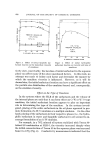
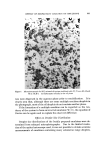
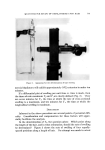
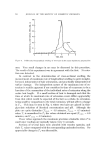
EFFECT OF SURFACTANT LOCATION ON EMULSIONS 685 transfer were high. Conceivably, slow surfactant migration may be one of the reasons why some emulsions exhibit time-dependency of the rheological properties. In this work, systems initially containing varying proportions of sur- factants in each phase were emulsified under carefully controlled condi- tions and the viscosities of the freshly formed emulsions were determined immediately after homogenization. In addition to the viscosity, effects of the initial surfactant location on the particle size distribution, emulsion type, and emulsion stability were also investigated. The main purpose of this work was not to examine the causes of time-dependency, but rather, an attempt was made to explore the ways by which initial sur- factant locations affected the properties of the freshly prepared emul- sions. EXPERIMENTAL Since the viscosity of an emulsion is strongly dependent on the pre- parative variables, efforts were made to control all variables to insure the reproducibility of the experiments. In most instances, coarse emulsions were prepared in a 2-1. rectangular clear plastic vessel shown in Fig. 1. The mixing equipment used was Model ELB Experimental Agitator Kit* designed for bench-scale experi- mental purposes. The kit consists of 3• hp motor, variable speed drive, and various types of calibrated impellers. The impeller chosen for most of the experiments was a 2•-in. flat 6-blade turbine. The location of the impeller was 3• in. from the bottom of the vessel and, unless stated otherwise, the mixer speed was set at 400 rpm. In more viscous systems two 2•-in. impellers set apart by 3• in. were used. The mixing time used was mostly 3 minutes but in some viscous systems a longer mixing time was used. To keep the emulsion reasonably stable, the coarse emulsion prepared in the vessel was immediately passed through an ultrasonic homogenizer once. The homogenizer used was a laboratory size Minisonic IV Ultra- sonic Emulsifiert which operates on the mechanical cavitation principle. The valve setting used was such that the rate of discharge of water at 24øC was 1960 cc/min. Prior to emulsification, emulsifiers were dissolved or dispersed in each phase with a laboratory propeller mixer at 600 rpm. These liquids were * Manufactured by Chetnineer Inc., Dayton, Ohio. p Manufactured by Sonic Engineering Corporation, Norwalk, Conn.

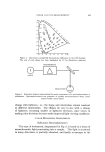
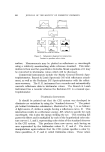
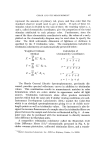
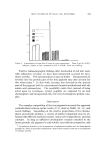
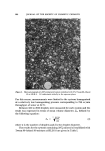
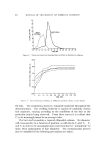
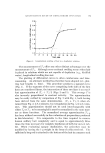
686 JOURNAL OF THE SOCIETY OF COSMETIC CItEMISTS then placed in a constant temperature bath until the temperature reached 24 =• 0.1 øC. The water phase was first placed in the emulsification ves- sel and the oil phase was then slowly placed on the top of it. This opera- tion was done very carefully to avoid emulsification prior to turning on the mixer. All viscosity measurements were done with Brookfield Synchrolectric Viscometer Model LVT,* and particle size distributions were determined from the enlarged photographs taken through a microscope. Emulsion stability was judged by placing the emulsion in a graduated cylinder and determining the degree of separation with time. The oil used for the experiments is a light mineral oilt and deionized water was used for the water phase. Surfactants used include: Tween 80©,• Arlacel 80©,t, Amerchol L-101©,õ and Solulan 98©.õ These surfactants are commercial grades and they were used without further purification. The following HLB values suggested by the manufacturers were used for computing the HLB of the surfactant mixtures: Tween 80 15 Ariaeel 80 4.3 Amerchol L-101 8 Solulan 98 13 RESULTS AND DISCUSSION Effect on Emulsion Viscosity The effect of initial locations of the hydrophilic surfactant on the im- mediate viscosities of emulsions stabilized with Tween 80-Ariaeel 80 is shown in Fig. 2. The total surfactant concentration was kept at 5% by weight in all cases but the HLB values for each system varied from 6 to 14. The amount of the hydrophilic surfactant (Tween 80) originally present in the aqeuous phase was varied from 0 to 100% of the total amount employed. All the lipophilic surfactant (Arlacel 80) was placed in the oil phase prior to emulsification in this series of experiments. The emulsions contained 30% mineral oil and the coarse emulsion prepared in the emulsification vessel was passed through the homogenizer once. * Manufactured by Brookfield Engineering Lab., Stoughton, Mass. t Carnation P-I oil, Witco Chemical Co., Sonneborn Division, New York, N. ¾. $ Tween 80 (polyoxyethylene sorbitan monooleate) and Arlacel 80 (sorbitan monooleate), Atlas Chemical Industries, Wihnington, Del. õ Amerchol L-101 (multisterol) and Solulan 98 (ethoxylated lanolin), American Cholesterol Products, Edison, N. J.
Purchased for the exclusive use of nofirst nolast (unknown)
From: SCC Media Library & Resource Center (library.scconline.org)