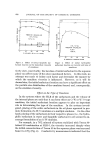
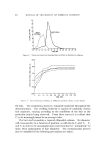
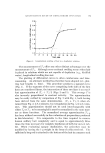
J. Soc. Cosmetic Chemists, 19, 699-706 (Sept. 16, 1968) A Quantitative Study of the Effect of Depilatory Solutions Upon Hair HARVEY ALLEN YABLONSKY, Ph.D., and ROBERTA WILLIAMS, B.S.* Synopsis--A procedure is described for determining the efficacy of depilatories. It involves the measurement of two parameters, the mean initial cross-sectional hair diameter and the time of maximum hair swelling. Plots of both the length and the width of swelling hair vs. time are sigmoid. The t•vo curves are sequential, the longitudinal sigmoid curve commencing on termination •f the cross-sec- tional one. Neither the time of occurrence, nor any other parameter ooe the sigmoid curve appears correlated to hair-break time. Seemingly identical hairs, in identical soluti{ms, show breaking times which vary from less than one hour to more than ten days. It is shown that slope maxima of the sigmoid curves may be used to define an in vitro index ooe depilatory effectiveness. INTRODUCTION The practice of hair removal for cosmetic purposes is an ancient one. Records of recipes for hair epilation and depilation date back as far as 1500 B.C. (1). Methods of attaining this end run the gamut from physically tearing the hair by its root to the application in an acceptable cosmetic base of disulfide bond-cleavers. Brute force methods of hair removal are usually dependent upon the imbedding or attachment of the undesired hair to a matrix which is first applied to the skin. Both the matrix and incorporated hair are then "painlessly" removed by tearing from the skin (2-5). Due to the questionable painlessness o[ this pro- cess, epilatories have, in this country, been largely superseded by them- * Bristol-Myers Products, Physical Chemistry Dept., Research Laborat•rics, 135{) Liberty Ave., Hillside, N.J. 07207. 699

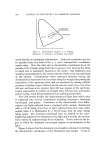
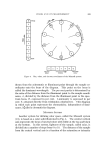
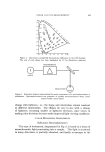
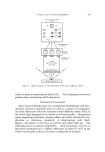
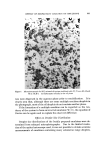
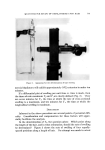
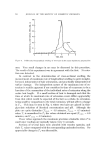
700 JOURNAL OF THE SOCIETY OF COSMETIC CHEMISTS ical depilatories. The most commonly used have been metallic sulfide and aliphatic mercapto compounds (6-12). This paper will be concerned with chemical depilatories, rather than epilatories. Evaluation of the efficacy of depilatories has, for the most part, been qualitative or, at best, crudely quantitative. In vitro methods employed at these laboratories in the past were dependent upon the break time o[ mechanically stressed hair during treatment with the prep- aratiou under consideration. These methods suffer from two major dis- advantages: 1. Tests which rely on hair breaking serve merely to indicate the effect of the preparation upon the weakest point along the hair shaft, rather than upon the hair as a whole. Such a point is usually the thin- nest portion of the hair or some previously damaged region. Analysis of both these regions is unrealistic since depilatories are required to remove hair at the skin line, where the hair is usually strongest and thickest. 2. The application of sizable stress to the hair creates an artificial condition. No such stress will be employed when the preparation is actually applied. The choice of stress must therefore, of necessity, be arbitrary. Correlation of break point data for different stress situations will be difficult since no simple relationship exists. A simple and realistic procedure for quantitative determination of depilatory effectiveness is proposed. It will be independent of cuticle condition, break time, and in most cases provide a degree of precision that is at least an order of magnitude higher than that obtainable through use of break time data. PROCEDURE A ll)-cm hair, having a small weight at its bottom, is hung in a stand- ard taper capped test tube containing the solution of interest (Fig. 1) By means of a traveling microscope, the rate of swelling, both longitudi- nal and cross-sectional, is evaluated. The time at which the rate is maximized is taken after normalization as being inversely proportional to the efficacy of the preparation. The weight is nominally about 1 g and serves merely to keep the hair taut, thus facilitating optical measurement. The stress imparted to the hair by this weight is minimal and will not affect longitudinal swelling in nondepilating solutions. The extension observed for hair in distilled water under these conditions is less than 1% in 24 hours. A good corn-
Purchased for the exclusive use of nofirst nolast (unknown)
From: SCC Media Library & Resource Center (library.scconline.org)