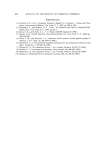
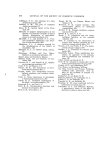
84O JOURNAL OF THE SOCIETY OF COSMETIC CHEMISTS (15) (16) (17) (18) (19) (20) (22) (23) (24) (25) (26) (27) (28) (29) Nimni, M. E., deGuia, E., and Bavetta, L. A., Collagen, hexosamine and tensile strength of rabbit skin during aging, J. Invest. Dermatol. 47, 156 (1966). Rasmussen, D. M., Wakim, K. G., and Winkelmann, R. K., Isotonic and isometric thermal contraction of human dermis. II. Age-related changes, Ibid., 45,341 (1904). Kohn, R. R., and Rollerson, E., Relationship of age to swelling properties of human diaphragm tendon in acid and alkaline solutions, J. Gerontol. 15,241 (1958). Keech, M. K., The effect of collagenase on the fixed and unfixed skin lesions of morphoea: An electronmicroscopic study, J. ?athol. Bacteriol., 77, 351 (1959). Houck, J. C., DeAngelo, L., and Jacob, R. A., Connective tissue. III. Dermal chemical response to age, ?roc. Soc. Exp. Biol. Med., 107, 280 (1961). Verzar, F., The aging of connective tissue, Gerontologia, 1,363 (1957). Smith, J. G., Jr., Davidson, E. A., and Taylor, R. W., Human cutaneous acid muco- polysaccharides: The effects of age and chronic sun damage, in Montagna, W., Ad- vances in Biology of the Skin--Volume VI Aging, Pergamon Press, New York, 1965, pp. 211-8. Smith, J. G., Jr., The derreal elastoses, Arch. Dermatol., 88,382 (1963). Weinstein, G. D., and Boucek, R. J., Collagen and elastin of human dermis, J. Invest. Dermatol., $5,227 (1960). Hult, A.M., and Goltz, R. W., The measurement of elastin in hmnan skin and its quantity in relation to age, Ibid., 44, 408 (1965). Weinstein, G. D., Autoradiographic studies of turnover time and protein synthesis in pig epidermis, Ibid., 44, 413 (1965). Storey, W. F., and Le Blond, C. P., Measurement of rate of proliferation of epidermis and associated structures, Ann. N.Y. Acad. Sci., 55, 537 (1951). Bertalanffy, F. D., Mitotic activity and renewal rate of sebaceous gland cells in rat, Anat. Record, 129, 231 (1957). Bertalanffy, F. D., Pusey, V., and Abbott, M.D., Mitotic rates of rat epidermis, Arch. Dermatol., 92, 91 (1965). Thur/nger, J. M., and Katzberg, A. A., The effect of age on mitosis in the human epidermis, J. [•vest. Dermatol., $$, 35 (1959).

J. Soc. Cos,Tctic Che,•isls, 19, 841-847 (Dec. 9, 1968) The Effect of Dimethyl Sulfoxide on Percutaneous Absorption: A Mechanistic Study, Part III STANLEY G. ELFBAUM, Ph.D., and KARL LADEN, Ph.D.* Presented April 21-23, 1968, Washington, D. C. Synopsis--Additional studies have been carried out to support the suggested swelling role of dimethyl sulfoxide (DMSO) toward hair fibers. Results again indicate that large con- centrations of solvent are required before appreciable swelling and greater uptake of DMSO can be realized. The swelling process is easily reversible. Other data indicate that DMSO at low pH values may be responsible for an increase in eoulombie repulsions within the fiber which results in greater swelling. With the more complex substrate, skin, the modifying role of DMSO on the skin barrier is more difficult to assign. The DMSO effect has not been shown to be reversible and results indicate that lipid extraction may play a supporting role to protein swelling in this modification process. INTRODUCTION In two previous papers, the effects of dimethyl sulfoxide (DMSO) upon the in vitro percutaneous absorption of picrate ion through excised guinea pig skin and upon some physical properties of several proteins have been reported (1, 2). As a result of studies on bovine serum albu- min, •-lactoglobulin, and hair keratin, DMSO was considered to be a pro- tein swelling agent. With a complex substrate such as skin, the role of DMSO is more difficult to assign and further experiments were proposed. The results of these studies are presented in this paper. * Gillette Research Institute, 1413 Research Boulevard, Rockville, Md. 20850. 841
Purchased for the exclusive use of nofirst nolast (unknown)
From: SCC Media Library & Resource Center (library.scconline.org)