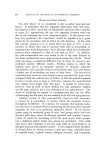
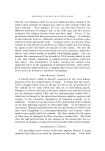
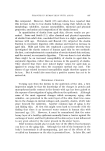
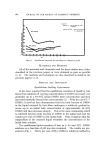
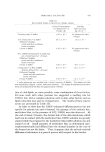
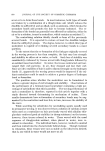
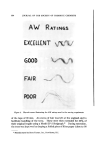
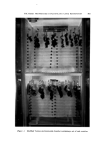
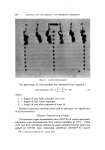
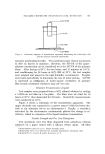
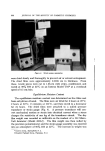
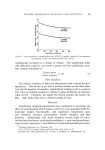
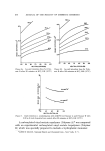
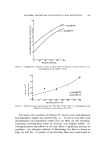
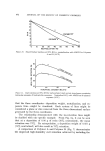
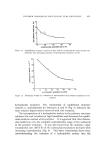
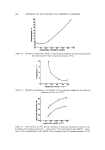
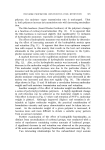
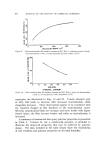
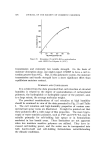
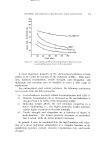
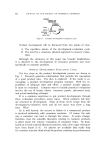
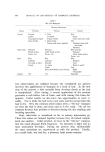
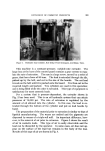
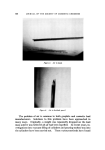
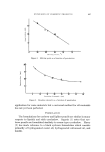
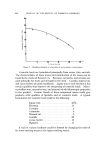
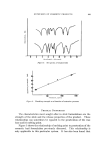
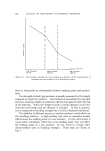
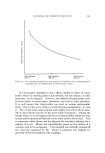
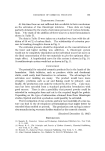
84'2 JOURNAL OF THE SOCIETY OF COSMETIC CHEMISTS 62 0% DMSO 1 2 3 4 5 pH Figure 1. Legend pH 1,2,3--corrected for salt residues pH 4.63,6,7,8,9 --salt correctio • is negligible 12 Equilibrium retention by hair fibers as a function of pH MATE}•IALS AND METI•ODS All of the materials and chemicals used for these studies were either described in the previous papers or were obtained as pure as possible (1, 2). The methods and techniques are also described in detail in the previous papers (1, 2). RESULTS AND DISCUSSION Equilibrium Swelling Experiments It has been reported that the equilibrium retention of liquid by hair fibers from solutions of varying concentrations of DMS0 increased very gradually up to a 40-50% initial DMS0 bath concentration and then increased markedly beyond this concentration (2). With the use of C •4- DMS0, it now has been demonstrated that the mole fraction of DMSO in the liquid retained by hair fibers undergoes a relatively gradual in- crease up to an initial bath concentration of approximately 40-50% DMS0 and then increases sharply. This is the same relationship which is exhibited between mole fraction of DMS0 in the initial bath and the volume per cent of DMS0 in the initial bath. Thus, it appears that the composition of the retained liquid resembles the concentration of the initial bath solution. The equilibrium liquid retention of hair in 0, 30 and 70% DMS0 solutions as a function of pH was also examined. The results are pre- sented in Fig. 1. Thirty per cent (30%) DMS0 is relatively ineffective

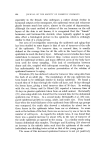
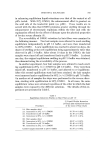
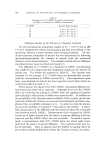
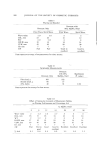
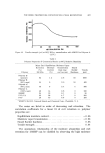
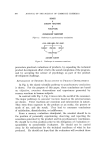
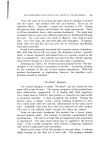
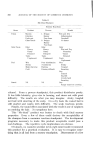
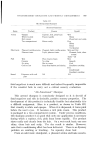
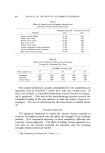
DIMETHYL SULFOXIDE 843 in enhancing equilibrium liquid retentions over that of the control at all pH's tested. With 70% DMSO, the enhancement effect is greatest on the acid side of the isoelectric point (ca. pH5). These results are in accord with the idea that DMSO promotes greater swelling through the enhancement of electrostatic repulsions within the fiber and with the explanation offered for the effect of dioxane upon the physical properties of bovine serum albumin (3). The reversibility of DMSO retention by hair fibers was examined in the following manner. Two hair samples were allowed to reach swelling equilibrium independently in pH 7.0 buffer, and were then transferred to 100% DMSO. A new equilibrium was reached in about two days, the degree of swelling at the new equilibrium being approximately twice that observed in pH 7.0 buffer. After about 10 days in the DMSO, the hair samples were rinsed off and transferred back to pH 7.0 buffer. In about one day, the original equilibrium swelling in pH 7.0 buffer was obtained, thus demonstrating the reversibility of the process. In another experiment, four hair samples were allowed to reach swell- ing equilibrium in 20% (v/v) DMSO in pH 7.0 buffer. They were then rinsed off, transferred to pH 7.0 buffer, and allowed to re-equilibrate. After this second equilibrium state had been attained, the hair samples were immersed and re-equilibrated in 80% (v/v) DMSO in pH 7.0 buffer. On another set of samples the steps were performed in the reverse direc- tion, starting with equilibration in 80% DMSO. In all cases, the same equilibrium values were attained regardless of the order in which the hair samples were exposed to the different solutions. The details of this ex- periment are presented in Table I. Table I Equilibrium Retention Studies on Hair Fibers at pH 7.0 Procedure % Liquid Weight Retention (Average plus standard deviation of the mean of four trials) 1A. Hair samples dried 2A. Immersion in 20% (v/v) DMSO 3A. Transferred to pH 7.0 buffer 4A. Immersion in 80% (v/v) DMSO lB. Hair samples dried 2B. Immersion in 80% (v/v) DMSO 3B. Transferred to pH 7.0 buffer 4B. Immersion in 20% (v/v) DMSO Control sample immersed in pH 7.0 buffer 32.78 q- O. 49% 32.40 q- 0.78% 48.24 q- 1.41% 48.07 q- 0.82% 32.46 q- 0.51% 33.23 q- 0.46% 32.55 q- 0.65%
Purchased for the exclusive use of nofirst nolast (unknown)
From: SCC Media Library & Resource Center (library.scconline.org)