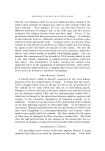
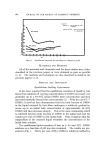
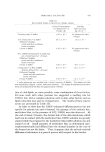
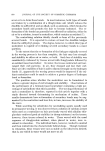
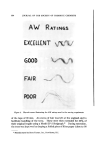
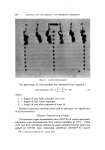
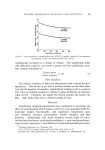
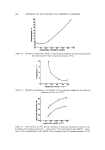
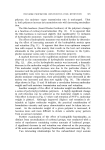
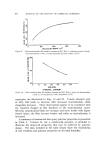
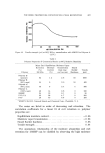
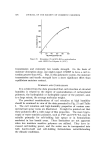
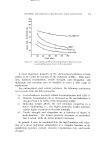
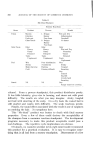
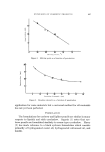
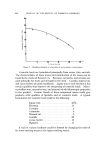
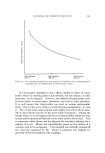
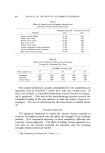
POLYMER PROI•ERTiES INFLUENCING CURL RETENTION 879 IOO 90. 80. • 7'0, :::,. _0 60. • SO. • 40, 30' Figure 21. ••'• POLYM"A" opvP-K30 3'0 60 9b I•o I•o i•o (TIME-MIN.) Curl retention at 90% RII as a function of time for several commercial hair spray resins (0.06 g deposited) A most important property of the carboxylated polymers is their ability to be varied by reaction of the polymeric acidity. Film hard- ness, moisture transmission, tensile strength, and elongation, and ultimately curl retention may be modified to cover a wide range of applications. For carboxylated vinyl acetate polymers, the following conclusions can be made from the data presented. (a) Curl retention is inversely related to neutralization with AMPD. (b) Moisture transmission rate is increased as the neutralization is changed from 0 to 100% of the theoretical acidity. (c) Molecular weight affects the curl retention properties in a direct relationship, i.e., the higher molecular weight polymers exhibit higher retention at elevated humidity. (d) Tensile strength and elongation are a function of degree of neutralization. The former property decreases as neutraliza- tion is raised, while the latter property increases. In general, it may be concluded that the high-humidity curl reten- tion of a given polymeric composition is a complex function of its equilibrium moisture content, moisture transmission rate, and tensile strength.

880 JOURNAL OF THE SOCIETV OF COSMETIC CHEMISTS The foregoing is an attempt to correlate certain polymeric properties with one desirable characteristic of a hair spray formulation, namely curl retention. Obviously, such considerations as ease of combing, adhesion to the hair, gloss, and feel are all important to ultimate con- sumer acceptance which in the final analysis spells the success or failure of a commercial product. (Received December 8, 1967)
Purchased for the exclusive use of nofirst nolast (unknown)
From: SCC Media Library & Resource Center (library.scconline.org)