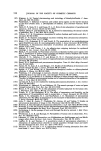
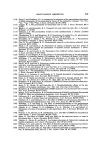
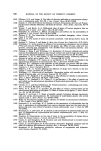
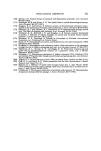
EFFECT OF SALT SOLUTIONS ON STRATUM CORNEUM 479 (3) (4) (5) (6) (7) (8) (9) (10) (11) (12) (13) (14) (15) (16) (17) (18) Higuchi, T. and Tillman, W. J. Stress-relaxation of stretched callus strips. Arch. Environ. Health. 11 508 (1965). Laden, K. and Morrow, R. Torsional measurements on skin. J. Soc. Cosmet. Chem. 21 417 (1970). Wildnauer, R. H., Bothwell, J. W. and Douglass, A. B. Stratum corneum biochemical properties. J. Invest, Dermatol. 56 72 (1971). Elfbaum, S. G. and Wolfram, M. A. Effect of dimethyl sulphoxide and other reagents upon mechanical properties of stratum corneum strips. J. Soc. Cosmet. Chem. 21 129 (1970). Crounse, R. G. Epidermal keratin: a re-evaluation. Nature (London) 200 539 (1963). Matoltsy, A. G. and Matoltsy, M. N. The membrane protein of horny cells. J. Invest. Dermatol. 46 127 (1966). Middleton, J. D. The mechanism of action of surfactants on the water binding properties of isolated stratum corneum. J. Soc. Cosmet. Chem. 20 399 (1969). Middleton, J. D. The mechanism of water binding in stratum corneum. Brit. J. Dermatol. 80 437 (1968). Mercer, E. H., Jahn, R. A. and Maibach, H. I. Surface coats containing polysaccharides on human epidermal cells. J. Invest. Dermatol. 51 204 (1968). Blank, I. H., Scheuplein, R. J. and Macfarlane, D. J. Mechanism of percutaneous absorp- tion. III. The effect of temperature on the transport of non-electrolytes across the skin. J. Invest. Dermatol. 49 582 (1967). Robinson, R. A. and Stokes, R. H. Electrolyte solutions 2nd ed. (1959). (Butterworths, London). Tanford, C. Physical chemistry of macromolecules 520 (1967) (J. Wiley and Sons Inc. London). Speakman, J. B. and Whewell, C. S. The action of potassium chloride on keratin. J. Text. Inst. 41 329 (1950). Alexander, P. and Hudson, R. F. Wool its chemistry andphysics 2nd ed. 219 (1963)(Chap- man & Hall Ltd, London). Middleton, J. D. Pathways of penetration of electrolytes through stratum corneum. Brit. J. Dermatol. 81 Suppl. 4 56 (1969). Scheuplein, R. J. and Morgan, L. J. 'Bound water' in keratin membranes measured by a microbalance technique. Nature (London) 214 456 (1967).

J. Sec. Cosmet. Chem. 23 481-521 (1972) ¸ 1972 Society of Cosmetic Chemists of Great Britain Methods of measuring, and factors affecting, percutaneous absorption P. GRASSO and A. B. G. LANSDOWN* Synopsis--Tests for PERCUTANEOUS ABSORPTION are needed principally for substances that are toxic or biologically active or which accumulate in body tissues. The most sensitive SPECIES for percutaneous absorption tests are the rabbit and the guinea-pig. The technique most widely applicable is the measurement by ANALYTICAL or ISOTOPE techniques of the rate of DISAPPEARANCE of a test substance from the site of its topical application. Urine examination or measurement of blood levels may be useful in certain circumstances. IN VITRO measurements are often useful as a guide to the planning of IN VIVO tests. The principal barrier against percutaneous absorption is the STRATUM CORNEUM. Water and water-soluble substances traverse this layer with difficulty while LIPID-SOLUBLE substances do so with less difficulty. Substances that are soluble in both water and lipids (amphipathic) penetrate readily. Vehicles may retard or enhance percutaneous absorption in relation to their water-lipid solubility. They may also enhance absorption by increasing the permeability of the stratum corneum. In the case of OINTMENTS, partition of the test substances between vehicle and stratum corneum is often an important factor influencing absorption. Temperature and pH of the test preparations are additional factors that influence absorption. INTRODUCTION The penetration through the skin of compounds applied to its surface and the consequences of their systemic absorption has been of interest in the treatment of disease for a number of years (1). As far back as 1899 Mussey (2) demonstrated in the urine a number of drugs that had been applied to the unbroken skin. Two years later Reilly (3) reported that * The British Industrial Biological Research Association, Woodmansterne Road, Carshalton, Surrey. 481
Purchased for the exclusive use of nofirst nolast (unknown)
From: SCC Media Library & Resource Center (library.scconline.org)