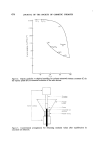
490 JOURNAL OF THE SOCIETY OF COSMETIC CHEMISTS cutaneous application of isotope-labelled test substances and measurement of their absorption by the method of 'analysis by difference' is carried out in practice. Wahlberg (74) studied the absorption from guinea-pig skin of a number of metals labelled with •,-emitting isotopes. The animal was anaesthetized, the hair was dipped and a glass cylinder of an inner diameter 20 mm (exposure area 3.2 cm •) and 104 mm high, was glued to the dipped area of skin. The glue was allowed to dry for 24 h and 1.0 ml of the respective isotope-labelled solution was put in the glass cylinder. This was immediately covered with a cover glass in order to prevent evaporation. The lower edge of the collimator was then placed in contact with the glass coverslip. Counting was commenced ! 5-30 s later and readings were taken over a period of 5 h. In order to estimate to what extent the amount of test material in the various layers of the stratum corneum, the epidermis or subcutaneous tissue influence the overall reading, the initial depot was carefully wiped off and the underlying skin was successively stripped in layers by 35 successive applications of adhesive tape. Results of a series of experiments indicated that the content of the radio-active label of the various skin elements varied greatly and it was not found possible to estimate the extent to which the 'disappearance curve' is influenced by amounts present in skin layers and subcuffs at any given moment of time, so that the best that can be achieved is a measurement of the sum of radiation from the various layers. The possible sources of error from this type of experiment were found to be injury of the skin by the adhesive used to secure the glass ring, absorp- tion of the isotope to the glass and leakage from the depot. Error from these sources could be guarded against by suitable preliminary work and careful attention to detail. In another type of experiment, the treated skin is excised after a predeter- mined period of time and the radio-activity is then measured. This method was employed by Parekh et al (57) in determining the percutaneous absorp- tion of sodium pyridinethione (SPT). 35S labelled SPT was applied in soap solution to the abdominal skin of rats 24 h after shaving. The application was spread over a fixed area by a Teflon rod, and was prevented from spread- ing further by the use of a polyethylene O-ring. After 15 s the treated area was wiped dean, the skin and subjacent muscle from this area were digested by an appropriate solubilizer, and the radio-activity of the digest estimated in a scintillation counter. The same method, with slight modifications, was used to determine skin absorption in monkeys. No cover was applied to the treated area presumably because of the short duration of the experiment.

PERCUTANEOUS ABSORPTION 491 Although 'disappearance measurements' are essential in order to obtain direct evidence of absorption of the test substance from the site of topical application, some idea of the rate of absorption may be obtained by measur- ing its rate of excretion in urine or faeces, from its deposition in internal organs, or by observing some known biological effect as a consequence of absorption. The list of compounds studied in this way in both animals and humans is an exhaustive one and only representative examples can be mentioned here. The absorption of mercury from intact and abraded skin was investi- gated critically by Sorby and Plein (70) by the use of •'øaHg. These workers used ammoniated mercury labelled with 2øaHg applied to the skin in the form of an ointment, and, 24 h later, the kidneys were removed for the deter- mination of mercury content since after absorption the metal accumulates chiefly in this organ (77). Estimation of the radio-active label in the urine has been found useful in other investigations especially in the investigation of the percutaneous absorption of steroids (67). The radio-active label, in this series of investigations, was found useful not only in determining the rate of absorption but in rendering unnecessay the elaborate analytical procedures required for identifying and measuring the metabolites. In other experiments, the radio-active label has been found useful in assisting the isolation and identification of the metabolites. For example, the presence of a•S in sodium pyridinethione was found to be of considerable assistance in the identification of its metabolite, pyridine-N-oxide-2-sulphonic acid in the urine of rats after dermal application of the parent compound (78). The pharmacological or other known biological effects of a particular compound can sometimes be used to investigate percutaneous absorption. Topical application of microgram quantities of steroids incorporated in a cream or ointment base produce local vasoconstriction which is visible as blanching. The degree and extent of blanching by topical corticosteroids was suggested as an indicator of percutaneous absorption and as a means of comparing absorption and efficacy in tests for new steroids (79, 80). Further experience indicated that this method of testing was neither accurate nor reproducible the degree of blanching was subject to 'observer error' and was found to vary in the same individual at different times of day even though the same anatomical site was used. The surrounding vascular skin colour and degree of pigmentation were found to interfere considerably with the interpretation of results. Dissolving the steriod in ethyl alcohol did not appreciably improve the reproducibility of the vasoconstriction (81). Despite these limitations, this method gave a reasonably close approximation
Purchased for the exclusive use of nofirst nolast (unknown)
From: SCC Media Library & Resource Center (library.scconline.org)