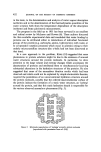
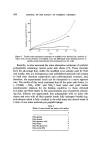
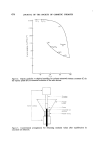
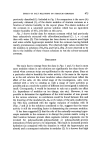
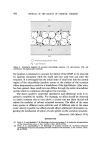
494 JOURNAL OF THE SOCIETY OF COSMETIC CHEMISTS a chamber suitable for such experiments and of the techniques employed are found in other publications (42, 94-98, 100, 101). The applicability of in vitro techniques is largely due to the non-cellular nature of the main epidermal barrier, the keratin layer, so that vital pro- cesses dependent on the integrity of epidermal cells are not involved: these cells lose their viability soon after death or removal from live animals. Knowledge of the rate of transepidermal passage of chemicals is im- portant in an assessment of the hazard of systemic toxicity from chemicals applied percutaneously. The in vivo method of 'analysis by difference' using a suitable radio-active technique is the most appropriate for assessing percutaneous absorption of cosmetic compounds. If such a study is first carried out in animals it may need to be supplemented by in vitro studies on excised human and animal skin in order to obtain some idea of the expected rate of penetration in humans. In vitro studies may also assist in studying factors which influence absorption of specific chemicals under defined conditions, such as temperature and pH. FACTORS INFLUENCING PERCUTANEOUS ABSORPTION Physico-chemical factors Temperature In most experiments on percutaneous absorption the environmental temperature is kept at about 37øC. Under the ordinary conditions of life, however, the skin .[emperature fluctuates considerably, especially in the exposed parts. Fluctuations in skin temperature are known to influence percutaneous absorption. Whitehouse, Hancock and Haldane (102) in their study of the passage of water and gases through the human skin, demon- strated an increase in the rate of percutaneous absorption of oxygen on raising the environmental temperature of man. Brown and Scott (103) later showed an increase in the absorption of methyl salicylate due to an increase in the skin temperature. Fritsch and Stoughton (104) investigated the effect of temperature on the in vitro percutaneous absorption of acetylsalicylic acid on human skin. They found that at 40øC and 88•o rh, the transepidermal passage of salicylate was about eight times times greater than it was at 10øC. An increased rate of percutaneous penetration of alcohols (C•.-C8) over the range of temperature 5ø-50øC was observed by Blank, Scheuplein and MacFarlane (105) using in vitro

?ERCUTANEOUS ABSORPTION 495 technique. They determined the permeability constants of each of the seven alcohols and found that there was, on an average, a 10-fold increase in the permeability constant for each alcohol, as the temperature rose from 10 øC to 50øC. A five-fold increase in the rate of absorption of salicylic acid and carbinoxamine was also found in vivo when the skin temperature of the abdomen of guinea-pigs was raised from 20øC to 38 øC (106). These effects of temperature demonstrated by in vivo and in vitro techniques are not due to skin circulatory effects of heat and cold. State of ionization Before the advent of radio-isotope labelling techniques it was generally held that electrolytes applied to the mammalian skin in aqueous solutions either do not penetrate at all, or if they do, they enter only in small amounts (21). In several experiments 'non-physiologic' cations, such as Li, Hg, Cs, Sr and Ba or of 'physiological' cations such as Na and Ca were applied to the skin of several species including man. No transepidermal passage could be detected by the analytical techniques employed (107-111). With the isotope tracer technique Loeffier and Thomas (112) were able to demon- strate the percutaneous absorption of aqueous radio-active strontium solutions (89SrC1•) through the shaved skin of rats. Johnston and Lee (113), applying an aqueous solution of •aNaC1 incorporated in an ointment base to the right arm of man, showed that radio-activity appeared in the left hand and in the urine. Others (96, 114, 115) have confirmed that electrolytes penetrate mammalian skin and in a recent experiment Wahlberg (56) showed that in the guinea-pig approximately 20•o of the amount of HgCI• and NaC1 applied to the skin was absorbed via the skin appendages, the remaining 80•o passed via the stratum corneum. It is of some interest that the rate of diffusion of water estimated by Scheuplein (39) on human epidermis in vitro is of the same order as that of the electrolytes employed by Wahlberg (56) on guinea-pig skin. This indicates that the rate of penetration of these electrolytes is not appreciably different from that of water. It would seem reasonable to expect other electrolytes to penetrate the skin at similar rates. Skog and Wahlberg (114) applied the chlorides of Co, Zn, Cd and Hg, sodium chromate and silver nitrate in equimolar concentrations (0.002 M) to the skin of guinea-pigs. With the exception of HgCI• these salts are present in an ionized form and their rate of absorption on a molar basis was of the same order as that of water. Some variation in the percutaneous absorption, expressed as disappearance constant was, however, found. The mercury compounds were absorbed twice as rapidly as those of Co,
Purchased for the exclusive use of nofirst nolast (unknown)
From: SCC Media Library & Resource Center (library.scconline.org)