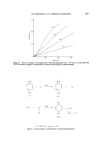
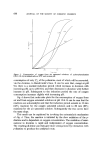
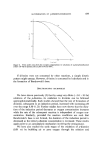
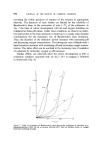
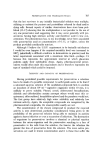
704 JOURNAL OF THE SOCIETY OF COSMETIC CHEMISTS severe limitations in their applicability restrict their use in modern pro- ducts. Alcohol was traditionally the preservative of tinctures and other galenicals the use of which has rapidly declined. Chloroform has been used both as a flavouring agent and preservative in extemporaneously prepared oral preparations with short storage life. It is volatile and readily lost from such preparations and is now losing favour because of possible toxicity. Syrups are still in vogue but temperature cycling during storage can produce a surface layer deficient in sucrose and deficient in antimicrobial activity. Indeed, recommendations to include preservatives in syrups (1) focus attention on possible failures in the use of syrup as a preservative. The physico-chemical properties of benzoic acid place severe restriction on its use. It has only moderate water-solubility (ca 0.28•) but high lipid solubility, for effectiveness must be employed at about half-saturation con- centration which, as will be shown later, detracts from its usefulness and has a pKa of 4.2 which really restricts its employment to acidic preparations. Several reports (2-5) have indicated the widespread nature of con- tamination in pharmaceuticals and stressed the necessity of controlling it Unfortunately, except for sterile products which are outside the purview of this survey, there are no universally recognized standards of what con- stitutes an acceptable number of micro-organisms in a product, the effective- ness of a preservation or even methods of determining preservative activity. Let it be first established that the writer strongly supports the hypothesis that preservation must never be a substitute for good manufacturing practice which can lead to a substantially reduced number of micro- organisms in a product at completion of manufacture. It is rather a safe- guard either to destroy or inhibit the growth of those organisms which cannot be eliminated by good manufacturing practice or which gain access to the product during use. Hitherto, the effectiveness of preservation has usually been assessed by a so-called challenge test. These involve inoculating a product with known organisms and incubating perhaps for many months. The prolonged storage or incubation is a confession of the recognition of the possibility of failure of the preservative effectively to fulfil its role and a number of containers are put on storage in an attempt to quantify the probability of failure. The test is really a measure of the ability of contaminating organisms to destroy the product. I submit that more desirable would be a performance test--a measure of the ability of the product to destroy invading organisms. Such a test would be more positive, more rapidly performed and possibly more easily definable by regulatory bodies.

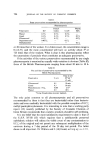
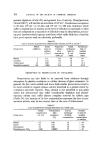
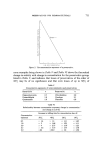
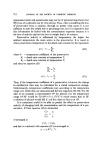
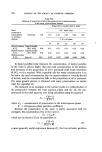
PRESERVATIVES FOR PHARMACEUTICALS 705 REQUIREMENTS OF PRESERVATIVES 'What constitutes satisfactory preservation?' is a question that has been asked by many and indeed was the subject of a paper presented in 1958 (6). The inclusion in a product of a bacteriostatic concentration of a preservative has often been regarded as adequate and many examples can be found of recommended concentrations of preservatives being at the level indicated in tests for minimum inhibitory concentrations. One does not have to seek far for the reason. It is that because the fundamental meta- bolism of all cells is essentially similar, a compound which shows marked toxicity to microbial cells is likely to show at least some toxicity to human cells, depending upon the mode of application. This philosophy, though understandable, does not necessarily make for adequate preservation. As far as the preservation of ophthalmic solutions is concerned a very definite shift in attitude is detectable. Crompton (7) originally suggested that ophthalmic solutions should incorporate a bacteriostatic and indeed reconunended 0.005•o chlorhexidine which is certainly bacteriostatic rather than bactericidal (7). He later declared (8) that reliance on bacteriostatics can be hazardous and maintained that ophthalmic solutions should contain a quickly acting bactericide, and Williams and Boehm (9) criticized the Solution for Eye Drops (B.P.C. 1959) on the grounds that it was not bactericidal. Perhaps the most categorical statement is due to Kohn, Gershenfeld and Barr (10) who believe that any substance having a steriliz- ing time greater than 1 h is too slow-acting for use as a preservative in ophthalmic solutions. I am happy to observe that the preservatives cur- rently recommended by the British Pharmaceutical Codex for eye drops appear in most situations to meet this requirement and furthermore they do so without there having been criticisms of their use on the grounds of toxicity or irritancy. There are, however, exceptions to this general state- ment. For example, Ridley (11) found 0.0045/0 phenylmercuric nitrate to be necessary in eye drops to ensure freedom from contamination a concen- tration four times that recommended by the Codex. There is nothing like the weight of authoritative advice for products other than ophthalmic solutions but it is instructive to consider what are regarded as adequate preservatives by several pharmacopoeias (Table I). Of the preservatives shown there is agreement only on the recommended concentration for phenol. In the case of cresol the specified concentrations range from 0.30 to 0.50•o and since the concentration exponent for cresol is about six the activity of the more concentrated solution is about (1.66) 6
Purchased for the exclusive use of nofirst nolast (unknown)
From: SCC Media Library & Resource Center (library.scconline.org)