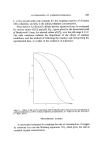
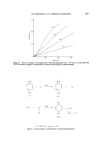
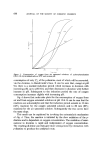
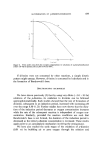
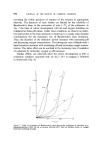
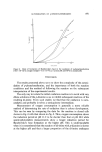
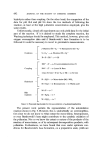
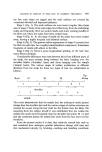
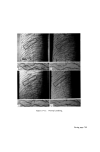
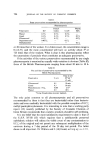
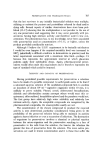
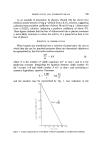
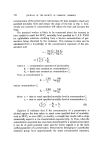
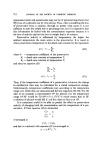
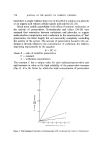
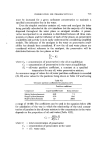
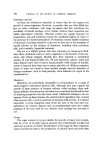
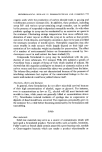
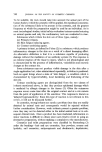
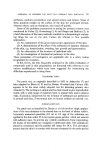
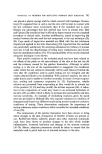
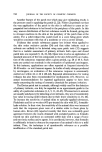
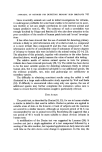
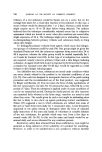
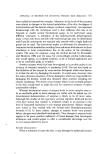
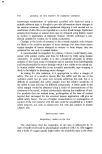
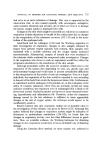
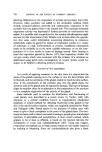
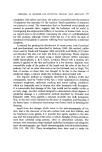
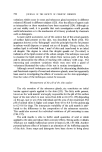
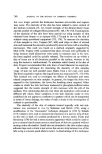
710 JOURNAL OF THE SOCIETY OF COSMETIC CHEMISTS concentration of the preservative will increase the time needed to reach any specified mortality level and reduce the slope of the line in Fig. 1. Con- versely any increase in concentration will reduce the time and increase the slope. The practical worker is likely to be concerned about the increase in time needed to reach the 99.9}/0 mortality level specified by U.S.P. XVIII for ophthalmic solutions resulting from a known concentration of pre- servative being absorbed by the container. This increase in time can be calculated from a knowledge of the concentration exponent of the pre- servative and log K•- log K•. log C•- log Ca ( C• ) n K• or • =K-• where n -- concentration exponent of preservative K• = death rate constant at concentration C• K•. = death rate constant at concentration Now, at concentration C• 2.303 100 K•- t• 1øg 0.1 and at concentration 2.303 100 K•.- t•. log0.1 where t• -- time to reach specified mortality level at concentration C• t•. = time to reach specified mortality level at concentration Ca Equation H indicates that if the concentration of a preservative is plotted against the time taken to reach some specified level of mortality, such as 99.9• or even 100• or sterility, a straight line results with a slope numerically equal to n, the concentration exponent (Fig. 2). Thus, when the concentration exponent has once been determined for a named preservative it can be of great practical value and the writer regards it as the most useful parameter of a preservative. Preservatives belonging to a particular chemical group have approximately the same concentration exponent,

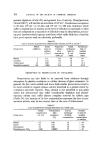
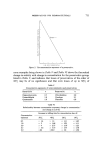
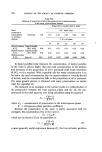
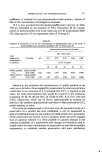
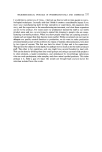
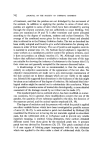
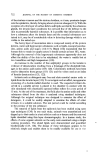
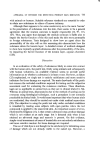
PRESERVATIVES FOR PHARMACEUTICALS 711 Log conch preservahve Figure 2. The concentration exponent of a preservative. some examples being shown in Table V and Table VI shows the theoretical change in activity with change in concentration for the preservative groups listed in Table V, and indicates that losses of preservatives of the order of 10•o may be of no significance and that even losses of up to 50• of Table V Concentration exponents of some commonly used preservatives Preservative n Preservative n Organomercurials 0.5 Chlorhexidine 2.0 Formaldehyde 1.0 Parabens 2.5 Quaternaries 1.0 Phenolics 6.0 Table VI Relationship between concentration exponent, change in concentration ' and change in activity Increase in killing time for concentration loss of: Concentration exponent 50 % 40 • 20 % 10 % 0.5 x 1.4 x 1.3 x 1.11 x 1.05 1.0 x 2 x 1.66 x 1.25 x 1.11 2.0 x 4 x 2.75 x 1.56 x 1.23 2.5 x 5.6 x 3.55 x 1.75 x 1.30 6.0 x64 x20.9 x 3.8 x 1.90
Purchased for the exclusive use of nofirst nolast (unknown)
From: SCC Media Library & Resource Center (library.scconline.org)