APPRAISAL OF METHODS FOR DETECTING PRIMARY SKIN IRRITANTS 753 with animals or humans. Suitable reference standards are essential in order to relate new substances to others of known irritancy. Although there appears to be some controversy as to the main 'barrier' to the penetration of substances into the skin, there seems to be a general agreement that the stratum corneum is largely responsible (12, 97, 113, 127). Thus, any agent that damages the stratum corneum is liable also to impair the barrier function of the skin and make the skin more permeable to foreign substances. Tests designed to show how an agent alters the permeability of the skin will on this reasoning also demonstrate how the substance alters the keratin layer. A detailed review of methods designed to show how topically applied substances alter the permeability of the skin, by impairing the barrier function of the keratin layer, appears elsewhere (128). Discussion In an evaluation of the safety of substances likely to come into contact with the human skin, the patch test, firstly using animals and subsequently with human volunteers, on available evidence seems to provide useful information as to whether a substance is irritant or not. However, as Idson (25) emphasized, no single test is entirely satisfactory and more sensitive indicators for tissue damage are required. The main drawbacks of the patch test concern the occluded conditions required for testing and the subjective assessment used for evaluating the cutaneous reactions. These disadvan- tages are as applicable in animal tests as they are in clinical trials (11, 54). Whereas in animal tests, discrepancies due to the method of scoring can be overcome using histological techniques, such a procedure is not normally practicable in clinical trials. It would seem important that when human trials are conducted, they should be carried out under strict medical supervision (59). The objection to using the patch test only under occluded conditions is remedied by treating some subjects with open patches where the test compound is applied to the uncovered skin. An important source of error, illustrated by Kligman (11), is that certain substances may produce damage which is not evident at an early stage but is detected only when it has attained an advanced stage and necrosis is present. On this evidence, simple visual assessments of areas of treated skin are not entirely satisfactory and more sensitive markers for tissue damage are required. The use of vital dyes is not thought to be satisfactory for delimiting areas of damage which are not already visible to the naked eye. However, a

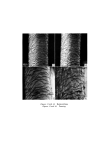
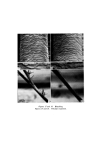
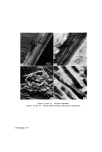
754 JOURNAL OF THE SOCIETY OF COSMETIC CHEMISTS microscopic examination of epidermal cornified cells removed using a suitable adhesive tape, is thought to provide information about changes in the stratum corneum. Although epidermal stripping is best carried out on small areas of skin this is not regarded as a serious disadvantage. Epidermal samples from human or animal skins may be obtained using blisters raised by suction or application of chemical vesicant. Neither technique is con- sidered suitable for routine use in safety evaluations. Changes in the levels of enzymes in skin treated topically with irritants are likely to be sensitive markers of tissue damage, but since these assays require samples of tissues obtained at autopsy or from biopsy, they are restricted for use only in animal studies. A recommended investigation for primary irritants would ideally com- mence with animal studies and then be followed by trials using human volunteers. In animal studies, it is also considered advisable to obtain samples of skin from areas of treatment and to examine these histologically and histochemically for minor damage which is not visible to the naked eye. In human studies where this is not normally practicable, tape stripping is likely to be helpful in detecting minor changes. In testing for skin irritation, it is appropriate to allow a margin of safety. The use of a sensitive species like the rabbit and the use of the occlusive patch test go some way towards achieving this end, but it is difficult to quantirate this safety margin since the relative sensitivity of the rabbit to man will vary for different compounds. A better guide to the safety margin would be obtained using a series of concentrations of the substance to be tested, without substantially altering the conditions of test. For products that are washed away, prolongation of the time of contact beyond that envisaged for the eventual human application will give an added safety factor. The use of higher concentrations or prolongation of contact of the test material with the skin could be considered as a further safety measure, not only in animal tests but with due caution in human subjects also. SPECIALIZED TESTS Respirat9ry studies on the skin The observation that the respiration of the skin is influenced by its state of health (122) and its physiological condition (130, 131,128)suggests that a study of oxygen uptake might reflect the metabolic state in the tissue
Purchased for the exclusive use of nofirst nolast (unknown)
From: SCC Media Library & Resource Center (library.scconline.org)