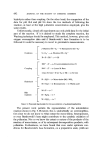
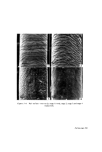
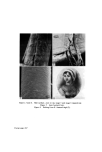
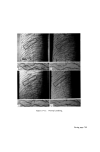
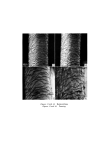
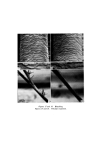
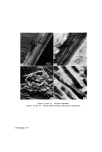
APPRAISAL OF METHODS FOR DETECTING PRIMARY SKIN IRRITANTS 757 precipitate with saliva and urine, the authors concluded that the presence of ammonia was necessary for the reaction. Small quantitites of ammonia are present in sweat. The observation that no functional sweat glands are present in psoriatic skins, suggests that the technique will be useful in investigating the antiperspirant effects of cosmetics in human trials. As yet, no reports seem to be available concerning the value of o-phthalaldehyde for this purpose, although Verbov (145) did use it to show the lack of functional sweat glands in patients suffering from hypohydrotic ectodermal dysplasia. A method for plotting the distribution of sweat pores, both functional and non-functional, was described by Sarkany (148). His method, unlike those used by Wada and Takagaki (146) and Juhlin and Shelley (147) does not discolour the skin, but takes the form of imprinting. Plastic imprints of the skin surface are made using a liquid silicone rubber monomer (Silfio dental plastic, J. & S. Davis, London). Mixed with a catalyst, this plastic is applied to the skin and hardens in a few minutes. Imprints were successfully made of the palms of the hands and the soles of the feet of patients, but not on other sites such as on the forehead, arm or thigh. The lack of success on these sites was thought to be due to the absence of epidermal ridges, a feature which this technique demonstrated well. The imprint method as originally described by Sarkany (148) and subsequently used by Verbov (145), has a wider application in detecting increased roughness, epidermal cracking and minor scaling, conditions which are frequently seen in human skin after treatment with detergents. It is conceivable that damage of this type would not be readily visible at an early stage. Another method designed to demonstrate minor degrees of epidermal damage is a colorimetric method described by Tronnier and Eisbacher (149). They applied a resistant insoluble dye stuff, hostaperm blue, to the skin which marked out the areas of roughness and fissuring of the horny layer. A dissection microscope was found useful in detecting the fissuring. Apart from the changes which occur in the microtopography of the skin, that is the character of the skin surface hairs and hair follicles, and the functional sweat glands, it is possible that agents applied to the skin may alter the composition of the sweat or sebum. Samples of these secretions have been collected using acetone, ether or chloroform solvents. The extracts were examined using standard analytical techniques including thin layer chromatography, gas-liquid chromatography and photodensitometry (124, 125, 150, 151). These investigations have been used to study the

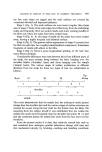
758 JOURNAL OF THE SOCIETY OF COSMETIC CHEMISTS variations which occur in sweat and sebaceous gland secretions in different rodents (150) and in different subjects (125). Also the effects of agents such as tetracycline on these secretions have been examined (124). Although as yet not widely used, it is possible that such investigation could provide useful information as to the mechanism of irritancy produced by chemicals such as detergents. A more useful assessment, not of the content but of the actual quantity of surface lipid present on the skin, was described by Roth (152). The apparatus known as the 'Sebograph' used the principle that the fat present in sebum would disperse or spread out an oil droplet. Using a stylus, the surface lipid is collected from 1 mm • of skin and transferred to an inked oil droplet. The degree to which this droplet speads out ('hs-value') is indicative of the lipid content of the sebum sample. The technique was used to examine the lipid content of the sebum from various parts of the body and to demonstrate the effects of washing with ordinary toilet soap. The interesting and consistent variations which were seen with a panel of volunteers illustrated the value of this test in routine investigations. Although several techniques are available for determining distribution and functional capacity of sweat and sebaceous glands, none has apparently been used in investigating the effects of cosmetics on the skin appendages thus the value of the techniques cannot be assessed. Measurement of the pH of the skin surface The oily secretion of the sebaceous glands, etc. constitutes an initial barrier against agents applied to the skin (153). The fatty acids present, known as the 'acid mantle' are largely responsible for the pH of this surface layer of the skin which in man varies from 4.04 to 6.6 (153-155) depending on the age, race or sex of the individual and the area of skin examined. The pH of animal skins is higher and ranges from 4.8 to 6.6 for the guinea pig to 6.2-8.6 for dogs. The interspecies variability of the acid mantle is attri- buted to the differences in the composition of the sebaceous secretion. This could also account for individual variations of pH occurring in man (156, 157). The acid mantle is able to buffer small quantities of acid or alkali applied to the skin and reduce their corrosive effects. Strong acids or alkalis which are not readily buffered are severe irritants (2, 68, 158-160). Another potential adverse effect of irritants is an alteration of the buffering capacity of the skin. Some soaps and detergents have been shown to bring about
Purchased for the exclusive use of nofirst nolast (unknown)
From: SCC Media Library & Resource Center (library.scconline.org)