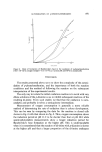
APPRAISAL OF METHODS FOR DETECTING PRIMARY SKIN IRRITANTS 763 the correct interpretation in terms of tissue damage. The conclusion reached by Allenby et al (187) that the impedance of the skin varies according to the permeability to water, suggests that probably the techniques are of greater value in detecting changes in the permeability of the skin due to topical applications of substances, rather than to detecting damage which is not evident to the naked eye. Collagen swelling in vitro Choman (192) suggested that since normal skin contains approximately 70}/0 collagen, changes in dermal collagen might be useful in evaluating the response of the skin to irritants. He exposed discs of animal and human skin collagens to a series of alkyl sulphates in vitro and noted changes in the thickness of the discs and their ability to stain with indigo carmine dye. With these surfactants, consistent changes were evident after 24 h immersion. Swelling or contraction of the discs varied according to the nature and concentration of the chemical and the temperature. Choman (192) regarded the magnitude of swelling as a measure of the conformational changes in the structure of the protein. Sodium lauryl sulphate, which showed the greatest effect in this in vitro assay, was also the most irritant of the agents in in vivo studies on human skin (193). It would seem that a correlation exists between the magnitude of collagen swelling and absorption of the surfactant at the protein-solution interface. The tissue changes would be a reflection of the weakening or rupture of hydrogen bonds and salt linkages which are largely responsible for holding together the collagen fibres. In these studies the staining characteristics of the collagen discs with indigo carmine correlated well with the swelling observed. Greatest dye uptake was observed in discs exposed to surfactant solutions which produced greatest swelling. It was not found possible to remove the dye taken up for quantitative measurement of the tissue responses. In a subsequent study, Choman (194) used skin collagen swelling to compare the effects of aqueous anionic, cationic and nonionic surfactants. Whereas anionic soaps caused swelling and inhibition of dye uptake, cationic and nonionic agents caused contraction. Where swelling was less than 50•o structural changes were not evident histologically. The lack of tissue changes with nonionic surfactants is consistent with Putnam's view that nonionic agents are not reactive with proteins on account of the absence of strong polar groups on the molecule (195). However, this concept would not seem adequate to explain the lack of

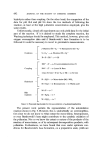
764 JOURNAL OF THE SOCIETY OF COSMETIC CHEMISTS swelling of the tissues in quarternary ammonium cationic agents such as Cetab, which are known to interact with proteins and are also irritant in vivo (196). The value of the collagen swelling technique in vitro as an indication of the irritancy of a particular substance to the skin in vivo is open to specula- tion. It would appear, however, that the technique may provide some evidence of the ability of a particular substance to interact and denature fibrous proteins. Since skin irritation would appear to result from denatura- tion of the fibrous protein-keratin, it is probable that the collagen swelling technique may prove useful in predicting strong skin irritants. Skin reflectance Absorption studies of skin irradiated with ir light, have indicated the possibility that spectroscopic methods may be of value in detecting the presence of foreign substances present on the surface of the skin, and on the general condition of the keratin layer (197). Absorption peaks at particular wavelengths have been correlated with the presence of moisture, carbonyl groups, polypeptide amides and absorptions due to CH2 and CHa groups (198, 199). The absorption peaks have been shown to vary according to the composition of the stratum corneum, and the presence of sweat, sebum or materials of extraneous origin. For example, after washing and drying the skin thoroughly, peaks of absorption corresponding to water were diminished. In psoriatic skins, water peaks were diminished as would be expected from regions where sweating is impaired. The technique is considered to be attractive since it may be readily carried out in vivo and imposes no serious artefacts. However, further studies would appear to be warranted to establish the value of the technique in detecting epidermal damage which is not visible to the naked eye and cannot be ascertained using simpler techniques employing less sophisticated appara- tus. At present, the interpretation of changes in the absorption properties of the skin in terms of tissue damage is not clear and caution would seem to be necessary in interpreting the results of skin reflectance studies. SUMMARY AND GENERAL CONCLUSIONS Investigations of the skin irritancy of substances intended for inclusion in cosmetics, should be carried out firstly in animals and subsequently in man. The tests should be designed to take into account the type or'
Purchased for the exclusive use of nofirst nolast (unknown)
From: SCC Media Library & Resource Center (library.scconline.org)