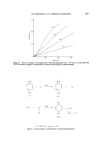
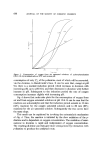
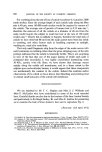
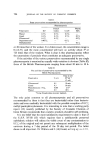
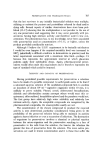
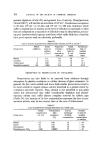
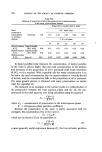
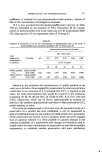
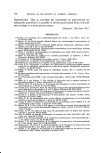
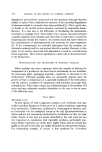
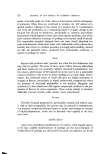
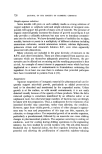
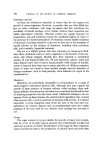
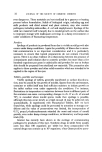
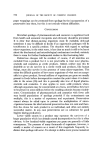
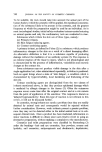
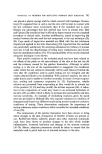
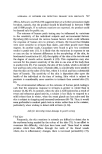
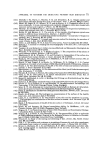
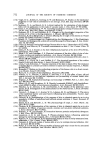
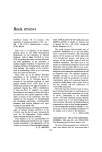
708 JOURNAL OF THE SOCIETY OF COSMETIC CHEMISTS greatest depletion {,Table III) and greatest loss of activity. Phenylmercuric nitrate 0.001 }/o will sterilize an inoculum of 10 a ml -• Pseudomonas aeruginosa in 10 min, 105 ml 4 in 25 min and l0 s ml -• in 180 min. Solutions which suffer a marked loss of activity as the level of infection is increased or when they are subjected to a succession of infections may be described as possess- ing oeoor (antimicrobial) capacity and those which suffer little loss of activity have good capacity and are obviously preferable. Table III Loss in activity of preservative solutions after infection by 109 E. coli ml -x Preservative Phenol Initial Proportion Initial Sterilization coefficient concn of of preserv- sterilization time of solution ative time for residual (Yoo w/v) removed by E. coli solution cells (•) (rain) (rain) Phenol 1 1.0 0.5 10 10 m-Cresol 2 0.33 0.6 10 10 Chlorocresol 12 0.08 2.5 10 11.5 Benzylchlorophenol 160 0.006 33.0 10 115.0 ABSORPTION OF PRESERVATIVES BY CONTAINERS Preservatives are also liable to be removed from solutions through absorption by plastics containers or rubber closures of glass containers. In general, the less water-soluble and more lipid-soluble preservatives tend to be more soluble in organic phases and are absorbed to a greater extent by containers and their closures. Thus, phenol is not absorbed to any great extent but chlorocresol may suffer considerable depletion and phenyl- mercuric nitrate may suffer almost complete removal by rubber caps (Table IV), but because of its low concentration exponent the loss of pre- servative activity may be less serious than in the case of chlorocresol. Table IV Loss of preservative through absorption into rubber caps Preservative Initial Concentration Loss as Increase concentration after percentage in time for (% w/v) absorption of initial residual (%) concentration concentration to sterilize Phenol 0.5 0.39 22 x 4.5 Cresol 0.3 0.21 30 x 8.5 Chlorocresol 0.1 0.04 60 x 250 Phenylmercuric NO a 0.001 0.00005 95 x 42

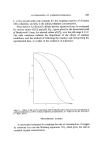
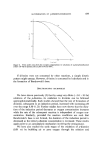
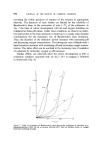
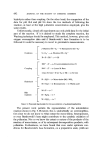
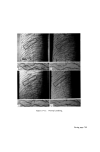
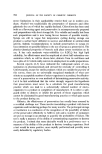
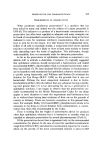
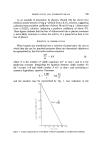
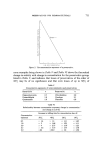
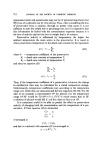
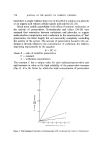
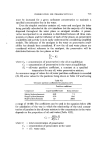
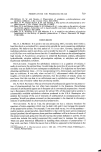
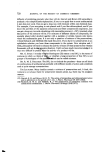
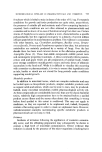
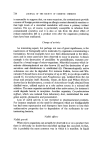
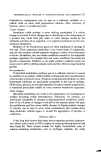
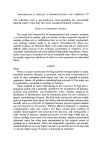
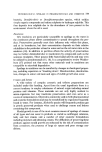
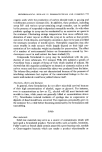
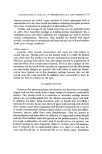
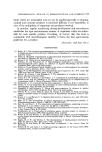
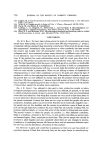
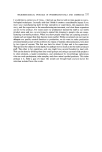
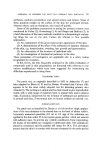
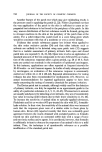
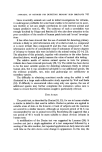
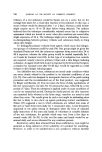
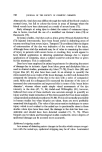
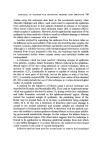
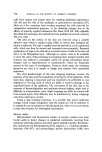
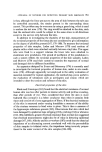
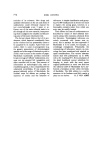
PRESERVATIVES FOR PHARMACEUTICALS 709 As an example of absorption by plastics, Hamdi (18) has shown that cellulose acetate absorbs 23 mg g-• phenol from a 0.1 •o solution, suggesting a plastics/water partition coefficient of about 30 and 19 mg g-• chlorocresol from a 0.025•o solution, indicating a partition coefficient of about 475. These figures indicate that the loss of chlorocresol into a plastics container is more likely seriously to reduce the activity of a preservative than is the loss of phenol. KINETICS OF PRESERVATIVES When bacteria are introduced into a solution of preservative the rate at which they die can for practical purposes (there are theoretical objections) be represented by the first-order reaction equation -dN - KN (I) dt where N is the number of viable organisms m1-1 at time t and K is the death-rate constant. Integrating the equation between viable number No ml 4 at time t =0 and viable number N ml -• at time t and converting to common logarithms, equation I becomes 2.303 No K - log t N- and the reaction may be represented by Fig. 1. Any reduction in the 1¸5 - 10 4 7 • I0• --K .9 o• IC) • t0 20 30 40 50 60 Time ( rain ) •i•u•e 1. Typical representation of the death of mi•m-o•ganisms
Purchased for the exclusive use of nofirst nolast (unknown)
From: SCC Media Library & Resource Center (library.scconline.org)