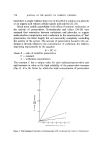
APPRAISAL OF METHODS FOR DETECTING PRIMARY SKIN IRRITANTS 761 is that, although the force put across the area of skin between the tabs can be controlled accurately, the strains present in the surrounding tissue cannot. This problem may be overcome by using a guard ring, which is used to enclose the test area (178). The ring would be attached to the skin, such that the enclosed skin would be subject to the same stress in all directions except in the narrow strip between the tabs. In addition to investigating the elasticity of the skin, measurements of the torsional properties of the tissue also are considered to give information on the degree of pliability present (167, 178-180). To measure the torsional properties of skin samples, Laden and Morrow (179) used sections of plantar callus which were attached vertically between vinyl tabs. The upper tabs were fixed to a support whereas the lower tabs were attached to aluminium wire pendulums. The period of oscillation of the pendulums in such a system reflects the torsional properties of the skin samples. Laden and Morrow (179) used their system to examine the responses of normal and damaged skin to different humidifies. An apparatus designed by Evans and Seisennop (174) is currently used to investigate the torsional properties of human skin, under in vivo condi- tions (178). Although apparently not employed in the safety evaluation of materials intended for topical application, the method may prove useful in the evaluation of substances such as astringents and creams which are intended to alter the tension and softness of the skin. Electrical properties of the skin Blank and Finesinger (181) found that the electrical resistance of normal human skin was less after periods in intense activity and profuse sweating, than after periods of rest. They considered that when the skin is more hydrated than normal it is a better conductor than when it contains little water and consists of a loose aggregation of fibres. If the electrical resistance of the skin is measured under varying humidities a measure of the ability of the stratum corneum to bind water is given. This is then a measure of the hygroscopic substances present (182). Observations that skin which had been damaged by epidermal tape stripping (183), pricking (184) or abrasion (185, 186) exhibited a greater electrical resistance than normal skin suggested that electrical measurements might also be of value in detecting epidermal damage (167, 168). Allenby and his co-workers (187) noted that the electrical impedance of an alternating current correlated well with the permeability of skin samples to tritiated water, the impedance being inversely propor- tional to the water content of the skin samples (188-190).

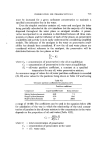
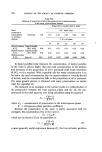
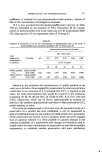
762 JOURNAL OF THE SOCIETY OF COSMETIC CHEMISTS Although the exact mechanism for the enhanced impedance of dehydrated skin to an alternating electrical current is obscure, Allenby et al suggested that the impedance measurements were an indication of the composition of the stratum corneum, the forces binding the components in the keratin and the state of hydration of the tissue. When the skins of rats fed on a low fat diet were examined, epidermal lipids were depleted, water binding was reduced and the impedance (A/C) and resistance (D/C) were increased. Histologically these skins exhibited a state of gross spongiosis (191). Measurements of the electrical resistance to a direct current or of the impedance to an alternating current may be carried out, either using excised skin samples, or in vivo on convenient areas of the skin of patients. Blank and Finesinger (181) used a simple direct current with zinc electrodes which were brought into contact with the human skin for long enough to obtain a reading for cutaneous resistance. The palms of the hands and the arms were suitable areas for this work. They found that the apparent skin resistance decreased as the size of the electrode increased. Also, the effective size of the electrode is not indicated by its overall size, but by the area of skin actually in contact with the electrode paste. A further problem en- countered in their work concerns the effect of liquid film on the electrode paste. This has the effect of increasing the overall size of the electrodes and thus leading to misleading results being given. The effect of the electrodes and the paste used to provide contact may be a source of error, due to their ability to increase the state of hydration of the skin. In examining the effect of topically applied substances on the electrical conductivity of the skin, it would also seem important to use subjects only after periods of rest. In this way the effects due to natural sweating could be minimized. In a study of the effects of organic solvents on the electrical impedance of the skin samples, an AC half bridge circuit was used (187). The electrodes were of stainless steel and constant contact with the skin was maintained using beryllium-copper springs. In this system, a reduction in the electrical impedance of the skin due to the action of some carboxylic acids, was present 1-2 h after treatment. With dimethyl sulphoxide, however, which greatly enhances the penetrability of the stratum corneum, a drastic reduc- tion was evident after only a few minutes. Although the changes in the electrical impedance or resistance of skin treated with solvents or other substances may give some information on the extent of damage present in the stratum corneum, at present the value of the method is open to speculation. Until now only limited experience has been gained in using them and no positive conclusions are possible as to
Purchased for the exclusive use of nofirst nolast (unknown)
From: SCC Media Library & Resource Center (library.scconline.org)