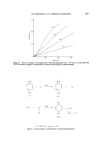
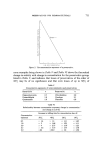
APPRAISAL OF METHODS FOR DETECTING PRIMARY SKIN IRRITANTS 759 such a change (161). Although not extensively used, a measure of the dermal 'neutralizing' capacity of the skin may be a useful guide to the effects of a substance on the function of the sebaceous glands. Methods for measuring the acidity of the skin surface date back to 1892 when Heuss (162) used simple colorimetric indicators. Using this technique, the human skin was shown to have a pH of approximately 5.5 (163). More recent investigators have used pH meters and as the instruments have become progressively more accurate the techniques have become more sensitive (154, 164-167). Saitoh and Inomato (166), in discussing the use of pH meters in measur- ing the pH of the skin surface layer, emphasized the importance of main- taining a constant contact between the skin and the electrodes for obtaining consistent readings. They also considered that the pressure with which the electrodes were applied to the skin and the period of contact were potential sources of error. Using short periods, with pH readings taken at frequent intervals and an apparatus designed to give a constant contact with regular pressure, these authors studied the response of human skin to treatment with solvents which removed the surface lipids. With substances which had a relatively high acidity, neutralization was achieved within about 30 min, but with alkaline substances the reduction in pH was delayed. These observations suggest that the time taken for the pH to return to normal is a measure of the harmful effect of a particular substance. Although the use of pH neutralizing ability of the skin appears to be limited to a few studies in which the effects of soaps and detergents have been examined, the technique would seem to have a wider application in the evaluation of the safety of cosmetic substances. It has the advantage of being usable in vivo with the minimum of difficulty and does not require to be carried out by medical personnel. For this reason studies into its applica- bility in this field would appear to be warranted. The mechanical properties of the skin Normal skin is capable of being stretched by up to 10-50•o depending upon the age, sex and species of animal (167, 168). Rodent skins have the greatest extensibility of those so far examined. Female human skin is weaker than that of males and skin taken from the trunk is less elastic than that derived from the limbs (169). Also the extensibility of the skin declines with age. If the skin is stretched for only a few seconds the extension is reversible,

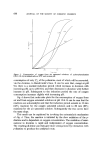
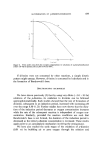
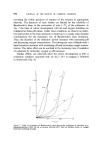
760 JOURNAL OF THE SOCIETY OF COSMETIC CHEMISTS but over longer periods the distension becomes irreversible and rupture may occur. The elasticity of the skin has been related to water content of the stratum corneum (13, 11), tensile strength of the dermal elastic tissue and the number of collagen fibres present (167, 168, 170-172). Examinations of the elasticity of the skin have been carried out using samples of skin obtained from biopsy or at autopsy (168, 171) and in vivo on the skin of subjects using specialized equipment (173, 174). To measure the elasticity of skin samples in vitro, Tregear (167, 168) used strips or discs of excised skin and measured the extension produced by known forces with a travelling microscope. This work was based on a method originally suggested by Dick (170). Tregear (168) considered that discs of tissue were preferable to strips because small distensions were easier to measure and, in his view, the force applied could be quickly released. The tensions set up within a disc of tissue are in all directions parallel to the surface, whereas in the strip the tension is unidirectional. To minimize radial stretch in the disc of skin, Tregear recommended that only discs of small diameter be employed. In another technique for measuring the elasticity of skin samples, 'rings' of skin cut with parallel razor blades from a rat's tail, were used. The force required to rupture the ring of tissue was measured (171,175-176). This method was used to investigate the effects of hydrazine and some related compounds on skin samples. In general, the longer the skins were exposed to the hydrazines, the lower the breaking strain required. Other studies in which the skin had been immersed in phosphate-buffered saline suggested that the tensile strength of skin increases with the pH of the medium. This relationship did not exist when the hydrazines were tested at different pH values. Since variations in the skin elasticity under in vitro conditions do not appear to conform to a pattern which can be interpreted in terms of tissue damage, the value of such a study in the investigation of irritants is questionable. The elasticity of the skin of subjects treated topically with test sub- stances was examined in vivo by Sodeman and Burch (173), using a modification of the 'elastometer' technique designed in 1912 by Schade (177). Calipers were used to measure the extension of a narrow strip of skin on the arm or back of a patient produced by a known strain. Evans and Seisennop (174) devised a more accurate apparatus which could be used to give a uniaxial tensile strain across a small area of skin on a patient without causing undue discomfort. Small tabs are attached to the skin surface using adhesive tape and a strain is put across the narrow strip between two of the tabs using a constant speed electric motor. A disadvantage of this technique
Purchased for the exclusive use of nofirst nolast (unknown)
From: SCC Media Library & Resource Center (library.scconline.org)