756 JOURNAL OF THE SOCIETY OF COSMETIC CHEMISTS detecting differences in the respiration of normal and psoriatic skin (143). However, when succinate was added to the incubation medium which already contained glucose, pyruvate and oxaloacetate, respiration in the psoriatic skin was greater than in the normal skin. This succinate-enhanced respiratory activity was depressed if further pyruvate or oxaloacetate was added. It is possible that competition for the succinic dehydrogenase might account for this observation (144). Details such as these allow the specula- tion that some useful information concerning alterations in cutaneous metabolism might be gained by means of respiration studies if a variety of substrates is used. Unfortunately at present, insufficient information seems to be available as to the most suitable substrates, or on the inter- pretation of in vitro results in terms of damage caused. Also, bearing in mind the experience gained by Brown (137), that respiratory studies did not give results which were consistent with the irritancy of a substance as determined using patch tests, investigations of oxygen uptake would not appear to be helpful in detecting primary irritants. Function of skin appendages As a result of applying cosmetics to the skin there is a chance that the ducts of the glands opening on to the surface or into the hair follicles will be blocked, and the secretions of the glands unable to reach the skin surface. Also, if the constituents of the cosmetic pass into the gland ducts, the secretory cells of the glands may be exposed to damage. This type of damage might be manifest either by an alteration in the composition of the secretion or in a complete suppression of the activity of the gland. Some methods used to examine the distribution and functioning of sweat glands were described in a recent review by ¾erbov (145) with reference to a clinical condition known as hypohydrotic ectodermal dysplasia. A simple method for detecting functional sweat glands in the skin is the starch-iodine reaction, which was originally described by Wada and Takagaki (146). Starch grains in the presence of iodine react with sweat to give a black precipitate in the pores of the gland ducts. The tech- nique has been used to detect increased sweating in people given intradermal injections of adrenaline and acetylcholine. A more recent method, which appears to be at least as efficient, is based on the reaction between the constituents of sweat and o-phthalaldehyde (147). Using this reagent, sweat pores are marked out as black puncta which are not readily removed by washing or bleaching. Since the o-phthalaldehyde also gives a black

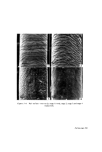
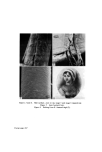
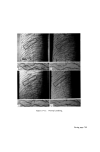
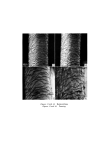
APPRAISAL OF METHODS FOR DETECTING PRIMARY SKIN IRRITANTS 757 precipitate with saliva and urine, the authors concluded that the presence of ammonia was necessary for the reaction. Small quantitites of ammonia are present in sweat. The observation that no functional sweat glands are present in psoriatic skins, suggests that the technique will be useful in investigating the antiperspirant effects of cosmetics in human trials. As yet, no reports seem to be available concerning the value of o-phthalaldehyde for this purpose, although Verbov (145) did use it to show the lack of functional sweat glands in patients suffering from hypohydrotic ectodermal dysplasia. A method for plotting the distribution of sweat pores, both functional and non-functional, was described by Sarkany (148). His method, unlike those used by Wada and Takagaki (146) and Juhlin and Shelley (147) does not discolour the skin, but takes the form of imprinting. Plastic imprints of the skin surface are made using a liquid silicone rubber monomer (Silfio dental plastic, J. & S. Davis, London). Mixed with a catalyst, this plastic is applied to the skin and hardens in a few minutes. Imprints were successfully made of the palms of the hands and the soles of the feet of patients, but not on other sites such as on the forehead, arm or thigh. The lack of success on these sites was thought to be due to the absence of epidermal ridges, a feature which this technique demonstrated well. The imprint method as originally described by Sarkany (148) and subsequently used by Verbov (145), has a wider application in detecting increased roughness, epidermal cracking and minor scaling, conditions which are frequently seen in human skin after treatment with detergents. It is conceivable that damage of this type would not be readily visible at an early stage. Another method designed to demonstrate minor degrees of epidermal damage is a colorimetric method described by Tronnier and Eisbacher (149). They applied a resistant insoluble dye stuff, hostaperm blue, to the skin which marked out the areas of roughness and fissuring of the horny layer. A dissection microscope was found useful in detecting the fissuring. Apart from the changes which occur in the microtopography of the skin, that is the character of the skin surface hairs and hair follicles, and the functional sweat glands, it is possible that agents applied to the skin may alter the composition of the sweat or sebum. Samples of these secretions have been collected using acetone, ether or chloroform solvents. The extracts were examined using standard analytical techniques including thin layer chromatography, gas-liquid chromatography and photodensitometry (124, 125, 150, 151). These investigations have been used to study the
Purchased for the exclusive use of nofirst nolast (unknown)
From: SCC Media Library & Resource Center (library.scconline.org)