J. Soc. Costnet. Chem. 24 217-227 (1973) (• 1973 Society of Cosmetic Chemists of Great Britatn Primary irritation of the skin: mouse ear test and human patch test procedures MARGARET UTTLEY and N.J. VAN ABB•* Presented on the 11th April 1972 in Oxford, at the Symposiutn on 'Skin-Environmental responses and protection', organized by the Society of Cosmetic Chemists of Great Britain. Synopsis--A test for primary IRRITANCY using albino MOUSE ear SKIN is described. The METHOD is suggested as one of the preliminary screening procedures before commencing HUMAN skin studies. Details are also given of a human volunteer PATCH-TESTING pro- cedure suitable for the study of toiletry and COSMETIC preparations. INTRODUCTION The predictive value of methods for studying the skin irritancy of cosmetic raw materials and finished products is difficult to verify. Cosmetics in general are only mildly irritant and problems in the quantification of irritancy possibly affecting less than 1 in 5 000 users are almost insuperable. In these circumstances, it is necessary to rely on empirical test methods that have been used extensively and which appear to yield substantially reliable data according to long-term experience. The purpose of this paper is to describe two procedures for studying the irritancy of cosmetics these methods have been repeatedly used in our own laboratory for several years. The mouse ear test is a convenient and economical screening procedure, for example, as a preliminary before under- *Beecham Products, Brentford, England. 217

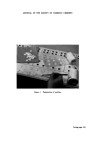
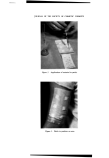
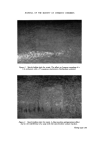
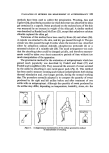
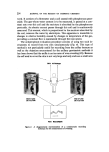
218 JOURNAL OF THE SOCIETY OF COSMETIC CHEMISTS taking a rabbit skin irritancy test. The human patch test described below serves as an intermediate step between laboratory animal screening and 'home use' tests by human volunteers it is potentially less hazardous to the skin than a continuous 48 or 72 h occlusive patch test, more suitable on this account to be conducted without direct medical supervision and more acceptable to the volunteers since patches are worn only during working hours. PROCEDURES Mouse ear test A test for anti-inflammatory compounds has been described by Brown and Robson (1) whereby Pontamine sky blue dye is injected into the tail vein of a mouse and an irritant (xylol) is applied to the ear inflammation is visualized through release of the blue dye into the skin of the treated ear and anti-inflammatory action of the drug under test (orally administered 1 h before application of the xylol) is shown by inhibition of dye release. For assessing primary irritation, we have found that direct observation of changes in the skin of albino mouse ears is quite readily made without using a dye. Groups of five female CF1 albino mice are used for each test substance. Males are unsuitable since their pugnacious behaviour often leads to trauma of the ears. Individual mice are identified by marking the tail with a fibre- tipped pen. The mice are kept five to a cage, allowed water ad lib and provided with a pelleted diet (Oxoid diet 4lB) bedding consists of sterilized softwood sawdust. Application of test materials Each mouse is lightly anaesthetized with ether and 10 I•1 of a liquid test sample or 10 mg of a solid (usually in cream form) is applied to the dorsal aspect of one ear the sample is gently spread over the skin. The other ear serves as an untreated control. Daily applications are made on 4 successive days on the fifth day of an experiment, no application is made. 10 [tl quantities of liquid are readily applied by means of a push-button [tl piston pipette*. Liquid is drawn into a plastic tip and a new tip is used for each test solution. 10 mg quantities of solid are weighed on micro- spatulas using a torsion balance. * Supplied by Anderman and Co., Ltd, London.
Purchased for the exclusive use of nofirst nolast (unknown)
From: SCC Media Library & Resource Center (library.scconline.org)