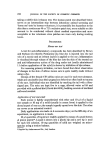
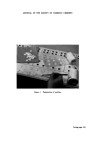
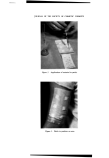
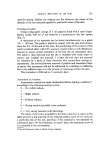
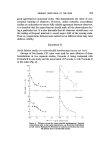
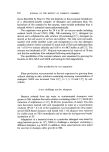
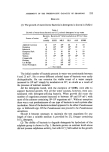
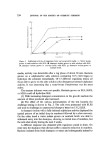
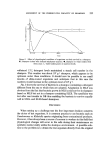
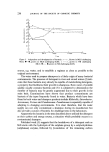
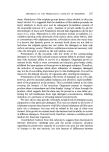
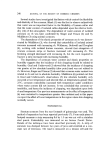
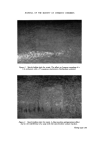
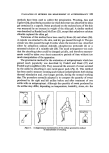
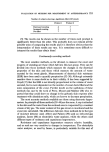
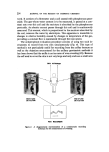
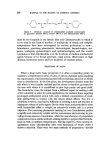
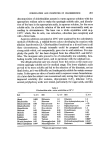
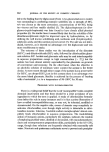
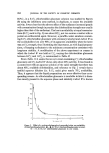
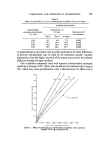
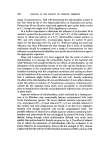
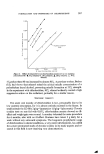
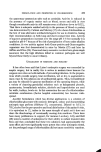
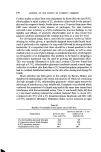
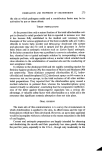
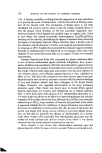
234 JOURNAL OF THE SOCIETY OF COSMETIC CHEMISTS 20 --x x 30 6O 0 9o t20 •I irne (rain) Figure 1. Sulphatase activity of organisms from various growth media. X, Water isolate grown in salts solution with SLS O, shampoo isolate grown in salts solution with SLS ,s•, shampoo isolate grown in nt•trient broth with SLS O, shampoo isolate grown in nutrient broth. media, activity was detectable after a lag phase of about 30 min. Bacteria grown on a sulphate-free salts solution containing 0.1• SLS began to hydrolyse the substrate immediately. Of 15 different organisms tested, all those able to grow on the salts solution plus detergent possessed sulphatase activity. It was interesting that a water-borne Pseudomonas was the most active. The enzyme inducers were not specific. Bacteria grown on SLS, SLES, or MLS could all hydrolyse SLS. (3) With increasing detergent concentration in the growth medium the amount of slime produced also increased. (4) The effect of the various pretreatm.ents of the test bacteria for challenge testing is shown in Fig. 2. The cells were pretreated with SLES and used to challenge an unpreserved shampoo based on 13•o SLES. A shampoo isolate with a fully induced sulphatase activity displayed the typical pattern of an initial drop in numbers followed by a slow recovery. On the other hand a water isolate grown on nutrient broth was able to withstand entry into the shampoo, showing no initial loss of numbers, but the ceils died slowly during the next 3 weeks. A different response was obtained with organisms coated in slime. On entry into the shampoo they did not suffer a massive reduction in numbers. Bacteria isolated from. both shampoo or water and subsequently trained to

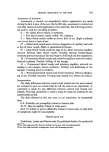
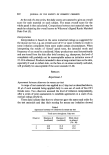
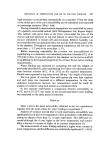
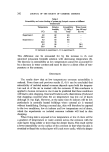
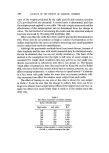
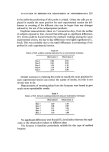
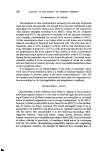
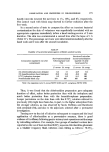
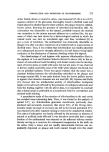
ASSESSMENT OF THE PRESERVATIVE CAPACITY OF SHAMPOOS 235 1o weeks Time Figure 2. Effect of physiological condition of organisms on their survival in a shampoo. A, Shampoo isolate with induced sulphatase enzyme O, shampoo or water isolate with slime coat x, water isolate grown in nutrient broth. withstand 13•o detergent levels maintained a steady cell number in the shampoo. This number was about 10 7 g4 shampoo, which appears to be optimum under these conditions. It should now be possible to use small inocula of slime-coated organisms and anticipate that in this case the numbers would increase to the optimum level of 10 7 g4. Fig. 3 shows the survival of bacteria in a shampoo containing a detergent different from the one to which they are adapted. Adaptation to MLS was obvious from the fact that bacteria grown in MLS could survive in shampoo based on MLS but not in a shampoo containing SLES. The specificity was lost after one transfer in NB thus enabling the bacteria to survive equally well in MLS- and SLES-based shampoos. DISCUSSION When setting up a challenge test the first important decision concerns the choice of test organisms. It is common practice to use bacteria such as Pseudomonas or Klebsiella species originating from contaminated products. However, it has always been a source of concern to workers in this field that physiological changes will occur in the cells during their maintenance on synthetic media totally unlike the shampoo environment. A possible solu- tion to the problem is to obtain the test organism directly from the original
Purchased for the exclusive use of nofirst nolast (unknown)
From: SCC Media Library & Resource Center (library.scconline.org)