262 JOURNAL OF THE SOCIETY OF COSMETIC CHEMISTS led to the finding that the digluconate (from 1,5-D-gluconolactone in water) was outstanding in conferring extensive solubility (4). A strength of 20• w/v was chosen as the most convenient, concentrations of 40-70• being too viscous and less readily clarified (5). The diglucoheptonate (or di-r- glycero-r-gulo-heptonate) was later found to have closely allied physical properties (6). On similar lines it seemed likely that the fair solubility of the dimethanesulphonate might be improved upon by hydroxylation, i.e. by utilizing the well known solubilizing acid, isethionic acid (2-hydroxyethyl- sulphonic acid), and this surmise proved correct (7). The salt was not intro- duced, however, as it showed no advantage over the digluconate and was more troublesome to make. The outcome of these studies was the introduction of the diacetate (B.P.C.) and dihydrochloride (B.P.) salts, followed by chlorhexidine gluco- nate solution B.P. Acetate and gluconate salts may be used interchangeably in aqueous preparations except in high concentration ( 2•) but the acetate has been almost entirely superseded by the gluconate on grounds of convenience and economy. On the other hand, when the objective is an alcoholic solution of minimum water content the acetate is the better choice. A more recent though minor usage of the acetate is as a preservative for B.P.C. eye drops (0.01•) yet in this context there is no advantage over the more bland gluconate. Sterility is achieved by the process of 'heating with a bactericide', i.e. to a temperature of 98-100øC for 30 min. PROBLEMS WITH INCOMPATIBILITIES There is a widespread belief that the word 'incompatible' bodes complete chemical inactivation and that there should be a strict avoidance of any ingredient to which the term is applied. A study of chlorhexidine formula- tions belies this rule in many instances and is in fact a prime illustration of how so-called incompatibilities may, or may not, be tolerated, modified or circumvented. On the negative side, excess of stearate soap completely in- activates chlorhexidine, even though slight activity is detectable in chlor- hexidine stearate. Likewise, 'insoluble sodium metaphosphate' almost com- pletely binds chlorhexidine in aqueous preparations. The insolubilizing action of inorganic anions, particularly the sulphate, indicates the wisdom of employing purified water, distilled or de-ionized, with manufactured pro- ducts and extemporaneous preparations alike, particularly in the 0.5-1.0•o range, though clear solutions are frequently obtained with reasonably soft water. Nonionic and quaternary surfactants serve to prevent such precipita-

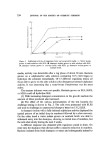
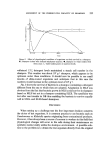
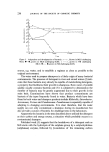
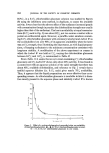
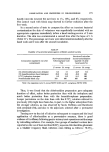
FORMULATION AND PROPERTIES OF CHLORHEXIDINE 263 tions, the latter being more effective and less liable to lower the available chlorhexidine. The solubilizing properties of surfactants are put to good effect in formulating concentrates for dilution with hard water. Thus, a 7.5•o chlorhexidine gluconate concentrate, intended for dilution to 0.005•o to be used as a premilking udder wash in the prevention of bovine masfitis, required the presence of about 2•o of an ethoxylated (9 mol.) nonylphenol, Lissapo! NXU, in order to prevent precipitation with almost all the hard water likely to be found on farms, while at the same time conferring ade- quate cleansing action. Reverting to pharmaceutical preparations, one risk is the incompati- bility of the chlorhexidine preservative with the salts of alkaloids, frequently the hydrochlorides, hydrobromides or nitrates, used in eye medication. Common ion effect also governs the issue, yet most of them give clear solutions with chlorhexidine acetate 0.01•o, though there are some failures at 0.02•o. Chlorhexidine gluconate at 0.05•o gives a clear solution with normal saline at 20øC. A typical example of the need to check the 'incom- patibility' before reaching a decision is seen with silver nitrate-chlorhexidine preparations, a recent innovation for the treatment of burns (8). Quite surprisingly it was found that silver nitrate at 0.5•o did not precipitate chlorhexidine nitrate from a 0.2•o gluconate solution when present far in excess of solubility product requirements. It was likely that complex forma- tion was the reason. CHLORHEXIDINE AVAILABILITY When chlorhexidine is converted, wholly or partly, to an insoluble salt by reaction with an excipient or with hard water, a loss of antibacterial action is to be expected. The problem of chlorhexidine availability is more involved when it is held in solution in the presence of a surfactant, the need for which may arise for various reasons, e.g. wetting agents or cleansers in skin-disinfecting solutions or in instrument disinfectants, and co-emulsifiers in creams. In the last application the situation is complicated because release of antibacterial at the skin surface from a diphasic oil-in-water cream system is governed inter alia by its concentration in the aqueous phase and the pos- sible influence of any co-emulsifier that partitions into it. The co-emulsifier may or may not be above its critical micelle concentration, and this also has a bearing on the availability. The effect of varying the concentration of a nonionic surfactant Lubrol W, a polyethyleneglycol monoalkyl ether allied to Cetomacrogol 1000
Purchased for the exclusive use of nofirst nolast (unknown)
From: SCC Media Library & Resource Center (library.scconline.org)