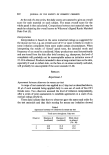
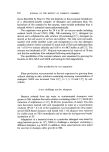
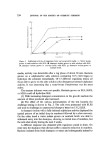
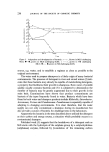
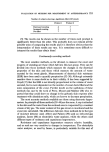
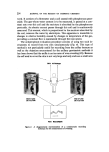
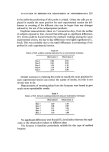
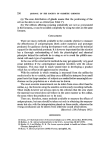
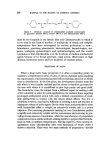
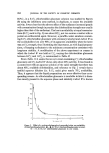
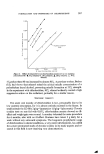
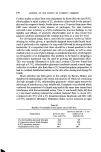
236 JOURNAL OF THE SOCIETY OF COSMETIC CHEMISTS ,x x I I J4 days 21 days T•rne Adaptation and de-adaptation of bacteria. x --x, Grown in MLS challenging Figure 3. MLS 0--0, grown in MLS challenging SLES x --- x, grown in N-B challenging MLS ß- - - O, grown in NB challenging SLES. source, e.g. water, and to establish a regimen as close as possible to the original environment. The water used to prepare shampoos is a likely origin of many bacterial contaminants. The presence of detergent in river and stored waters (2) indi- cates that these bacteria may already be capable of metabolizing detergents, a property that facilitates their growth in shampoos. Even water of potable quality usually contains bacteria and if it is subjected to deionization the number of bacteria may be greatly augmented due to their growth in the resin beds. Examinations have shown that product contaminants are bacteria of the types frequently found in water. Bacteria which have been found in both water and shampoo products include Klebsiella, Enterobacter, Aeromonas, Proteus and Pseudomonas. Pseudomonas is especially capable of adapting to changing environments. It is clear therefore, that the water supply can not only contaminate a shampoo during its manufacture but also provide a source of bacteria for challenge tests in the laboratory. Apparently the bacteria in the tests described above utilized the detergent as their carbon and energy source, a situation which probably occurs in a contaminated shampoo. Published work (3) suggests that the breakdown of a detergent such as SLS starts with the hydrolysis of the sulphate group by a sulphohydrolase (sulphatase) enzyme, followed by [3-oxidation of the remaining carbon

ASSESSMENT OF THE PRESERVATIVE CAPACITY OF SHAMPOOS 237 chain. Hydrolysis of the sulphate groups leaves a fatty alcohol, in this case lauryl alcohol. It is suggested that the oxidation of this residue proceeds via lauryl aldehyde to lauric acid, and its subsequent [•-oxidation consists of the sequential removal of C,. units. Analysis of growth media by glc for intermediates of lauric acid breakdown showed that degradation did in fact occur in C2 units. Alternatives to this procedure include co-oxidation, i.e. oxidation starting at the distal end of the carbon chain, either before, after or concomitant with sulphatase activity. co-Oxidation must also occur since it is known that bacteria grown on nutrient broth alone are not able to hydrolyse the sulphate group but can utilize the detergent as their sole carbon and energy source. Therefore, sulphatase enzymes are necessary only when the detergent is present as the sole sulphur source. Pretreatment of the inoculum with low levels of the corresponding detergent to ensure fully induced enzyme systems failed to produce organ- isms with increased ability to survive in a shampoo. Organisms grown in nutrient broth, which is more convenient and certainly gives better yields, exhibited the same pattern as those grown in detergent solutions. Therefore, the induction of enzymes which allow utilization of shampoo detergent may not be of over-riding importance prior to the challenge test. It is not the reason for the delayed recovery of organisms after entering the shampoo. Pretreatment of the organisms with levels of detergent up to 13•o did, however, give the inoculum added resistance and allowed a rapid establish- ment of the population in the product. This is probably related to the slime covering the bacteria of the inoculum. Organisms present in shampoo produce slime in abundance and often display 'strings' of slime through the product, which suggests that the slime may be present as a coat either pro- tecting the cell membranes from high detergent concentrations, affecting induction of a permease or elevating induced enzyme levels. We have shown that growth of bacteria in high levels of detergent causes adaptation to that particular detergent. This was not related to the levels of sulphatase enzymes since bacteria with fully induced sulphatase still die upon entry into a shampoo, but may well be related to the type of slime coat formed. After growth in nutrient broth the bacteria had the ability to survive in different shampoos. Nutrient broth, therefore, remains a suitable growth medium for these test organisms. Unpublished evidence from this laboratory suggests that discrepancies between laboratory challenge tests and the actual in-factory situation regarding the preservative capacity of a product can arise not only because of changes in the test bacteria, but also because of differences between
Purchased for the exclusive use of nofirst nolast (unknown)
From: SCC Media Library & Resource Center (library.scconline.org)