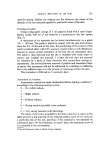
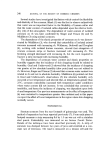
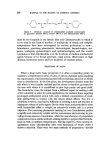
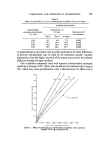
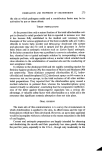
270 JOURNAL OF THE SOCIETY OF COSMETIC CHEMISTS Further studies on these lines were undertaken by Scott (30) who used 0.5% chlorhexidine in spirit in place of 2•o alcoholic iodine both for the patient's skin and the surgeon's hands. Swabs taken over a 2 h period from more than 1000 cases showed a total absence of pathogens. No skin reactions occurred. Later, Lowbury et al (31) confirmed his previous findings on the rapidity and efficacy of alcoholic chlorhexidine and he also found that aqueous solutions maintained the resident skin flora at a very low level. For oft-repeated usage, that is, each time the surgeon 'scrubs up' before donning his rubber gloves, a specifically designed bactericidal liquid hand- wash is preferred to the regimen of a soap wash followed by strong alcoholic bactericide. It is important that there should be a broad spectrum to deal with the wide variety of organisms met with in hospitals, as well as some residual action in case of glove leakage or accidental puncture, which happen too frequently to be disregarded. One problem to be faced in designing a chlorhexidine handwash was the need to prolong the bactericidal effect. This was recently illustrated by Lilly and Lowbury (32) who found that although a 0.75•o chlorhexidine gluconate handwash caused a much larger reduction in resident skin flora than a 3% hexachlorophane preparation, it had no residual disinfectant action on the skin after rinsing and drying the hands. Much attention has been given to this subject by Barnes, Billany and Sandoe (33) culminating in the recent introduction of Hibiscrub containing the high strength of 4•o chlorhexidine gluconate--which again stresses the advantage of introducing a very soluble salt. Excipients were selected which conferred the properties of a liquid soap and at the same time caused least interference with the bactericidal action. Thus, it was found (Table III) that a 1 min hand washing reduced the resident bacterial flora to about 18•o compared with 35•o with a 3•o hexachlorophane handwash and 20•o with a 0.75• iodophore detergent. Repeated washes on five occasions at eight Table In Rapidity of bactericidal action against natural skin flora Composition Survivors after 1 min wash (,%o) Survivors after five X 1 min washes at 8 h intervals (,%o) 4 ,%0 chlorhexidine gluconate detergent 3 % hexachlorophane liquid detergent 0.75 5/o iodophore detergent Nonmedicated block soap 18.2 35.5 20.5 100 0.9 10.0 5.9 100

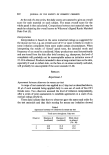
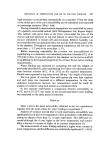
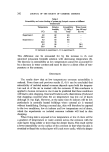
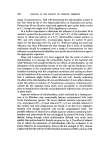
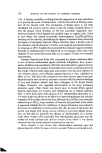
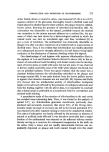
FORMULATION AND PROPERTIES OF CHLORHEXIDINE 271 hourly intervals lowered the survivors to 1•, 10•o, and 6Yo respectively. The control wash with block soap showed no further reduction after the first wash. In a second series of tests to compare the effect on transient bacterial contamination the skin of volunteers was superficially inoculated with an appropriate organism immediately before a hand washing session of 2 min duration. The skin was contaminated a second time after the lapse of 1 h (Table IV). The percentage survivors were determined immediately after the hand wash and 2 rain after the second inoculation. Table IV Rapidity of bactericidal action against artificially applied bacteria Composition (applied 2 min after contaminant) Survivors immediately following hand wash (%) $. aureus Ps. aerug. Survivors 2 min after second contamination (applied 1 h after hand wash (yo) $. attreu$ P$. aerug. 4 •o chlorhexidine gluconate detergent 0.2 5.1 22.9 51.3 3 •o hexachlorophane liquid detergent 28.0 39.8 49.0 100 0.75 •o iodophore detergent 0.2 11.2 81.3 100 Nonmedicated block soap 100 100 100 100 Note: the organisms were $. aureus NCTC 4163 and Ps. aeruginosa NCTC 6749. Thus, it was found that the chlorhexidine preparation gave adequate duration of effect, rather better protection than with the iodophore and much better protection than with the hexachlorophane preparation. Longer persistence on the skin than with the 0.75•o solution referred to previously (32) might have been due, in part, to the higher adsorption from the stronger solution, as was observed by Scott, Robbins and Barnhurst with cetrimide (34), and also to the adjuvants selected after a protracted investigation. Turning now to the risk of infection subsequent to surgery and the local application of chlorhexidine as a preventative measure, there is good evidence of its efficacy following genito-urinary tract operations and drainage by indwelling catheters. For example, four groups of medical workers have reported on the use of heat sterilized 0.025/o •aqueous chlorhexidine gluconate as a bladder irrigatory fluid, infection rates falling as follows: 70-8• ,
Purchased for the exclusive use of nofirst nolast (unknown)
From: SCC Media Library & Resource Center (library.scconline.org)