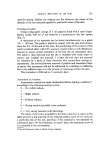
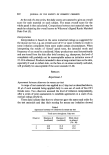
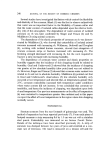
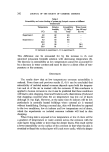
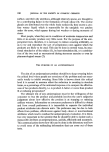
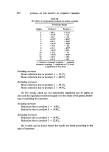
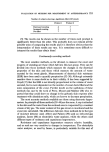
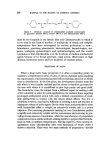
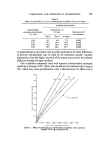
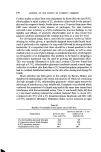
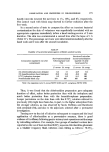
252 JOURNAL OF THE SOCIETY OF COSMETIC CHEMISTS Table IH The effects of antiperspirant products on axillary sweating Percentage change Subject Product 1 Product 2 1 - 20.2 q.31.5•' 2 -- 37.6* -- 15.9 3 -- 18.8 q- 4.9 4 +43.0* -- 60.4* 5 q.33.6 -- 40.4* 6 - 50.5* - 56.8* 7 + 8.0 - 2.0 8 +10.1 -68.7* 9 -- 39.8* +29.5 10 q- 2.0 -- 5.1 11 - 30.3•' - 45.4* 12 - 23.9 - 18.3 13 +21.8 - 16.3 q., Indicates increased sweating -, indicates decreased sweating *, significant at 5 % level •', significant at 10% level. Including increases Mean reduction due to product 1 = 13.1•o. Mean reduction due to product 2 = 40.0•o. Excluding increases Mean reduction due to product 1 = 39.1•o. Mean reduction due to product 2 = 54.4•o. (3) The results which are not statistically significant can be taken as zero and the significant results averaged over the whole of the panel, includ- ing or excluding the increases. Including increases Reduction due to product 1 = 6.0•o. Reduction due to product 2 = 18.0•o. Excluding increases Reduction due to product 1 = 14.4•o. Reduction due to product 2 = 22.6•. (4) A table can be drawn where the results are listed according to the type of response:

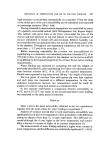
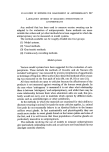
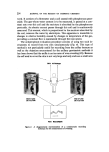
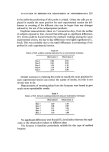
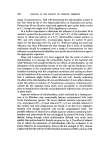
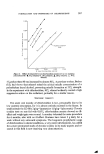
EVALUATION OF METHODS FOR MEASUREMENT OF ANTIPERSPIRANCY 253 Number of subjects showing a significant effect (10 % level) Product 1 Product 2 Decreased sweating 4 5 Increased sweating 2 1 No effect 7 7 (5) The results can be shown as the number of times each product is significantly better than the other. This probably does not exhaust all the possible ways of comparing the results and it is therefore obvious that the interpretation of these results can vary. It is sometimes more difficult to interpret the results than obtain them! Continuously recording methods The most sensitive methods, so far devised, to measure the onset and progress of sweating are those which fall into this last group. They can be divided into those methods which measure the changes in the electrical properties of the skin and those which measure the amount of water secreted by the sweat glands. Measurements of electrical skin resistance (ESR) have been used to quantify perspiration (32-36). Although extremely sensitive there is some doubt as to their validity. It has been suggested by Lloyd (37) that the ESR is not directly proportional to the volume of sweat secreted, but is more dependent on the number of sweat ducts filled and the ionic composition of the sweat. Further doubt on the usefulness of these methods was cast by the work of Perry, Mount and Maliner (38) who re- ported that they could show no change in the galvanic skin response after treatment with aluminium salts, which are known to decrease perspiration. The most accurate methods available are those using electronic hygro- meters. In principle all these methods (39-44) are the same. A cup is attached to the skin and the water from the enclosed area is evaporated by a constant stream of dry gas. The water content of this gas stream is monitored and the sweat rate calculated. The differences between these methods lie in the type of moisture detector used. Albert and Palmes (39) used an infra-red gas analyser, James (44) an electrolytic water analyser, whilst the others used different types of resistance and capacitance hygrometers. Resistance and capacitance hygrometers measure relative humidity, and as such are very sensitive to changes in temperature. The electrolytic water analyser, as used by James, is particularly suitable for this sort of
Purchased for the exclusive use of nofirst nolast (unknown)
From: SCC Media Library & Resource Center (library.scconline.org)