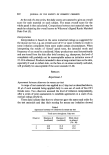
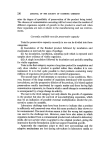
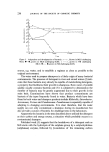
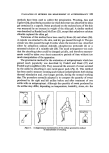
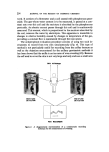
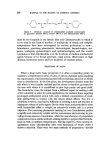
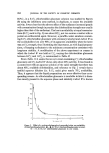
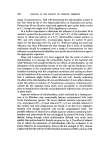
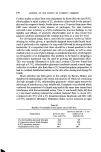
254 JOURNAL OF THE SOCIETY OF COSMETIC CHEMISTS work. It consists of a flowmeter and a coil coated with phosphorous pent- oxide. The gas whose water content is to be measured, is passed at a con- stant rate over this coil and the moisture is absorbed by the phosphorous pentoxide. An electric current passes through this coil and is continuously measured. This current, which is proportional to the moisture absorbed by the coil, removes the water by electrolysis. This apparatus is insensible to changes in relative humidity caused by changes in temperature of the gas, providing a constant flow is maintained through the instrument. The antiperspirant evaluation procedure consists of using two such in- struments to record from two sites simultaneously (Fig. 4). This type of method is not particularly useful for recording from the axillae because as well as the objection encountered for the axillary gravimetric methods it has been shown that the axilla is not an area of even sweating (45). Because the cell used to cover the skin is not very large and only encloses a small area DRY NITROGEN MOISTURE • / MOISTU DETECTOR DETECTOR PEN RECORDER Figure 4. A diagrammatic representation of a continuously recording technique for the measurement of sweating.

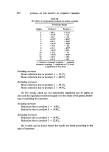
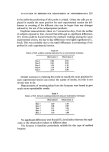
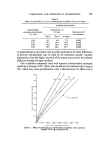
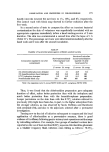
EVALUATION OF METHODS FOR MEASUREMENT OF ANTIPERSPIRANCY 255 in the axilla the positioning of this probe is critical. Unless the cells are re- placed in exactly the same position for each experimental session the dif- ference in sweating of the different sites can be larger than any changes induced by the use of the antiperspirant products. Duplicate measurements, taken on 5 consecutive days, from the axillae of subjects exposed to heat, showed that although no significant differences (5•o level) could be found between the replicate readings during the same experimental session, the day-to-day differences were highly significant (1•o level). This was probably due to the small differences in positioning of the probes for each experimental session. Table IV Ratios of R/L axillary sweating measured by an instrumental technique Observation 1 Observation 2 Day 1 0.62 0.62 Day 2 0.81 0.92 Day 3 1.34 1.18 Day 4 1.36 1.30 Day 5 2.19 1.89 Greater accuracy in replacing the probe in exactly the same position for each experimental session can reduce the scatter of results, but this is not always easy to do. Measurements of sweating taken from the forearms were found to give much more reproducible results. Table V Ratios of R/L forearm sweating measured using an instrumental technique Observation 1 Observation 2 Day 1 1.30 1.01 Day 2 1.06 0.87 Day 3 1.11 1.01 Day 4 1.38 1.17 Day 5 1.19 1.09 No significant differences were found (5% level) either between the repli- cates or the observations taken on different days. The forearm is therefore particularly suitable for this type of method because:
Purchased for the exclusive use of nofirst nolast (unknown)
From: SCC Media Library & Resource Center (library.scconline.org)