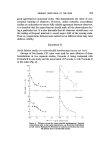
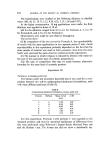
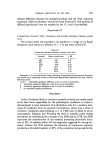
EVALUATION OF METHODS FOR MEASUREMENT OF ANTIPERSPIRANCY 247 LABORATORY METHODS OF MEASURING EFFECTIVENESS OF ANTIPERSPIRANTS Any method that has been used to measure eccrine sweating can be adapted to the evaluation of antiperspirants. Some methods are more suitable than others and yet other methods have been suggested in which the antiperspirancy can be measured on model systems. The methods available can be roughly divided into four groups: (1) Model systems. (2) Visual methods. (3) Gravimetric methods. (4) Continuously recording methods. Model systems Various model systems have been suggested for the evaluation of anti- perspirants. These include the methods of Govette and de Navarre (8) included 'astringency' was measured by protein precipitation of egg albumin or shrinkage of frog skin. Other authors have described methods where sweat- ing was measured on the foot pads of mice (9), rats (9, 10) or cats (11). All these methods are open to criticism because the effectiveness of the products is not measured against sweating of the human sweat glands. In the case where 'astringency' is measured it is not clear what relationship there is between 'astringency' and antiperspirancy, and whilst there may be some relationship between them when aluminium salts are used, this pro- bably would not carry over to materials which operate by different mech- anisms such as anticholinergics or other anhidrotics. In the methods in which the materials are examined for their ability to decrease sweating in animal foot pads the same criticism applies, i.e. animal foot pads do not necessarily behave in an identical fashion to the human axillary sweat glands. In fact anatomically and physiologically they are much more similar to sweat glands found on the human palms and soles of the feet, and it is well known that these populations of eccrine glands are particularly insensitive to antiperspirants. The methods involving the use of models to measure antiperspirancy give particularly misleading results and as such have not found much favour amongst cosmetic chemists.

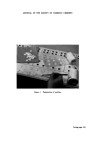
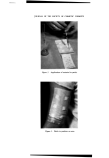
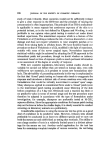
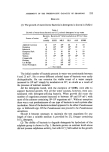
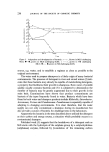
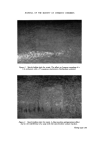
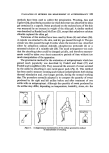
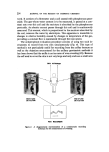
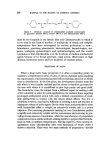
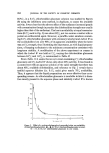
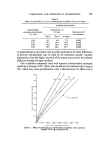
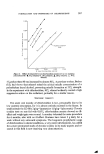
248 JOURNAL OF THE SOCIETY OF COSMETIC CHEMISTS Visual methods These can be subdivided into the methods in which sweat is either obtained or collected directly from individual glands and those methods in which sweat droplets are made visible over a larger area of skin. The first type of method is not really suitable for the evaluation of antiperspirants because of the variations in function from gland to gland and the necessity therefore of taking observations from large numbers of glands before any conclusions can be drawn. The second type of method in this category, the observation of large numbers of sweat glands has been used quite extensively (12-23). The first of the methods was described by Minor (12) who used the water from the sweat gland to form a medium for the reaction of starch and iodine. He painted the skin with an alcoholic iodine solution, which when dry left a thin layer of iodine on the skin. This was then covered by a dusting of fine starch powder. Wherever sweating was taking place a blue spot appeared due to the reaction between the starch and iodine. Various modi- fications of this method using starch paper or a suspension of starch in a suitable oil have been described. Other methods in this category include the quinizarin method of Guttmann (15) methods in which sweating was visualized using different techniques have also been used. These methods are particularly useful in demonstrating the effects of antiperspirants qualitatively but not quantitatively. The material is applied under a small patch for a suitable length of time. The visualizing procedure can then be applied and sweating elicited by placing the subject in a hot room. The sweat droplets are seen in the test area and in the untreated area surrounding the test site. The effect of the product on the test area can be compared with the surrounding untreated control area (Fig. 1). The main problem associated with this type of procedure is that it is at best only semiquantitative. Most antiperspirant materials only partially inhibit sweating and the differences between products need particularly sensitive methods for their detection. A further inconvenience with these types of methods is the danger that the substance applied to the skin or anything that may already be present may interfere with the colour reaction and thus give a false positive result (Fig. 2). Gravimetric methods This group includes all the methods in which sweat is collected on absor- bent materials, and the amount determined by weighing. Several different
Purchased for the exclusive use of nofirst nolast (unknown)
From: SCC Media Library & Resource Center (library.scconline.org)