130 JOURNAL OF THE SOCIETY OF COSMETIC CHEMISTS (15) Willis, I., and Kligman, A.M., The mechanism of photoallergic contact dermatitis, Ibid., 51, 378 (1968). (16) Barry, J. N., and Donald, G. F., Photocontact dermatitis from soap, Brit. J. Dermatol., 80, 711 (1968). (17) Willis, I., and Kligman, A.M., The mechanism of the persistent light reactor, J. Invest. Dezmatol., 51, 385 (1968). (18) Hather, L. C., Targovnik, S. E., and Baer, R. L., Studies on contact photosensitivity to hexachlorophene and trichlorocarbani]ide in guinea pigs and man, Ibid., 51, 373 (1968). (19) Baker, H., Ire, F. A., and Lloyd, M. J., Primary irritant dermatitis of the scrotum due to hexachlorophene, Azch. Dezmatol., 99, 693 (1969). (20) Nilzen, A., Some endocrine aspects of skin sensitization and primary irritation, J. Invest. Dermatol., 18, 7 (1952). (21) Ishihara, M., and Yoshii, T., Studies on various factors in primary irritant reaction of the skin, Jap. J. Clin. Dezmatol., 25, 1043 (1971). (22) Stott, C. W., Evaluation of the phototoxic potential of topically applied agents using longwave ultraviolet light, J. Invest. DcrmatoI., 55, 335 (1970).

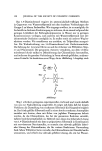
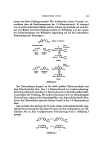
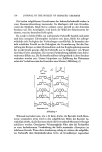
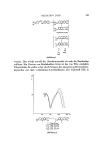
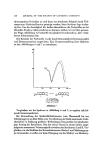
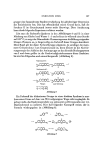
I. Soc. Cosmet. Chem., 25, 131-138 (March 1974) Oxidationsfarbstoffe: Bildungsmechanismen und Strukturen HANS HUSEMEYER * Vortrag anliifllich des VII. IFSCC-Kongresses in Hamburg vom 11. bis 15. September 1972 Synopsis -- Oxidation Dyes: Mechanism of formation and structure. -- The reaction of 1.4-DIAMINOBENZENE with derivatives of 1.3-DIAMINOBENZENE in AMMONIA- CAL AQUEOUS HYDROGEN PEROXIDE SOLUTIONS was investigated. The initially formed QUINONEDIIMINE COUPLES with other components to yield DYES OF THE TOLUYLENE BLUE TYPE which was discovered by O. N. Witt. The entire group of dyestuffs was synthesized by systematic changes of the substituents. Their spectral behavior and their RATE OF OXIDATION TO PHENAZINES at elevated temperature permit interesting insights into the positions of the MESOMERIC BASIC STATE. In der Haarfiirberei spielen die Oxidationsfarbstoffe eine besondere Rolle. Sie entstehen aus farblosen aromatischen Verbindungen im Haarschafk in Gegenwart von Ammoniak und Wasserstoffperoxid. Ober ihren chemischen Aufbau existieren fast nur Vermutungen. Die einen ordnen sie den von O. N. Witt entdeckten Indaminen und Indophenolen zu, die anderen spre- chen von hochmolekularen Substanzen vom Poly-Phenazin- bzw. Phenoxa- zintypus. Die auf•erordentliche Schwierigkeit, die sich bildenden Farbstoffe aus ammoniakalisch-wiif•rigen, wasserstoffperoxidhaltigen Medien zu isolie- ren, hat bisher eine klare Entscheidung zwischen beiden Anschauungen ver- hindert. Hier auf einem Teilgebiet Klarheit zu schaffen, ist Zweck dieser Ausfiihrungen. Man betrachte folgende Reaktionspartner: 1. 1.4-Diaminobenzol (p-Phenylendiamin) 2. 1.3-Diaminobenzol (m-Phenylendiamin) li3-Diamino-4-methylbenzol 1.3-Diamino-4-methoxybenzol * Wella AG, D-61 Darmstadt, Berliner Allee 65 131
Purchased for the exclusive use of nofirst nolast (unknown)
From: SCC Media Library & Resource Center (library.scconline.org)