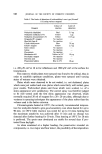
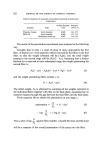
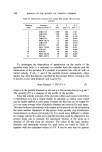
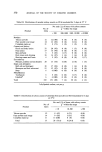
540 JOURNAL OF THE SOCIETY OF COSMETIC CHEMISTS Table I. The limits of detection of imidazolidinyl urea type (Germall 115) using various reagents Colour of Limit of Reagent reaction detection Ninhydrin (daylight) Red 2.5 lag Ninhydrin (reflected UV) Yellow 1 lag Ninhydrin (transmitted UV) Yellow 0.25 lag Dragendorff's reagent No reaction -- Blue Salt Irga B No reaction -- Cobalt thiocyanate Blue 25 lag Erlich's reagent Yellow 2.5 lag Silver nitrate No reaction -- Iodine No reaction -- Fluorescein No reaction -- Rhodamine 6G Yellow in UV 10 lag Prochazka reagent No reaction -- Chromic acid No reaction -- Pinacryptol yellow Blue in UV 10 lag i.e. 450 [tW cm 2 at 18 in for reflectance and 1900 gW cm 2 at the surface for transmission. The extent to which plates were sprayed was found to be critical, thus in order to establish optimum conditions, plates were sprayed until varying states of wetness were obtained. Plates which were observed to be not wetted, i.e. not darkened, plates which were just wetted and even plates which were fairly well wetted, gave poor results. Well-wetted plates and those which were soaked, i.e. of a shiny appearance were satisfactory. The correct spray was therefore judged to be well wetted until the first shiny appearance was observed, which normally required 20 ml of reagent for a 20 x 20 cm plate, although due to variance in spraying techniques the appearance of the plate rather than the volume used is the better criterion. Chromatograms heated at 105øC, the normally recommended tempera- ture for ninhydrin failed to give good sensitivity even when heated for up to 90 min. At 150øC little reaction was noted for up to 10 mins heating but the maximum sensitivity was achieved after 15 min and no change was detected after further heating for 30 min. Thus heating at 150øC for 20 min is preferred. The spots once developed are stable for several days if pro- tected from daylight. As when examined at a higher loading, the preservative revealed six components, i.e. two major and four minor, the possibility of decomposition

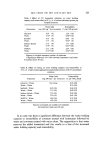
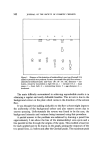
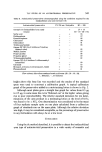
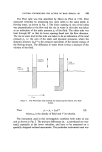
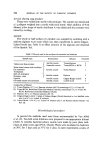
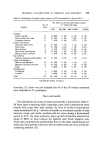
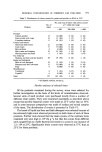
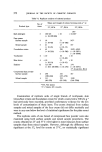
TLC STUDY OF AN ANTIMICROBIAL PRESERVATIVE 541 due to chromatography was examined. A two-dimensional chromatogram was carried out using the solvent chloroform-methanol-acetic acid-water (50: 30: 10: 10) in both directions. All the components were found to lie in a diagonally straight line, showing that no new components were formed during the chromatographic run. In addition, solutions kept for several days showed no detectable decomposition compared to freshly-prepared solu- tions. The detection of imidazolidinyl urea when added to several cosmetic and toiletry products was attempted. These products included a moisturiz- ing lotion containing fifteen ingredients, some of which were themselves complex mixtures and known to include an aliphatic amine, a mixture of parabens, two dyes, a lanolin product, an emulsifier, long chain alcohols and esters, poly hydroxy compounds and aloe, polysaccharides, proteins, amino acids and vitamins. An egg shampoo was also tested, as unlike some anti- microbials, the efficiency of imidazolidinyl urea is not impaired by the presence of proteins. The other products tested were, a deodorant foam bath, a hand cream, a squeeze-on deodorant, a roll-on deodorant and an aerosol deodorant (Fig. 1). Imidazolidinyl urea was successfully detected down to at least 0.1% in all the products tested and only the roll-on deodorant and the aerosol deodorant exhibited any distortion of the preservative zones. The preservative was easily detected in the presence of other anti- microbials (Table II), including parabens with which it is recommended for joint use, as a synergistic effecl in efficiency has been observed. The detection system was specific for the imidazolidinyl urea type of antimicrobial when compared with other antimicrobials and additives, as none of those tested revealed a similar distinctive coloration in uv light, even though a number reacted with ninhydrin to form colours visible in daylight. Quantitative Although for routine quality control, a simple, visual comparison of spots with the appropriate standard spots is both rapid and sufficiently accurate, a more precise densitometric determination was also investigated. For all quantitative work, the sample was run with replicate spots alternately spaced with standard solutions, which consisted of the 'blank' product doped with known quantities of imidazolidinyl urea. The chromatographic conditions were as for the previous qualitative work.
Purchased for the exclusive use of nofirst nolast (unknown)
From: SCC Media Library & Resource Center (library.scconline.org)