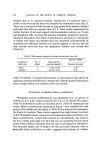
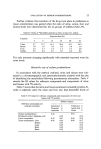
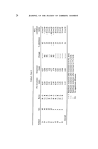
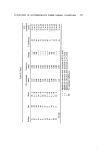
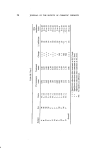
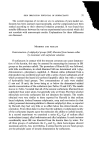
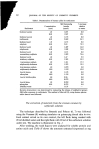
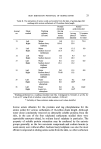
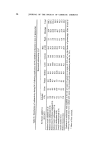
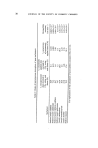
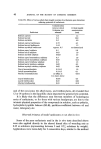
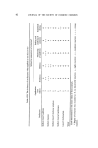
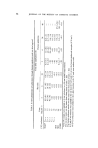
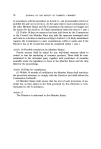
SKIN IRRITATION POTENTIAL OF SURFACTANTS 41 previously described (16). After 1 day and 3 days of application the degree or irritation was assessed macroscopically in terms of erythema and oedema, scaling and cracking of the stratum corneum and drying of the stratum corneum superficially. The results are shown in Table VIII. When the effects of each surfactant were compared, after only 1 day's application, sodium laurate was by far the most irritant compound by virtue of the intense erythema and oedema which resulted. Indeed, none of the other surfactants showed differences from the water treatment. After 3 days, how- ever, there was a much different picture. By this time sodium lauryl sulphate treatment was seen to have caused thickening of the epidermis with scaling and cracking of the stratum corneum. Sodium laurate also exhibited these changes but to a lesser degree and sodium lauryl triethoxy sulphate was the only other surfactant to cause erythema and oedema after 3 days, and then this was very slight. Both sodium lauroyl isethionate and (to a lesser degree) lauryl triethoxylate caused superficial dryness to the stratum corneum after 3 days, but there were no signs of accompanying inflammation (erythema and oedema). Overall, the irritancy of these surfactants could be ranked relative to water as follows: sodium lauryl sulphate • sodium laurate • sodium lauryl triethoxy sulphate sodium lauroyl isethionate • lauryl trieth- oxylate. With in vivo irritancy tests such as this, however, one must pay due regard to the significance of the various components of the overall irritation response. For example, moderate erythema may represent significantly greater irritation to the skin than a moderate drying of the stratum corneum. Also, the duration of application is important: changes such as cracking and thickening of the skin probably arise secondarily to inflammation, due to hyperproliferatio• of the epidermis. If applications had been for 1 day only, then sodium laurate would have been adjudged to be the most irritant of the surfactants studied, by virtue of the rapidly developing erythema, whereas when sufficient time was allowed for the complete irritation pheno- menon to develop (3 days or longer) then the more drastic effects of sodium lauryl sulphate were evident. DISCUSSION It has been suggested by Bettley (3) that irritancy to skin by surfactants is governed by their percutaneous penetrability and their toxicity to the

42 JOURNAL OF THE SOCIETY OF COSMETIC CHEMISTS + + •+++ +++ + + + + • + • o • • • •+ +
Purchased for the exclusive use of nofirst nolast (unknown)
From: SCC Media Library & Resource Center (library.scconline.org)