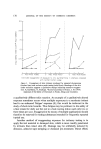
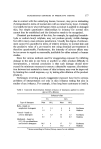
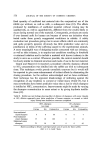
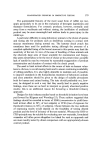
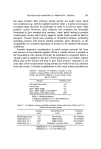
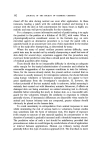
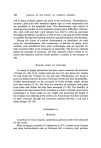
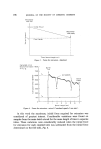
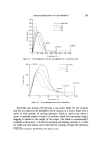
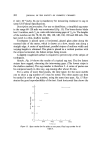
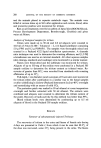
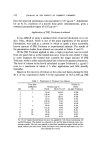
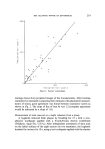
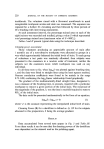
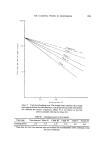
176 2'5 -- JOURNAL OF THE SOCIETY OF COSMETIC CHEMISTS 2.0 1.5 1.0 x 0.5 x-•X'" x -•• X 'm= -- - X 0 X50 XIO0 X300 0 X50 XIOOX300 0 X50 XlOOX300 Estimated exaggeration of exposure to zinc pyridinethione •n shampoo compared with normal human usage Figure 1. Comparison of skin irritancy produced by repeated shampooing (,broken lines) and occlusive patch testing (solid lines). Breakage of the skin under occlusion suggests a qualitative change indicating excessive exaggera- tion. X, Erythema O, breakage. *Scored according to Draize, J. H. (1959). Appraisal of the Safety of Chemicals in Foods, Drugs and Cosmetics. a qualitatively different skin reaction. An example of a qualitatively altered response sometimes occurs when multiple exposures to a moderate irritant lead to an enhanced 'fatigue' response (8) this would be irrelevant in the study of short-term hazards. Thus fatigue may be pertinent to the safety of a face cream for daily use but not to a hair-waving lotion used only two or three times per year. Exaggeration by means of multiple applications should therefore be reserved for testing substances intended for frequently repeated topical use. Another method of exaggerating exposure for irritancy testing is to apply the test material to damaged skin, which is more readily penetrated by irritants than intact skin (9). Damage may be artificially induced by abrasion, adhesive tape stripping or chemical pre-treatment. Direct effects

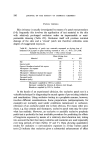
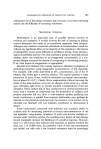
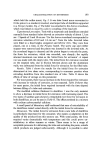
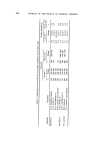
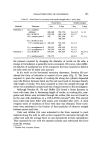
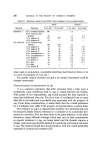
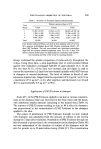
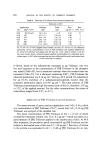
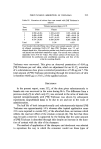
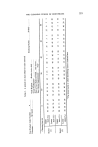
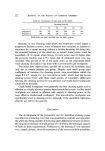
EXAGGERATED EXPOSURE IN PREDICTIVE TESTING 177 due to contact with the underlying tissues, however, may prove misleading if extrapolated in terms of normal skin with an intact horny layer. Certainly it is helpful to know what will happen when a product is applied to damaged skin, but simple quantitative relationships to irritancy for normal skin cannot thus be established and the distinction needs to be recognized. Chemical pre-treatment of the skin, for example, by applying formalde- hyde or sodium lauryl sulphate, may not produce grossly visible damage but will in many cases enhance penetration. Usually the degree of enhance- ment cannot be quantified in terms of relative irritancy to normal skin and the predictive value of a provocative test using chemical pre-treatment is therefore questionable. Furthermore, the intensity of adverse effects may be too severe to regard as reasonably justifiable for either animal or human studies. Since the various methods used for exaggerating exposure by inflicting damage to the skin in one form or another so often produce difficulty in interpretation, a rational conclusion is that such damage should never exceed the minimum necessary to ensure a detectable response discrimina- tion between test materials in terms of skin irritancy may even be improved by limiting the overall response, e.g. by testing after dilution of the product (Table I). Techniques involving grossly exaggerated exposure have led to serious problems of interpretation not only in skin irritancy testing but also in studies of eye irritancy. For example, it has long been customary to instil a Table I. Improved discrimination between irritancy of shampoos applied to rabbit skin at 10% dilution Irritancy* after 5 h 24h Type of shampoo Neat 10% Neat 10% Baby--based on amphoteric detergents 7 1.1 4 0 1.5 1 2 0 Normal--based on anionic detergents 7 1.5 15 1.5 8.5 I 14 0.5 Medicated--based ot• 0.5% Zn pyridinethione and anionic detergents 10.5 6 17 7.5 Erythema 6 I 15.5 7 Oedema Erythema Oedema Erythema Oedema * Scores according to Draize (Group means for six rabbits).
Purchased for the exclusive use of nofirst nolast (unknown)
From: SCC Media Library & Resource Center (library.scconline.org)