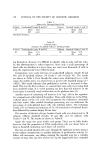
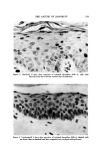
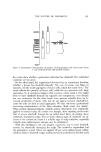
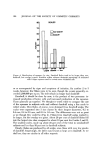
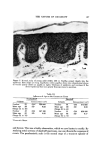
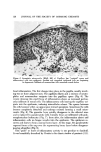
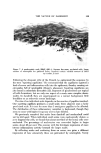
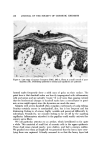
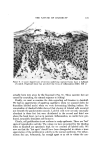
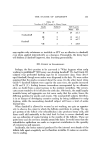
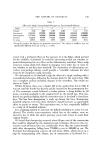
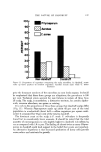
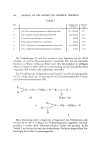
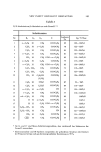
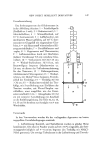
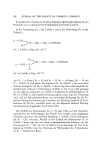
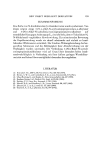
120 JOURNAL OF THE SOCIETY OF COSMETIC CHEMISTS until the label is lost at the base of the SC due to dissolution of the nucleus. The method is crude, because labeled cells leave the basal layer at different times, and so certain ones may be near the top, while others have scarcely begun to move. Biopsies were taken from 8 dandruff subjects and 7 without dandruff 4 to O days after injection of tritiated thyroidinc (Figs. 1 and 2). In every in- stance, labeled cells migrated more rapidly through the epidermis in dandruff. In the dandruff subjects, after five days, many labeled cells had reached the granular layer just beneath the SC. After seven days, there were far fewer labeled cells, indicating that many had moved into the horny layer. The viable epidermis in dandruff, therefore, turns over in about a week or so. VI. THE CORNEOCYTE COUNT The foregoing studies indicate a faster generation of epidermal dandruff. This means, of course, that more horny cells are being shed. A use- ful way of demonstrating this is the corneocyte count, a procedure which we originally devised to quantify the cutaneous microflora (7). The sampling technique removes corneocytes in the desquamating loose outer zone. This is accomplished by placing a 3.8 sq cm glass cup on the .clipped scalp. One ml of a buffered nonionic detergent is placed in the cup, and the surface rubbed vigorously with a teflon rod for 1 min. This is repeat- ed once more. The samples are pooled and then mechanically agitated to dis- perse the cells. A few drops of crystal violet are added, and the cells are counted in a Fuchs-Rosenthal hemocytometer. The corneocyte count is always performed 4 days after a bland shampoo and is expressed as the quantity of horny cells per square centimeter per 4 days. On the scalp, horny cell aggregates tend to be retained, shielded by the hairs. The count then is an indirect measurement of cell turnover. In the same individual, the counts are remarkably repeatable time after time, whether or not the subject has dandruff. From what has been said, one would expect a positive correlation between clinical grades and corneocyte counts. When the regression line for 208 pairs of observations was plotted, the grades and counts did indeed parallel each other, but the correlation was wcak, just achieving statistical significance (r equals 0.415) (1). This seemed a bit odd, but the reason soon came to light. A few individuals with Grades IV and V (mild and moderate dandruff) had unexpectedly low counts, while conversely, some Grade II and III scalps had counts which were more characteristic of the dandruff group. These un- usual individuals accounted for the uncomfortably large standard deviations around the mean. As a rule, however, Grade V subjects had counts exceeding 800,000 cells per sq cm while values of less than 500,000 per sq cm were typical of nondandruff subjects (Fig. 3). One cannot decide on the basis of

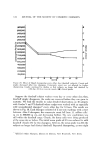
THE NATURE OF DANDRUFF 121 •-Rsr•e Figure 3. Quantitative determination of number of desquamating cells (corneocyte count) i•a 112 nondandruff and 126 dandruff subjects the count alone whether a particular individual has dandruff. The individual variations are too great. On the other hand, the experienced observer has no uncertainty deciding whether a person has dandruff clinically. The eye, of course, sees flakes or squames, not the small aggregates of horny cells, which the count "sees." The count reflects the quantity of horny cells, while the eye perceives only large aggregates. So, it sometimes happens that a person, whose count is low, might seem to have dandruff because his squames are conspicuous, even though not very numerous. On the other hand, some persons actually have an in- creased production of horny cells, but do not appear to have dandruff be- cause the cells are shed in small aggregates. We may cite here a particularly convincing demonstration of the latter situation (high count, low grade). When certain chemical irritants, notably anionic detergents, were repeatedly applied to normal scalps, the counts rose sharply, often reaching levels twice that of severe dandruff. Except for an initial brief flurry of scaling, these artificially stimulated scalps did not show clinical signs of dandruff. An in- crease in the corneocyte count is a reliable sign of scalp irritation, especially valuable since inflammatory changes may be subclinical. With this intelligence, one can imagine a perverse way to treat dandruff, namely, by chemically damaging the scalp. The method is impractical, but the principle is sound. When we applied 10 per cent sodium lauryl sulfate solutions daily to dandruff scalps, scaling increased markedly for the first week
Purchased for the exclusive use of nofirst nolast (unknown)
From: SCC Media Library & Resource Center (library.scconline.org)