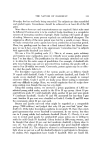
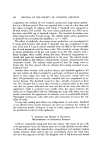
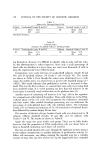
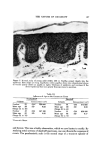
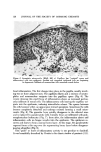
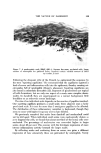
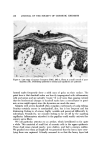
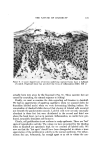
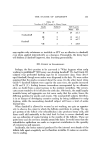
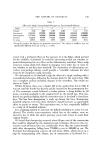
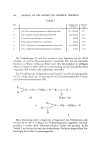
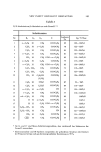
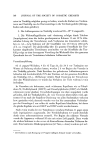
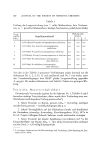
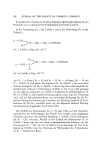
126 JOUBNAL OF THE SOCIETY OF COSMETIC CHEMISTS On the scalp, the undersurface of the normal epidermis is very strongly sculptured. The dermal papillae deeply dent the epidermis so that in cross- section the dermo-epidermal contour is highly undulating with long rete pegs (Fig. 5). Sometimes the appearance is psoriasiform. Initially, we thought that the epidermis in dandruff was thicker (acanthotic). This, too, turned out to be a variable feature and not at all characteristic of dandruff. An important fac- tor in this regard is age. Deeply projecting papillae with long rete pegs are very characteristic of youth. After middle age, the dermo-epidermal contour progressively flattens and the thickness of the epidermis decreases. In old age, the dermo-epidermal junction is flat rather than wavy, and the epidermis may become very thin. These changes, along with decreased cell turnover, explain the disappearance of dandruff in the aged. It is appropriate, here, to provide objective data on the extent to which age influences the rate of production of horny cells. Using corneocyte counts, we compared elderly subjects with and without dandruff to young adults. By cli- nical criteria, dandruff was equally severe in both groups (Grade V). It turned out, however, that the counts were appreciably lower for the elderly (Table III). Within each age group, the dandruff subjects had higher counts, the difference being especially prominent in the aged. This is another illustration of lack of a strict correlation between counts and grades. Apparently, the elderly can produce just as many scales even though cell turnover is de- creased. Since scaling is the central feature of dandruff, one might think this would be a dominant finding in histologic sections. Unfortunately, fixation and pro- cessing literally ruins the horny layer. Judgments of thickness and quality of the SC are very hazardous. Quite often, it is simply knocked off in sectioning -leaving only fragments. Originally, we thought that there was a diagnostic histologic feature in dandruff. We said, "the hallmark of dandruff is scattered loci of parakeratosis" (10) (parakeratotic horny cells retain their nuclei). Small mounds of paraker- atotic horny cells are to be sureco mmon in dandruff, but identical findings are present in nondandruff. Again, the difference is merely quantitative. To find them in nondandruff may require examination of many sections. They be- come increasingly sparse as the grades diminish from III to I. The reader has no doubt begun to sense that the parakeratotic loci are, in fact, the visible flakes or squames, which are universal in all scalps. Like the corneocyte count, their quantity is proportional to the clinical grade. Paraker- atosis invariably signals increased prolferative activity and is usually a con- sequence of underlying inflammatory change. Parakeratosis is typical of such inflammatory dermatoses such as seborrheic dermatitis and psoriasis in which cell turnover is sharply accelerated. In our previous work, we were mystified as to how these parakeratotic mounds formed in dandruff. They often seemed to be sitting over a normal epidermis

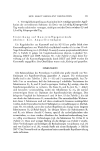
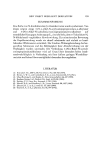
TIlE NATURE OF DANDRUFF 127 i:7:f: ....... ' • ' .•- ' .... '"• ..... 5.. •v ...,.• •--:,• •.• • . ..•'•.•- • ':' :'" '•" *"'..' ..... ' •- •':5•.' '"? ...... •.:....Z•',•?f '"' . ....... • •. :. ........................................................... .. ....... ..,.- • ..... -v. •:"".' ' ..... • - :::':::" :, ß •.. ß ... :•.• '•:•.• ....... :...,..•'• •'.'... /%:-... :.•...• •: . '•. ' - :...: * ß . •- •. .:: s.:, ½.½•:. •' . .: . •.•. .*"• •i•.... ..•.., •,.: '" ....... . .................... ..., ...... '4 .... ,•' zs •. .•':½".•'•.• ':•..•- .•..,.. • . •' .: •7• •':..• ..... " '• '• '"'½ d '- '-'. . %' •'•'•..•. •.:*•:• •: ..• '.•:. •-• ½•:.,. a •:'•. ::,.. • 'v::'.. .:,• t.. .•" '•.' .• • .•& '. :. ..:•:: . . •-- •.: ..... -. ,•.: •,....•. •... • •. **• ..... ,.,..• ....... .,-* ..•. • .... ß ,,.. •...• .... • ..... ':,'.• ""• '•'.': ,:' ......... •, ß .:V C". ...... .: ...... .. •." .':{•. ::-'., '.' - •.:...• ß .. . ...... .... .... ,,.. . ß . ..• .... ½.½ • •.'.: •..%.. ,•... . . % . ,•.. :• ....... . • ........... '. • .......... •:• . .......... :•., - •...•?. .. t '•,...-. .,.:•. .•. ?:.'.' .,.. '-':-. ....... •...., . . . •: ...., 51½' 4.. •?., •...... •:.: . • ..... 4 •....• "':,5.• -•' .,• i-.• ./:•., ':' .: .....¾ , •, .:•...:•..•.• -.• -T:- ..%.- '•'• •..(½" •'.'•:• .,"-...: '• .•c.'... . • ...:: .'.--, :. ,.• .it.....-,e. ',•:. :....•., .:........:. 3½ '7::' -a •.•. ,....5½ -' .: • .. ' h .... '. : .... ::: .... • .. •..•..."• ½: .... "'•2-,.,-,... :.•.:¾-• ....::::•.•.:: .... ......:'"•..-::...',.....:.'.'•, •.• •"•.:. •.• ,.. .. . :%.....• - .•... "::.':• •.•.•.•:. .• .... ..& .... ..•.:,,:.., .,.... ::•..,.•.-.•,•.•..•.,.2•. .•...•.•.::•,..•:•............• ..... .: •(:. :%.' ....... :, . ... •.. '.- '"'• •:•-, :• ....... f,.....3:'::• •'"':" ,•, •:'* :' 7-.. "": "*' •• -- =:, ..:%.:• .... .'-• :.,.. ..... .:: .' ' .• * .. ....... .. "t-? ,• • • '•' .... • .-- -'• Figure 5. Normal scalp of young adult (H&E, •65 x). Papillae projet[ deeply into the epiSermis. Bete riSges are long. Capillaries within papillae drain in[o subepiSermal plexus of •enubs (partly shown on papilla on right). •ekness of epidermis and waviness of [he 8ermo-epidermal line vary greatly •om spec•en to specimen Table III Influence of Age on the Corneocyte Count Nondandruff Dandruff Subjects Corneocytes (/cm -•) Subjects Corneocytes (/cm -ø) Number 81 CM • 520 800 Nnmber 91 CM 873 000 Mean age 28 SD 0.22 Mean age 29 SD 0.22 (Range 21 to 46) (Range 21 to 48) Nnmber 45 CM 367 100 Number 21 C,M 636 800 Mean age 63 SD 0.20 Mean age 62 SD 0.17 (Range 51 to 79) (Range 53 to 72) '*Geometric Mean. and dermis. This was a faulty observation, which we now hasten to rectify. By studying serial sections of dandruff specimens, one can discern the sequence of events. The parakeratotic scale is the second stage of a transient episode of
Purchased for the exclusive use of nofirst nolast (unknown)
From: SCC Media Library & Resource Center (library.scconline.org)